
First symposium held about a year after designation draws around 120 medical professionals from maternal-fetal centers nationwide
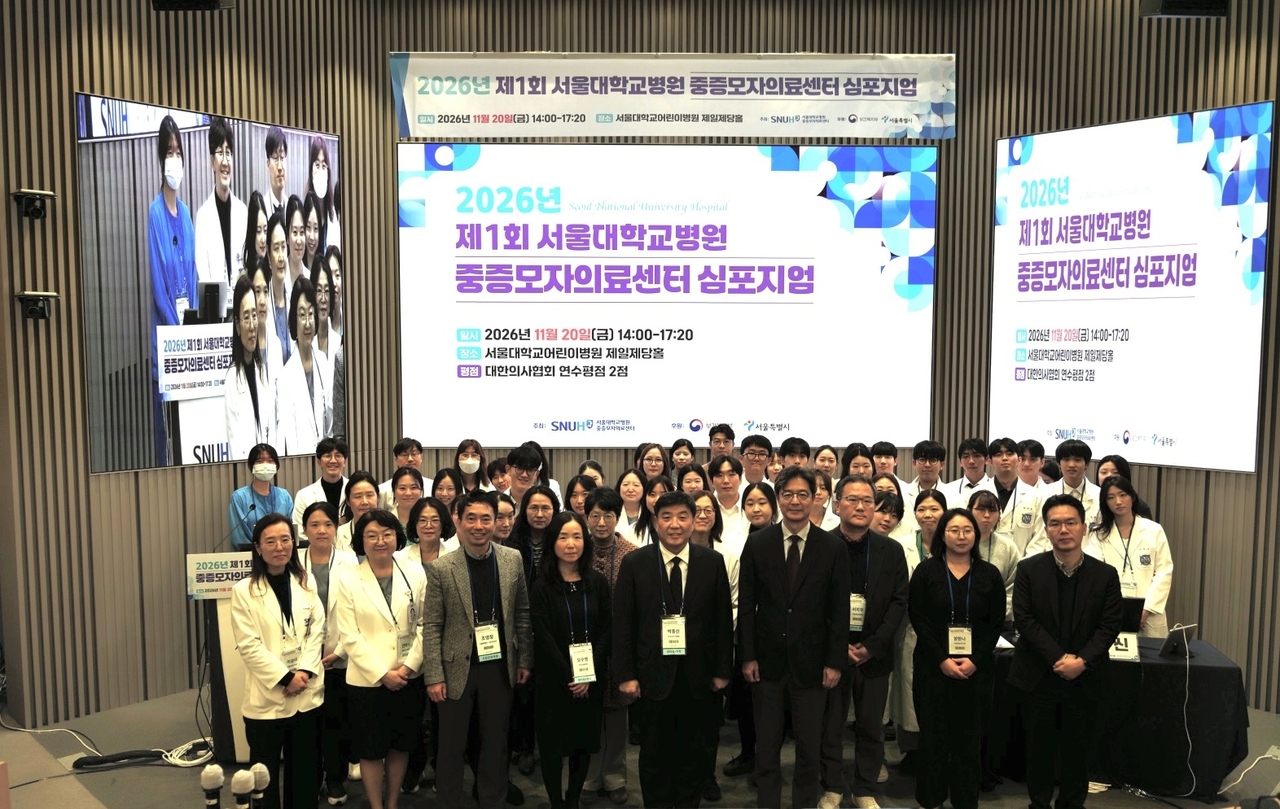
Seoul National University Hospital's Severe Maternal-Fetal Medicine Center held its first symposium Friday to share clinical experience from its first year of operation and explore ways to strengthen coordination among medical institutions within the maternal-fetal care delivery system, the hospital announced Wednesday.
Demand for specialized care for high-risk mothers, premature infants and newborns with congenital conditions has grown as pregnancies among older women and multiple-fetus pregnancies become more common. Protecting the lives of mothers and babies requires not only specialized treatment but also close collaboration across medical departments and institutions.
The government restructured the maternal-fetal care delivery system in 2025 into three tiers — severe, regional and local maternal-fetal medicine centers. Seoul National University Hospital was designated the sole severe maternal-fetal medicine center among national university hospitals, tasked with caring for the most critically ill mothers and newborns, and has served as the final referral institution for patients who cannot be treated at regional or local centers since July of that year.
Since its designation, the center has further strengthened its care and patient-transfer systems. On top of its existing 24-hour emergency delivery service and a mother-and-newborn transport network linked to the Seoul Metropolitan Intensive Care Unit transport service, the center now operates a dedicated transfer hotline and reserve beds for the most critically ill patients.
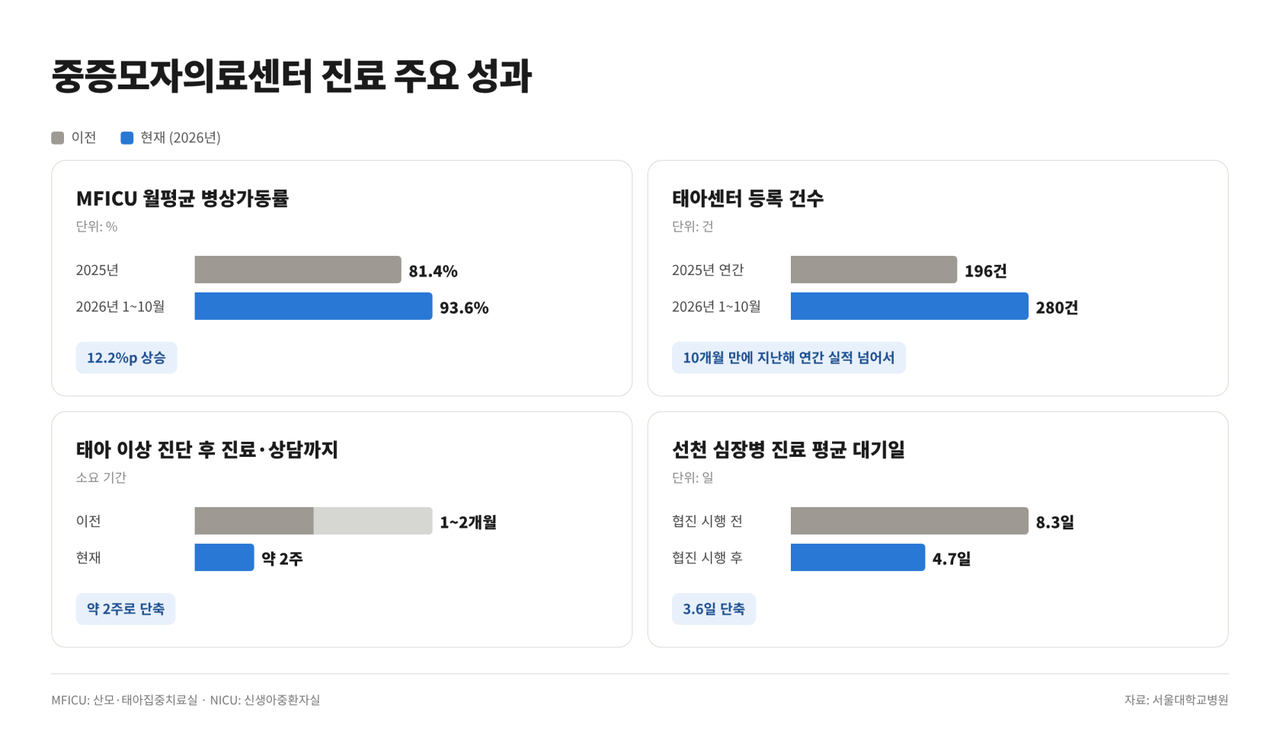
The maternal fetal intensive care unit's average monthly bed occupancy rate this year reached 93.6 percent from January through October, up from 81.4 percent last year, while the neonatal intensive care unit posted an average occupancy rate of 92.2 percent over the same period. During that time, 86.1 percent of all deliveries at the center were classified as high-risk.
In fetal medicine, the center runs a fetal center where obstetrics, radiology and pediatric specialists collaborate on care from prenatal diagnosis through post-birth treatment planning. Registrations from January through October this year reached 280 cases, already surpassing last year's full-year total of 196, and the waiting time from a fetal abnormality diagnosis to a specialist consultation fell from one to two months down to about two weeks. The center plans to expand same-day multidisciplinary consultations to seven pediatric subspecialties.
Since last May, the center has operated a congenital heart disease clinic that connects patients diagnosed with fetal congenital heart conditions to same-day consultations with pediatric cardiology and pediatric thoracic surgery. The average wait for a cardiology appointment fell from 8.3 days to 4.7 days.
The symposium was held under the themes "Severe Maternal-Fetal Medicine: Building the System" and "Critically Ill Mothers and Fetuses: From Diagnosis to Postnatal Care." Eight speakers from Seoul National University Hospital, Samsung Medical Center and the Central Maternal-Fetal Medicine Center at the National Medical Center shared experiences on the national maternal-fetal care system, critical maternal and neonatal transport, and prenatal diagnosis and postnatal treatment of fetal conditions. Sponsored by the Ministry of Health and Welfare and the Seoul Metropolitan Government, the event drew about 120 medical professionals and officials from maternal-fetal medicine centers and related organizations across the country.
Park Jung-shin, the center's director and an obstetrician-gynecologist, said the severe maternal-fetal medicine center "must be the last place the most critically ill mothers and newborns can turn to." Park added that the center would work closely with departments across the hospital and maternal-fetal medicine centers nationwide, drawing on the experiences shared at the first symposium, to build a system in which mothers and babies can receive care with confidence.
Meanwhile, the center this year resumed operation of two operating rooms inside the delivery suite, enabling immediate response for high-risk mothers requiring surgery such as emergency cesarean sections.
kty@heraldcorp.com





