
Residents' panel reaches agreement after prolonged opposition; vote to be held in Gam-il district
Ministry says administrative process will begin this year regardless of vote outcome; government criticized for slow response
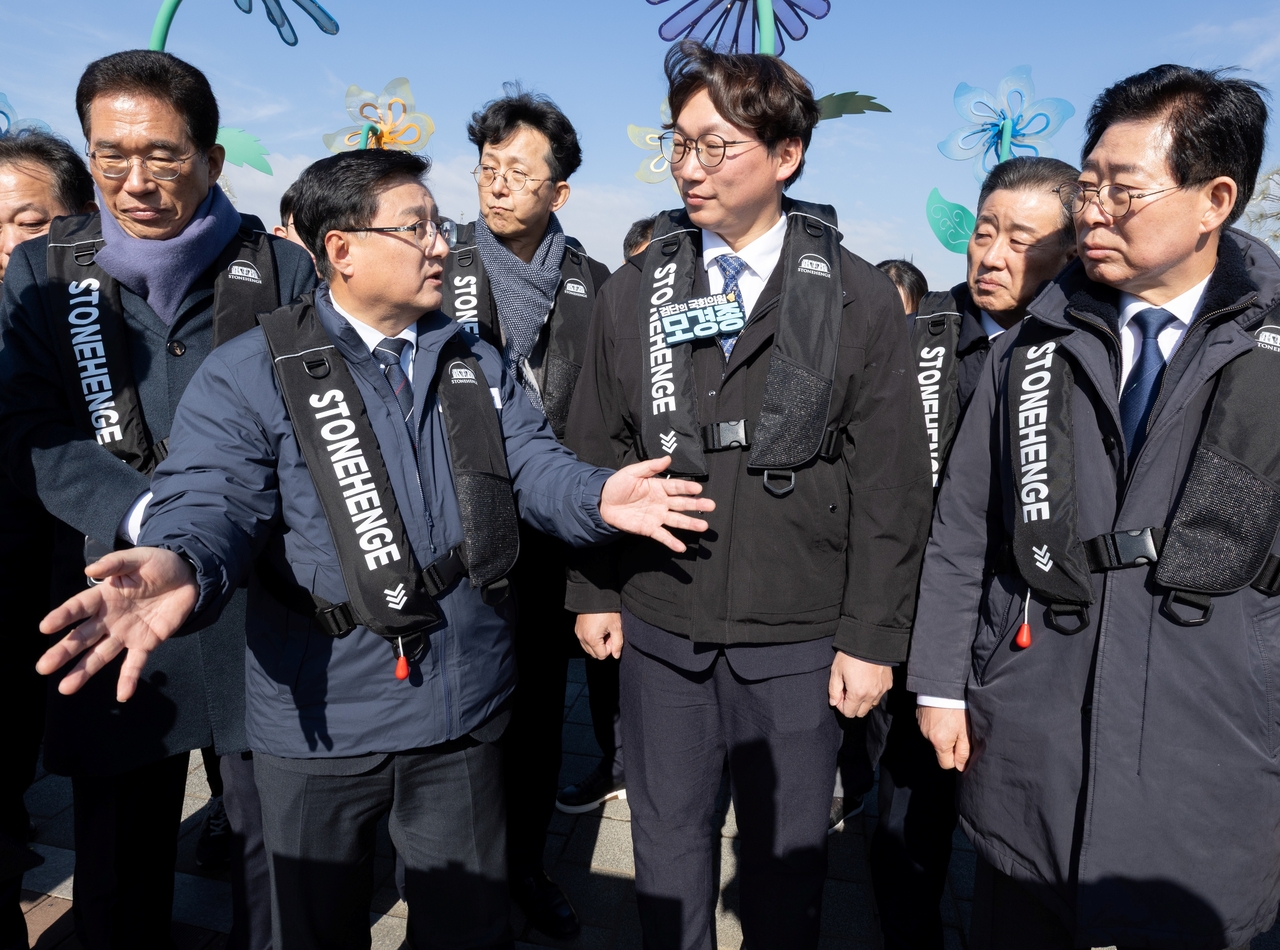
Administrative procedures for the Dong Seoul converter station — a key facility needed to supply electricity to the semiconductor cluster in Yongin, Gyeonggi Province — are set to begin after a prolonged series of setbacks.
Korea Electric Power Corporation and local residents have reached an agreement through a joint consultative body, and the government says it will launch the administrative process regardless of the outcome of a resident vote on the agreement.
The Ministry of Climate, Environment and Energy announced Wednesday that a resident vote will be held among household heads across 19 apartment complexes in the Gam-il district, based on an agreement drafted by the "Dong Seoul Converter Station Consultative Body."
The Dong Seoul converter station serves as the Greater Seoul terminus of a high-voltage direct current (HVDC) transmission line that carries electricity generated at coal and nuclear power plants along the East Sea coast into the metropolitan area. The project involves moving existing substation equipment indoors and expanding the converter station.
Korea Electric Power Corporation says that once the Dong Seoul converter station and the broader East Sea coast-to-Greater Seoul HVDC line are completed, 3.9 GW of electricity from East Sea coast power plants will flow into the metropolitan area, and Hanam and the southeastern parts of Gyeonggi Province will be able to secure their own power supply without routing through the central grid. The line was originally scheduled to be completed in 2019.
The project stalled, however, after residents of the Gam-il district near the Dong Seoul substation mounted strong opposition, citing concerns over electromagnetic waves, safety and damage to the local landscape.
The core of the agreement calls for a third-party expert body to verify Korea Electric Power Corporation's review materials on relocating the converter station to an alternative site in nearby Baealmidong, as well as data on the facility's impact on resident safety and the environment — covering electromagnetic waves, noise and fire risk — while simultaneously launching the administrative procedures required for the expansion.
Residents have demanded relocation to Baealmidong, but Korea Electric Power Corporation maintains that the site falls within a Class 1 ecological and natural zone under development restrictions, making construction either impossible or prohibitively costly and time-consuming.
The agreement also includes plans to apply electromagnetic shielding materials to the building, allow residents to participate in post-completion inspections for electromagnetic waves and noise, and plant a shielding tree line facing the Gam-il district.
The consultative body held 17 rounds of meetings to produce the agreement and advance to a resident vote, but the dispute is far from fully resolved.
Many residents still oppose the expansion, and there is reportedly no agreed-upon course of action should the vote fail.
The Ministry of Climate, Environment and Energy says it will proceed with the necessary administrative steps before year's end even if the vote fails. The administrative process is estimated to take roughly six months.
Before Korea Electric Power Corporation can submit an application to the government for approval of the expansion implementation plan, it must first hold a public briefing for residents and, if requested, a public hearing.
Once the ministry receives the implementation plan application, it must consult with Hanam and other relevant agencies to address permit and licensing matters. Under the National Grid Infrastructure Act, the East Sea coast-to-Greater Seoul HVDC line is classified as national grid infrastructure, meaning approval of the implementation plan is deemed to cover all related permits and licenses. In addition, if a local government fails to submit its opinion within 60 days of the application, the required consultations and approvals are considered complete.
While a path forward has been cleared, criticism has emerged that the government responded too slowly — particularly given that the project continued to stall for an extended period even after an administrative appeals ruling found that Hanam's rejection of the project had been unjustified.
The Dong Seoul converter station expansion has repeatedly been found procedurally sound, including a 2024 ruling by the Gyeonggi Province Administrative Appeals Commission that Hanam's rejection was improper.
The government has emphasized the need to "improve community acceptance," but critics argue that it has taken an overly deferential stance toward opposition from Greater Seoul residents in particular, even as power grid construction disputes flare up across the country.
"It is significant that through this consultative body, we were able to jointly establish procedures to verify residents' concerns and discuss ways to promote community coexistence," Climate, Environment and Energy Minister Kim Sung-hwan said. "The government will ensure that safety measures for residents and plans to improve the residential environment are faithfully carried out."
oskymoon@heraldcorp.com





