
Noh's side: 'Withdraw appeal if sincere'
Chey's side: 'A one-sided demand'
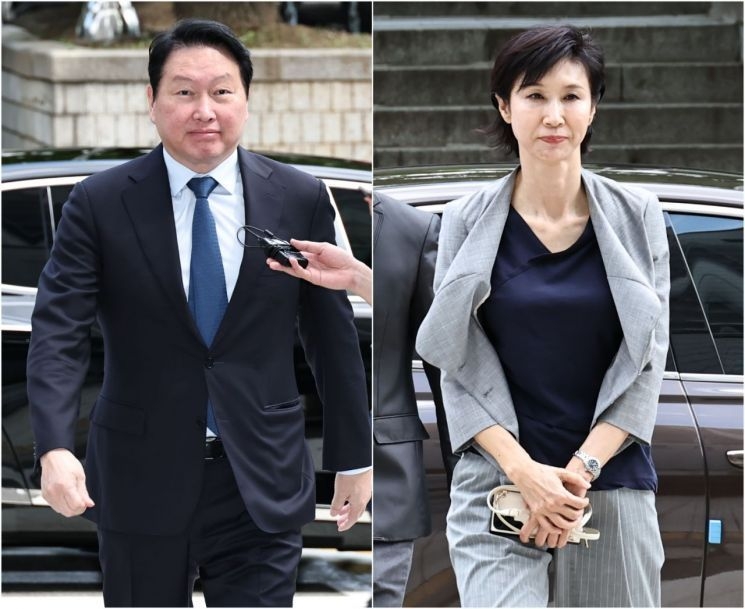
SK Group Chairman Chey Tae-won expressed regret Wednesday after Art Center Nabi Director Noh So-young's side rejected his request for a court-recommended settlement in their ongoing asset division retrial at the Supreme Court.
Chey's legal team issued a statement Wednesday afternoon saying it was "deeply troubled and profoundly regrets" that Noh's side had questioned the sincerity of the settlement request and dismissed its intent.
The statement said Chey had filed the request despite having "many legal grounds to contest" the asset division ratio and scope set by the appellate retrial court, adding that his overriding purpose was "to bring a long-running dispute to an amicable close through mutual settlement and fully resolve all points of contention."
Chey's side also pushed back against Noh's suggestion that he simply withdraw his appeal, calling it "a one-sided demand." "Agreeing to the settlement recommendation would allow the case to be concluded as early as this week, with the desired amount received — yet the response was simply 'withdraw the appeal,'" the statement said. It added that Chey "will faithfully engage in the remaining proceedings while continuing to seek an amicable resolution."
Earlier Wednesday morning, Noh's legal representatives said they had submitted a written objection to the settlement request, and called on Chey to withdraw his appeal immediately "if he is genuinely committed to an early resolution."
On Monday, Chey's side submitted a formal request for a settlement recommendation to the Supreme Court's Second Division — presided over by Justice Kim Seong-su — which is handling the asset division retrial. Chey's team indicated a willingness to pay Noh the full 944 billion won ($703 million) in asset division funds set by the appellate retrial court in July.
At the time, Chey's side said the request was made "for a smooth and final resolution of a dispute that has continued for many years," and explained that the intent was "to pay the full 944 billion won in asset division funds, bring all disputes to a close, and focus on management at a time of intensifying global AI competition."
A court-recommended settlement is a procedure in which the presiding panel urges the parties to reach an agreement. If neither side raises an objection within two weeks of receiving the recommendation, it carries the same legal force as a final ruling.
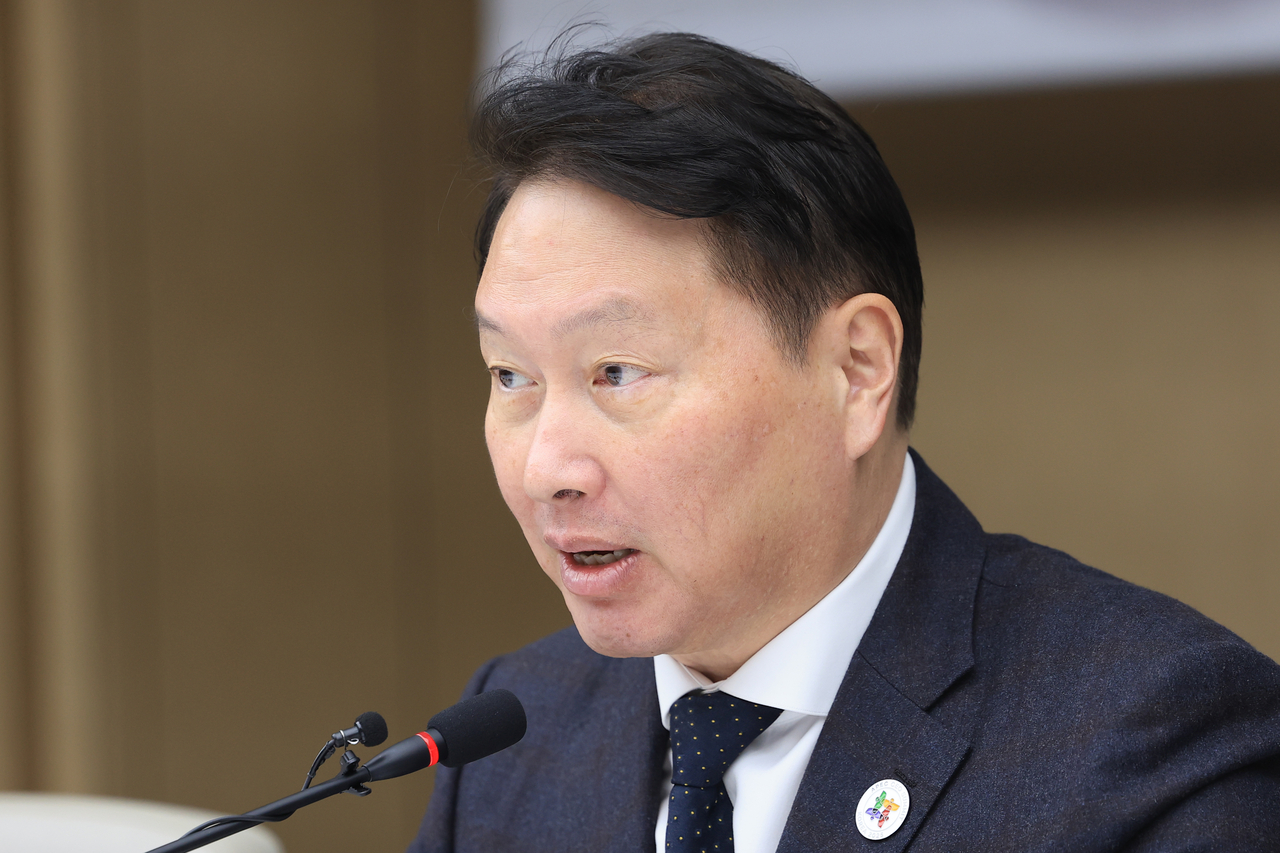
Chey and Noh married in September 1988 and have three children. The legal battle began in 2017 when Chey filed for divorce mediation.
The first-instance court treated Chey's SK shares as his own separate property and ordered him to pay Noh 100 million won in consolation damages and 66.5 billion won in asset division.
The appellate court in May 2024 sharply increased those figures, raising the consolation payment to 2 billion won and the asset division amount to 1.38 trillion won. The court ruled that SK shares were subject to division because the growth of SK Group had been aided by a 30 billion won slush fund linked to former President Roh Tae-woo and by Noh's own contributions.
The Supreme Court, however, overturned that ruling in October last year and remanded the case to the appellate court, finding that Roh Tae-woo's slush fund — being illicit money — could not be credited as Noh's contribution to the asset division even if it had flowed into SK. The 2 billion won consolation award from the appellate ruling was left intact, leaving only the asset division question for the retrial.
In July this year, the appellate retrial court followed the Supreme Court's reasoning but still found that Chey's SK shares were subject to division, setting the asset division amount at 944 billion won. The split was set at two-thirds for Chey and one-third for Noh.
Chey appealed the retrial ruling to the Supreme Court, then filed a motion to narrow the scope of his appeal — contesting only 244 billion won of the 944 billion won total and leaving the remaining 700 billion won undisputed. Noh did not file a cross-appeal to challenge the portions of the ruling unfavorable to her. The central question before the Supreme Court is expected to be whether the asset division ratio set by the retrial court was appropriate.
yg@heraldcorp.com





