
Shinsegae to introduce paper cushioning for top-tier gift sets from Lunar New Year
Hyundai, Lotte also expanding eco-friendly packaging; paper costs up to 10 times more than plastic
Easier recycling and reusable cooler bags among consumer benefits
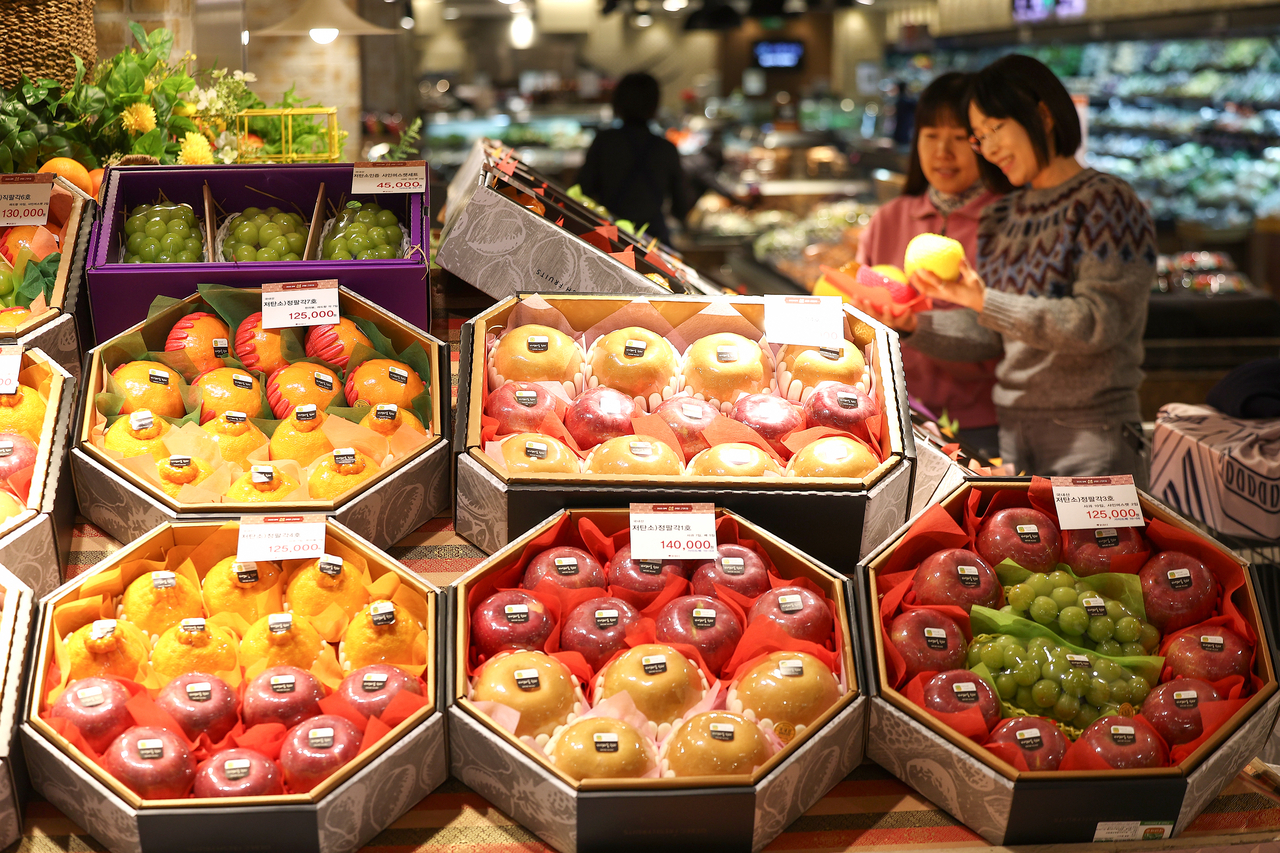
The packaging used in holiday gift sets is changing. From the plastic cushioning that wraps each individual piece of fruit to the inner frames that hold items in place, paper is taking over. The question now is whether the higher cost of paper materials — compared with conventional plastic — will push up the price of gift sets.
According to industry sources Wednesday, Shinsegae Department Store will begin switching some of its holiday gift set packaging from plastic to paper starting with next year's Lunar New Year. The centerpiece of the change is replacing the cushioning material used around fruit with paper. The transition will start with the store's top-tier "5 Star" products and is expected to expand to other in-house lines over time.
The shift to eco-friendly materials is expected to drive up costs, as paper packaging can run up to 10 times more than plastic. That raises the question of whether consumers will end up paying more for fruit gift sets. Department store holiday fruit sets already command steep prices, with many exceeding 100,000 won ($74). Retailers say, however, that because the base price of the fruit sets is already high, the added packaging cost represents a relatively small share of the total.
Beyond cost, maintaining the protective function of the packaging is another challenge. Paper must replicate what plastic cushioning has long done — conforming to the shape and size of each fruit and preventing damage from jostling during transport. Hyundai Department Store has addressed this by widening the gaps between fruits to absorb impact and enlarging the overall gift box by roughly 5 to 10 percent.
Department stores have been steadily moving toward eco-friendly packaging for years. Hyundai Department Store introduced an "all-paper package" for its Lunar New Year gift sets in 2020, replacing all packaging with paper. By last year's chuseok, it had completed the switch to eco-friendly packaging across its entire fruit gift set lineup — replacing plastic trays, cushioning pads and individual fruit caps with paper alternatives. The change has cut the equivalent of more than 300,000 pieces of plastic cushioning per holiday season.
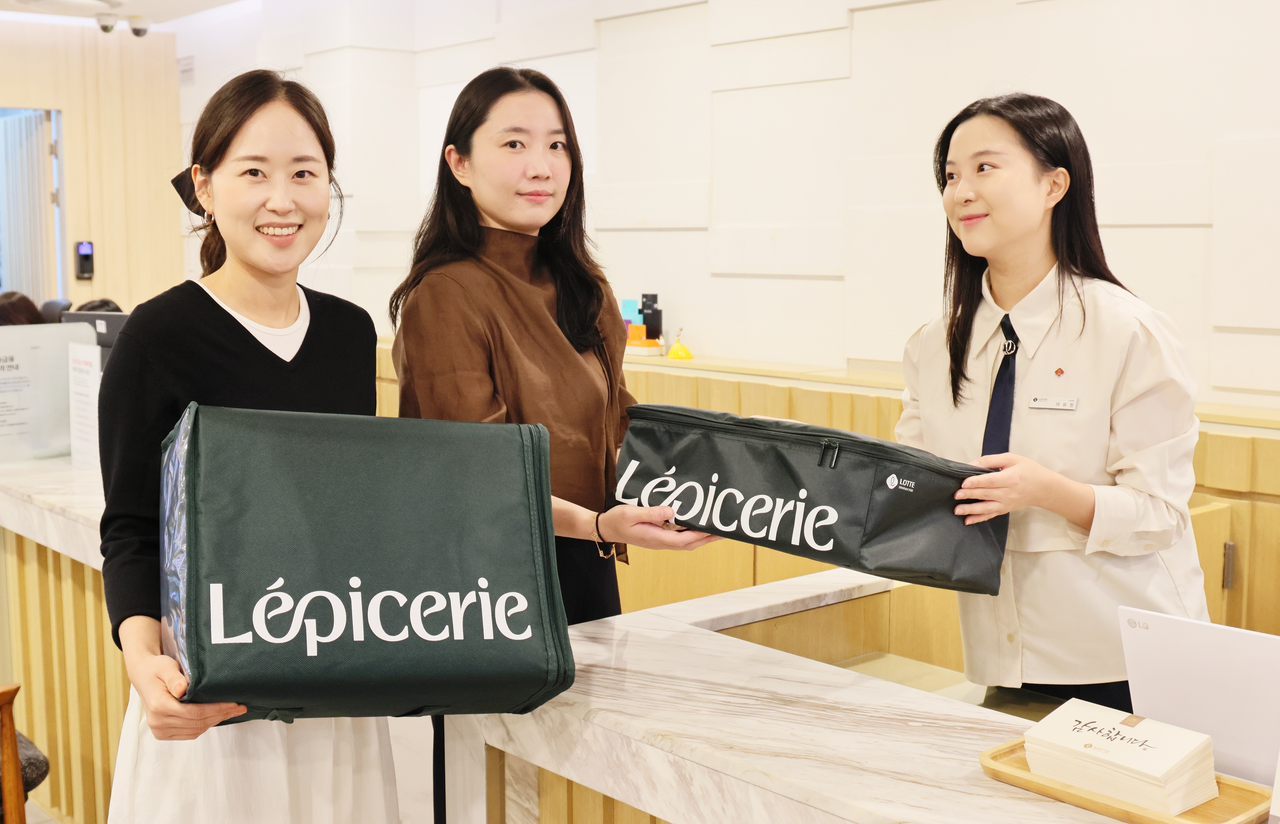
Lotte Department Store is also developing packaging that uses eco-friendly materials. In 2024, it introduced a gift package for its premium market brand Lepicerie made from non-wood pulp paper derived from sugarcane byproducts and kraft paper. For fresh food packaging, it adopted eco-friendly ice gel and water ice packs to make recycling and waste sorting easier. Since 2022, it has also run a cooler bag return program, collecting a cumulative total of 90,000 bags over the past four years.
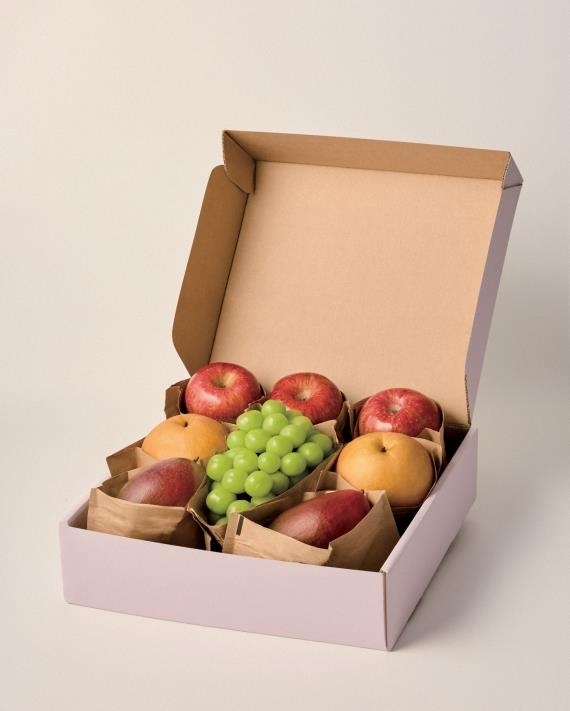
For consumers, the switch to eco-friendly packaging simplifies disposal. Under the old system, plastic cushion caps and inner frames had to be sorted and discarded separately. With paper materials, most of the packaging can go out as a single paper waste stream. The change is also a welcome one for shoppers who prioritize environmentally conscious purchasing.
Reusable packaging such as cooler bags offers lasting value beyond the initial gift. The bags can be used for grocery runs or outings, making them practical long after the holiday. Lotte Department Store's cooler bags in particular have built a following among consumers for their performance, with many repurposing them for everyday shopping.
"Eco-friendly packaging costs more than conventional materials and must still protect the product effectively, which makes adoption challenging," an industry official said. "That said, as more consumers factor environmental impact into their purchasing decisions, we plan to expand the use of eco-friendly packaging."
siuu@heraldcorp.com





