
Self-employed NPL ratio rises from 0.48% to 0.72%
Household credit loans' NPL ratio up for 5 consecutive quarters
Loan-loss coverage ratio falls for 8 straight quarters
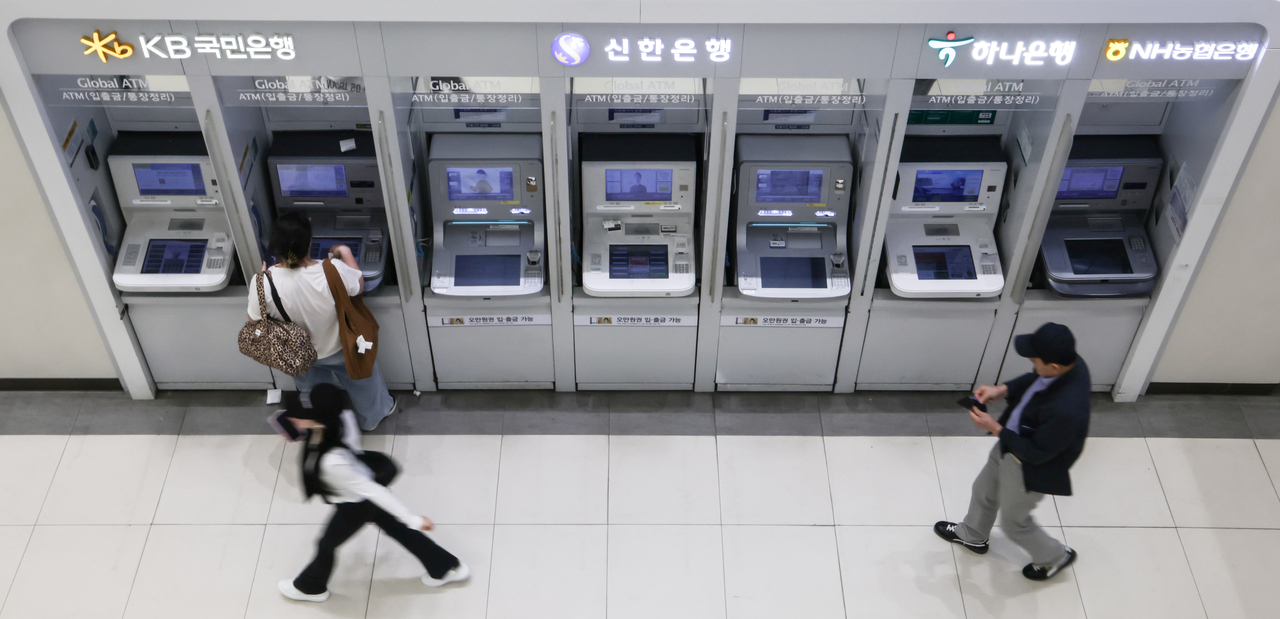
Domestic banks' non-performing loan ratio edged down in the third quarter, but the NPL ratio for loans to self-employed borrowers has risen 50% over the past two years. Asset quality is also deteriorating in vulnerable segments, including household credit loans and regional banks.
The NPL ratio — measured as the share of loans classified as "fixed or below" — stood at 0.62% at the end of September, down 0.01 percentage point from the end of the previous quarter, the Financial Supervisory Service said Thursday. The total outstanding balance of non-performing loans was 18.7 trillion won ($13.9 billion), a decrease of 200 billion won over the same period.
Newly classified NPLs in the third quarter totaled 5.3 trillion won, down 1.9 trillion won from the previous quarter, driven largely by a decline in new corporate loan impairments from 5.7 trillion won to 3.7 trillion won. Banks wrote off or otherwise resolved 5.4 trillion won in bad loans during the same period.
However, the NPL ratio for loans to self-employed borrowers continued to climb — from 0.57% at the end of last year to 0.66% at the end of March, 0.67% at the end of June and 0.72% at the end of September. Compared with 0.48% at the end of September 2024, the ratio has risen 50%.
The overall NPL ratio for corporate loans held steady at 0.77%, unchanged from the end of the previous quarter. The ratio for large-company loans fell from 0.53% to 0.50%, while the ratio for small and medium-sized enterprise loans edged up from 0.92% to 0.93%.
The NPL ratio for household loans remained flat at 0.33% from the end of the previous quarter. However, the ratio for other household loans — including credit loans — rose to 0.70%, marking a fifth consecutive quarterly increase. The NPL ratio at regional banks also climbed to 1.15%, up 0.23 percentage point from a year earlier.
The loan-loss coverage ratio — the level of provisions set aside against bad loans — also declined. The ratio fell to 139.8% at the end of September, its eighth consecutive quarterly drop. Regional banks fared particularly poorly, with their coverage ratio falling to 84.1%, down 31.7 percentage points from a year ago. All five regional lenders — Busan, Gwangju, Jeju, North Jeolla Province and Kyongnam Bank — posted ratios below 100%.
The Financial Supervisory Service said it sees a need to prepare for further credit risk expansion given the prolonged high-interest-rate environment and rising market rates. The regulator plans to guide banks to strengthen their loss-absorbing capacity — including capital buffers and loan-loss provisions — during year-end settlements and the preparation of next year's business plans. It also intends to encourage debt restructuring for vulnerable borrowers and the disposal of NPLs where recovery is unlikely.
Meanwhile, the delinquency rate on won-denominated loans at domestic banks continues its medium- to long-term upward trend. The rate stood at 0.59% at the end of September, down 0.10 percentage point from the previous month as banks cleared overdue loans at quarter-end, but it was still 0.07 percentage point higher than a year earlier. On a September basis, it is the highest level since 2016. Delinquency rates for corporate and household loans rose to 0.72% and 0.41%, respectively, up 0.11 percentage point and 0.02 percentage point from a year ago.
rim@heraldcorp.com





