20 Korean firms connected with local, neighboring-country buyers
Kazakhstan expands national health insurance coverage; Azerbaijan revamps drug pricing
K-medical, biotech sector eyes new market entry
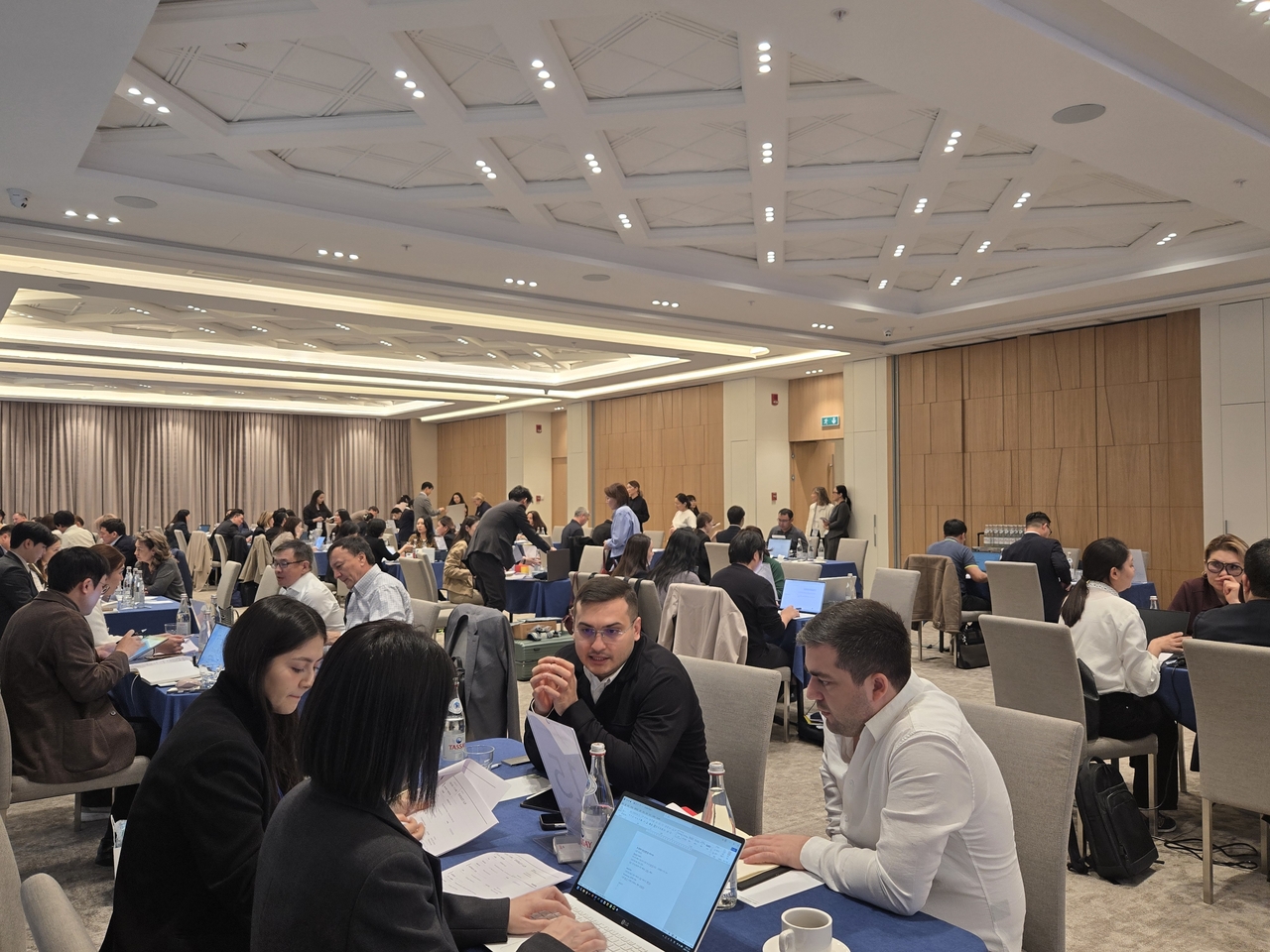
The Korea Trade-Investment Promotion Agency (KOTRA) announced Thursday that it co-hosted the Korea-Central Asia Biomedical Partnership event with the Korea Pharmaceutical Traders Association in Kazakhstan and Azerbaijan from Monday through Friday (local time).
The event was organized to diversify Korea's medical and biotech export markets beyond the United States and China. KOTRA aims to expand entry into the so-called "Caspian Belt" — countries along the Caspian Sea coast — using Almaty in Kazakhstan and Baku in Azerbaijan as hubs. The agency said the region relies heavily on imports of pharmaceuticals and medical devices and holds strong market growth potential. Economic cooperation between Korea and Central Asia has also been growing, with the first Korea-Central Asia Summit held in September.
The delegation included 20 Korean companies — among them Yuhan and Shinpoong Pharmaceutical in the pharmaceutical sector, and i-SENS and Suil Development in the medical device sector. The companies held 399 export consultations with 93 buyers from local markets and neighboring countries including Georgia, at sessions in Almaty on Tuesday and Baku on Thursday. They also received tailored consultations on product certification and licensing procedures from local regulatory specialists.
A Yuhan official said Central Asia is a market too promising to pass up, given its growth potential and import demand. "Thanks to KOTRA's local licensing consultations and advance buyer matching, we were able to quickly secure distribution channels and points of contact," the official said.
Korea's combined medical and biotech exports — pharmaceuticals and medical devices — reached $15.23 billion in the January-October period this year, up 12.8 percent from the same period last year. Of that total, pharmaceuticals accounted for $9.96 billion and medical devices for $5.27 billion. Pharmaceutical exports, which crossed the $10 billion annual mark for the first time last year, were approaching $10 billion again through October this year.
Kazakhstan is expected to see growing medical demand across all age groups — from mothers and infants to the elderly — as it maintains a relatively high birth rate while its older population also expands. Exports of finished pharmaceuticals to Kazakhstan surged 113 percent year-on-year in 2025 to $16.07 million, while medical device exports rose 26 percent to $59.84 million. The market is also expected to grow further as national health insurance coverage for medical devices and pharmaceuticals related to the diagnosis and management of chronic diseases such as diabetes has been expanded starting this year.
Azerbaijan, an oil-producing country, is seeing its healthcare market expand on the back of public hospital modernization and the growth of private medical institutions. The country's heavy reliance on medical device imports creates strong potential for Korean products that offer competitive pricing and quality. Changes to the pharmaceutical pricing framework taking effect this year are also expected to improve conditions for Korean drug makers entering the local market.
KOTRA and the Korea Pharmaceutical Traders Association have now run a Central Asia medical and biotech export delegation for two consecutive years. Last year, one participating company signed a pharmaceutical export contract worth $70,000. This year, Azerbaijan was added as a new destination, extending the program's reach to the broader Caspian Sea coastal market.
Sule Makseva, chief executive of Dolchepharma, a Kazakhstan-based distributor of medical devices and medical consumables, said the event gave her a chance to see firsthand the quality of Korean medical technology and innovative products and assess their distribution potential in the local market. "I would particularly like to expand our long-term partnership with Korean companies in medical devices and advanced medical materials," she said.
KOTRA President Kang Kyung-sung said K-medical and biotech products are emerging as a new engine of export growth that, alongside consumer goods, will carry Korea toward the $1 trillion export era. "We will do our utmost to support companies in raising export performance in emerging markets such as Central Asia by identifying suitable trading partners and navigating licensing requirements in line with opportunities arising from policy changes in host countries," he said.
eyre@heraldcorp.com