
Ministry of Interior and Safety selects 17 outstanding institutions in organizational culture and workspace innovation
Special local allocation tax grants of 300 million won to be distributed to winning local governments
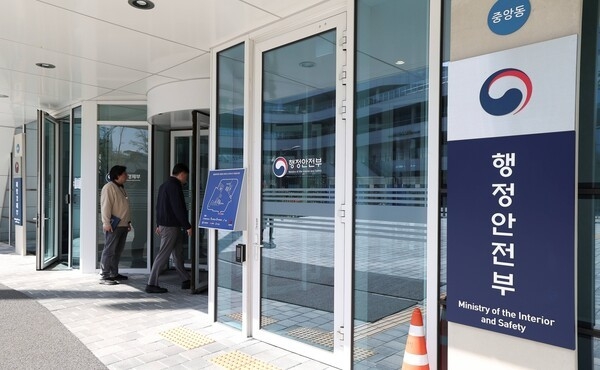
The Ministry of Interior and Safety held the "2026 Organizational Culture Improvement and Workspace Innovation Best Practices Competition" on Wednesday and selected 17 institutions that achieved outstanding results in organizational culture improvement and workspace innovation, the ministry announced Thursday.
A total of 101 cases were submitted across the two categories. Twelve institutions in the organizational culture improvement category and five in the workspace innovation category received ministerial commendations along with prize money of 28 million won ($20,800).
To encourage local governments to improve their organizational culture, the ministry plans to distribute a total of 300 million won in special local allocation tax grants on a tiered basis to local government winners in the organizational culture improvement category.
In the organizational culture improvement category, Seo-gu of the South Jeolla-Gwangju Special Metropolitan City took the top prize. The Ministry of Agriculture, Food and Rural Affairs, the Military Manpower Administration, the Korea Forest Service and Asan in South Chungcheong Province received excellence awards. The Ministry of Statistics, the Ministry of SMEs and Startups, the Ministry of Interior and Safety, Gangwon Special Self-Governing Province, Hanam in Gyeonggi Province, Dong-gu of the South Jeolla-Gwangju Special Metropolitan City and Cheongyang-gun in South Chungcheong Province each received encouragement awards.
Seo-gu, which took the top prize, connected employee suggestions to actual policy improvements through "Fun-On-Work 3.0," an innovation group led by civil servants born in the 1990s. Staff developed their own AI and work-automation tools and applied them to administrative tasks. An AI voice bot now handles 70 percent of after-hours complaint calls automatically, allowing the office to reduce its overnight duty roster from four staff members to three.
In the workspace innovation category, the Seoul Metropolitan Office of Education took the top prize for office space innovation, North Chungcheong Province received an excellence award, and the Ministry of Planning and Budget, the Korea Credit Guarantee Fund and Gyeryong Library each received encouragement awards.
The Seoul Metropolitan Office of Education built a new headquarters to overcome the spatial limitations of its previous building, which had been in use for about 45 years, and to create a work environment centered on communication and collaboration. The new facility minimizes partitions between departments, introduces a free-seating system that lets staff choose their seats based on the nature of their work, and expands the number of meeting rooms from 20 to 46. A book cafe and community spaces open to local residents were also added, realizing the concept of an open public office.
Gyeryong Library, which won in the universal design subcategory of workspace innovation, renovated its aging facility while incorporating user feedback gathered through resident surveys and town-hall meetings, reorganizing the space into an open layout that can be used freely according to age and purpose.
The ministry plans to compile and distribute a casebook of the best practices selected at this year's competition so that institutions at all levels can learn from and apply them, and to ensure that innovation results spread across the public sector as a whole.
Noh Hong-seok, director general of the ministry's Participatory Innovation and Organization Bureau, said the selected cases were "precious achievements earned through the consistent efforts of all members, including agency heads, to transform their organizational culture and working environment." Noh added that the ministry would "actively seek out more real-world best practices and spread them across the public sector to build a civil service that works well and is full of vitality."
thlee@heraldcorp.com





