Climate minister meets Jeju rental car industry to discuss EV transition support
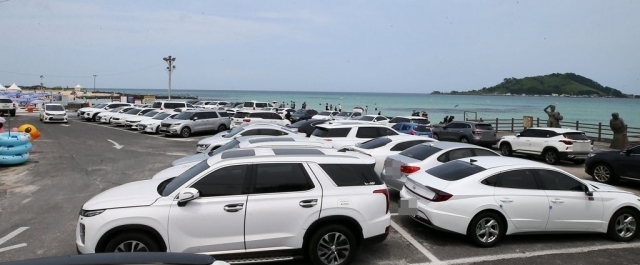
South Korea's Ministry of Climate, Environment and Energy said Thursday it would hold a meeting with the Jeju Special Self-Governing Province Rental Car Association and industry representatives at the Socar Terminal in Jeju's Dodu-i-dong.
The meeting was organized to assess on-the-ground conditions in the rental car sector as part of the government's push to cut greenhouse gas emissions from transportation and electrify commercial vehicles. The ministry said it particularly wanted to hear directly from rental car operators — whose vehicles log significantly more daily mileage than private cars — and to explore practical paths toward electrification.
According to the Korea Transportation Safety Authority, commercial passenger vehicles such as rental cars travel an average of 69.3 kilometers per day, more than twice the 30.9 kilometers logged by private vehicles. Each unit switched to an electric vehicle therefore delivers a substantially larger reduction in greenhouse gas emissions.
Jeju already leads the country in EV adoption, with electric vehicles accounting for 10.9 percent of all registered vehicles on the island — more than double the national rate of 4.7 percent. However, the share of EVs among rental cars on Jeju remains roughly on par with the national rental car average, pointing to the need for a stronger push toward electrification in that segment.
At Thursday's meeting, the ministry planned to share its support strategy for making electric rental cars more accessible to consumers by lowering rental fees and improving charging convenience.
The ministry currently provides an additional subsidy of up to 1.8 million won ($1,340) on top of the standard purchase subsidy for electric vehicles bought for rental or lease use.
Starting next year, the ministry plans to extend its conversion subsidy — paid when operators replace an internal combustion engine vehicle with an EV — to the rental and leasing sector as well, with the aim of easing vehicle purchase costs for the industry and encouraging lower rental rates.
The ministry also said it would present plans to improve charging infrastructure tailored to rental car usage patterns, including a proposal to develop a shared EV charging hub for rental cars on state- and publicly owned land near Jeju Airport, and would refine those plans based on industry feedback.
"Rental cars, which cover long distances each day, are a sector where switching to electric vehicles delivers significant greenhouse gas reductions," Climate, Environment and Energy Minister Kim Sung-hwan said. "We will ease the vehicle purchase burden on the rental car industry and improve charging convenience to accelerate the transition to electric rental cars, starting with Jeju."
thlee@heraldcorp.com