
8,300 metal detectors distributed to 319 Seoul high schools
At least 2 proctors required per period; teacher training ordered
Teachers union: 'Not enough staff — clear dispute procedures needed'
Education Ministry: 'Committed to fairness and easing school burden'
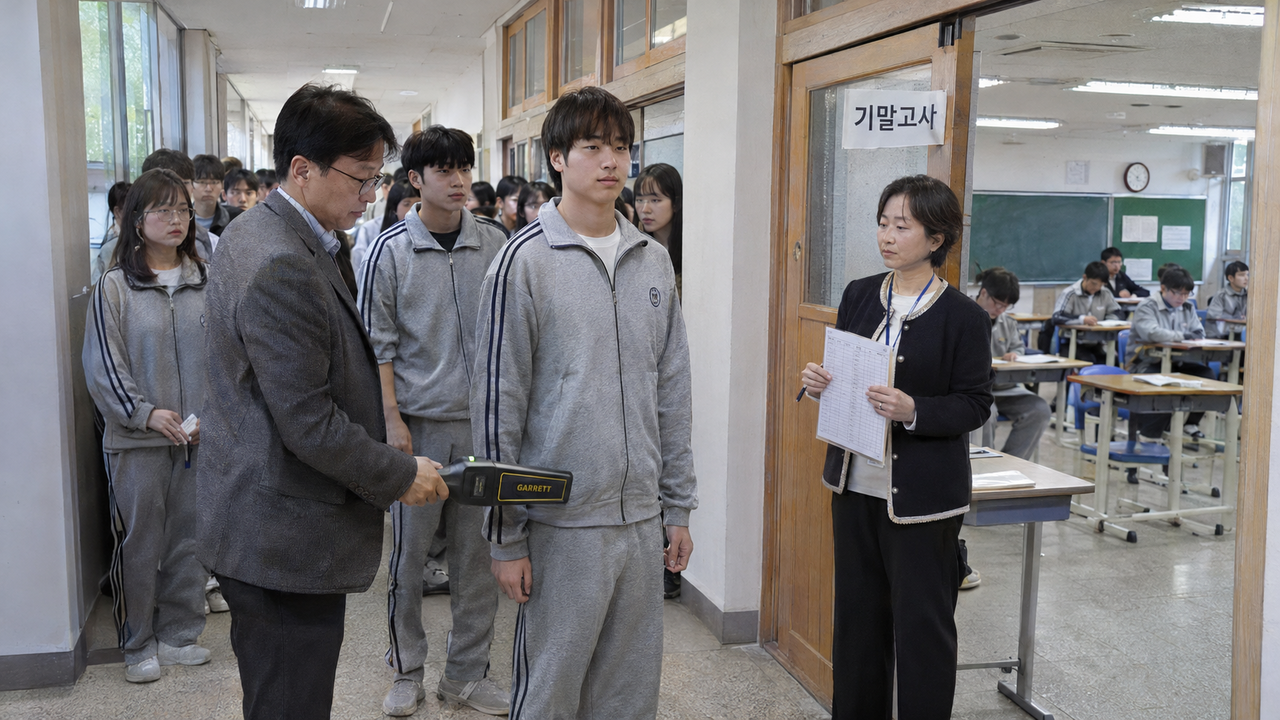
The introduction of mandatory metal-detector screening at high school final exams has thrown schools into turmoil. The measure is designed to prevent cheating with smart devices, but schools must scramble to secure screening personnel and obtain consent from students and parents before exams begin.
The Seoul Metropolitan Office of Education said Thursday it had notified schools of tightened exam supervision guidelines in line with the Ministry of Education's "exam management precautions for preventing cheating with smart devices." The office plans to purchase metal detectors in bulk and distribute one per classroom to all 319 high schools under its jurisdiction.
The move follows the ministry's presentation of its "measures to address grade-manipulation cheating" at a Cabinet meeting on Tuesday. Metal-detector screening will apply starting with second-semester final exams at high schools this year. Third-year students, whose exams are already under way, are exempt from some of the requirements, while middle schools have been told to refer to the high school guidelines and strengthen supervision as their circumstances allow.
Metal detectors in every classroom; 2 or more proctors every period
Schools holding final exams from late this month and next month will collect all electronic devices — mobile phones, smartwatches and the like — at the start of each exam day. Students must store all belongings except study materials and black pencils in bags kept at a separate location away from the exam room. The school will supply computer-marking pens and ballpoint pens.
Metal-detector screening will be conducted on all students — either before they enter the exam room or immediately after the exam — with prior consent from students and parents. Students who leave to use the restroom and re-enter, or those suspected of cheating, will be screened separately by a hallway proctor.
School Wi-Fi will also be disabled on exam days. Hallway proctors will use an app to monitor for Wi-Fi and Bluetooth signals. If an anomalous signal is detected, all students in the relevant exam room will undergo additional screening.
Students will sit their exams in a classroom other than their own. At least two proctors — a lead and an assistant — will check clothing, glasses and writing instruments at the start of every period. Students are advised to wear gym clothes or casual clothing without buttons; those wearing buttoned garments must cover the buttons with stickers.
The Seoul Metropolitan Office of Education plans to purchase about 8,300 metal detectors in bulk for the 319 high schools, providing one per classroom. The office will hold remote training Thursday for all department heads responsible for exam administration at high schools. Individual schools have also been instructed to immediately conduct teacher training and student education sessions.
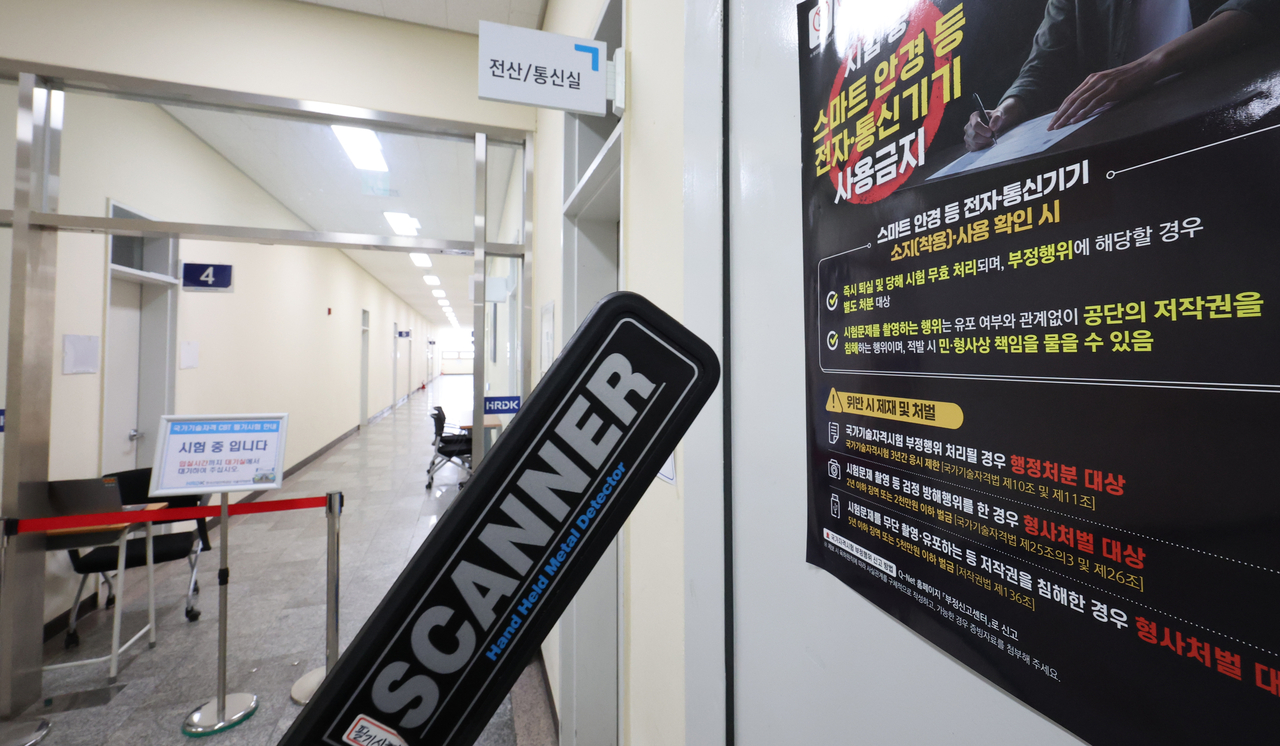
Teachers unions: 'Handing out equipment isn't enough — sort out staffing and dispute procedures first'
Even with the equipment in place, however, the policy has clear limits: universal screening cannot be enforced without prior consent. If students or parents refuse on human-rights grounds, the screening cannot proceed.
A teacher at a high school in the greater Seoul area said the authorities had delegated screening responsibility to schools without specifying how the process should be standardized. "Some schools will screen each student thoroughly, while others may end up doing a quick check because they lack the staff and time," the teacher said. "The education authorities need to provide specific procedures so that students at every school are screened to the same standard."
Teachers' organizations said the policy simply piles more burdens onto schools. The Korean Federation of Teachers' Unions said clear rules were needed on how to handle students who refuse screening and who would be responsible if the fairness of the screening process were challenged. "On top of collecting consent forms, schools will now have to manage the conflicts that arise from inconsistent screening methods," the federation said.
The federation also raised questions about the effectiveness of the screening and the availability of qualified personnel. "A metal detector finds metal — it cannot identify recording or communication functions," it said, calling on authorities to verify how reliably the devices can detect smart glasses and ultra-compact gadgets, and to provide trained specialists.
The federation added that the new requirements compound the complexity already created by the high school credit system, under which students and exam rooms change with every subject. "Checking clothing and glasses, running metal-detector screening and monitoring wireless signals have all been added on top of that," it said. "Space to store hundreds of bags, staff to manage them, and time to move and retrieve them are all needed."
Tougher disciplinary penalties are another source of concern. The ministry has recommended that students caught cheating with smart devices receive a zero on all subjects for that day, with punishments ranging from a minimum suspension to expulsion for high school students. The federation said precise rules governing those penalties are essential.
The federation called on authorities to "immediately review the blanket application of guidelines whose feasibility in the field has not been verified" and demanded that the government take direct responsibility for securing the equipment, trained personnel and budget that schools can actually use.
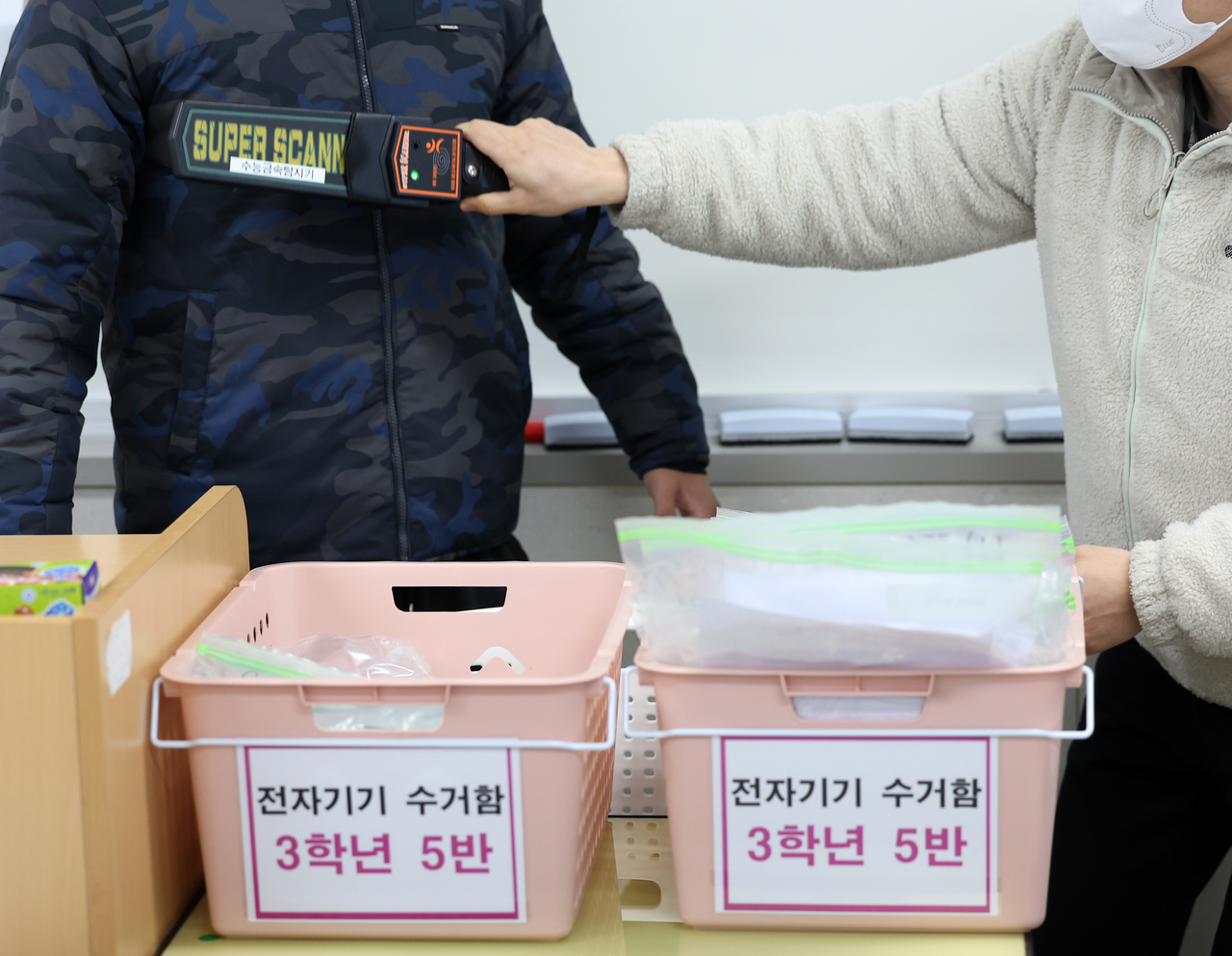
Education Ministry: 'Guidelines and forms provided; existing rules apply if school regulations can't be revised in time'
The Ministry of Education said Thursday it was supporting schools in their exam preparations. Along with an official circular, the ministry said it had provided a step-by-step exam operations checklist, a parent-and-student notice for distribution to households, and instructions on how to use a Wi-Fi detection app for hallway proctors.
Equipment shortfalls will be addressed through additional purchases and rentals. Regional offices of education currently hold about 8,300 metal detectors nationwide. The 16 regional offices plan to purchase about 12,000 more ahead of first- and second-year high school final exams scheduled for the first and second weeks of December.
Schools short on equipment will be able to borrow devices from local public institutions such as the Korean National Police Agency or share them with nearby schools. Regional offices of education will also distribute equipment to schools before exams and collect it afterward.
The ministry also clarified that schools do not need to complete revisions to their school regulations before applying the tougher disciplinary standards. Noting that amending academic performance management rules and school regulations takes about a month, the ministry said schools should handle violations strictly within the scope of existing rules until the revisions are complete.
"We will continue to work closely with regional offices of education to uphold the fairness of school-based assessments and ease the burden on schools," a ministry official said.
brunch@heraldcorp.com





