City to form 'Ulsan child care model council' by year's end
Policy development, budget support aimed at stable operations
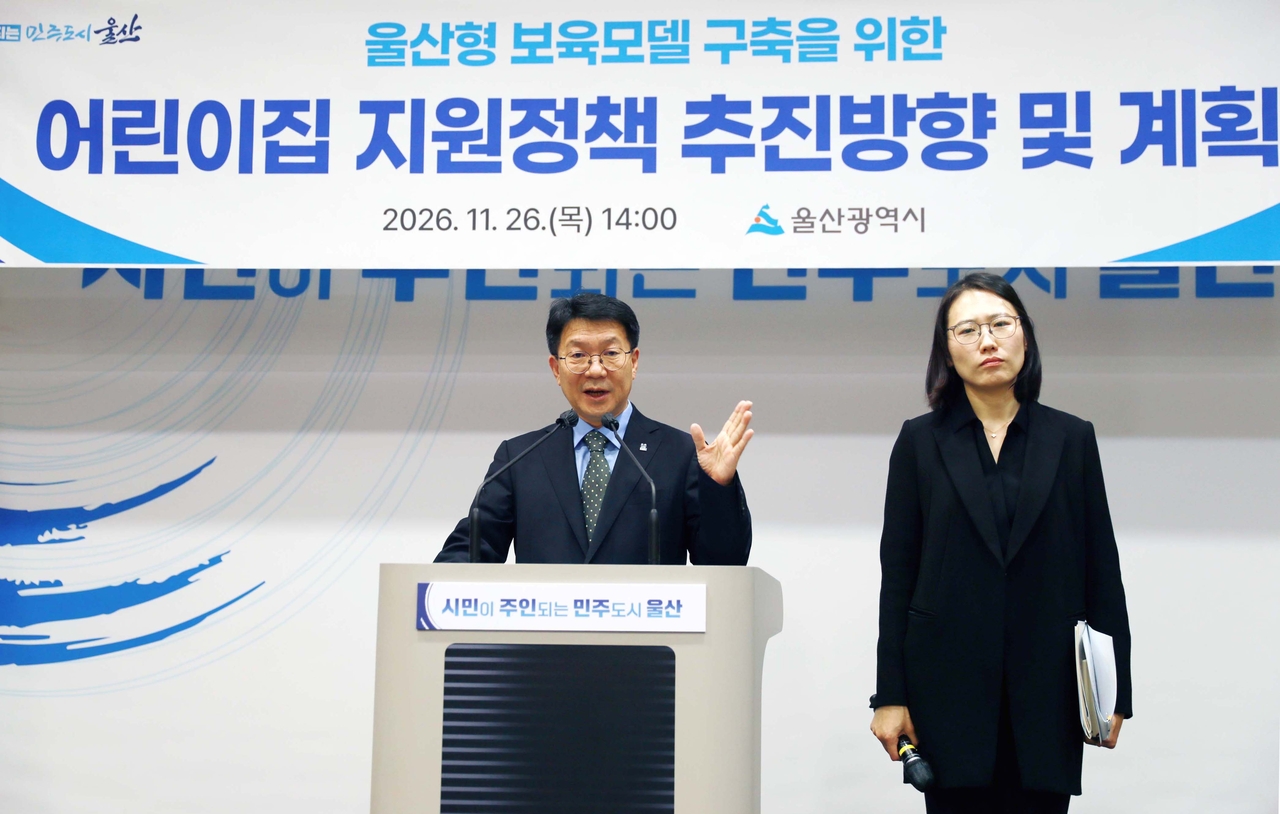
The city of Ulsan has launched a support initiative to ensure the stable operation of child care centers, fulfilling a campaign pledge from the ninth directly elected city administration to develop an "Ulsan child care model."
Ulsan Deputy Mayor for Economic Affairs Shin Min-sik announced Thursday at the city hall press center that the city would form an "Ulsan child care model council" by the end of this year to develop concrete support measures tailored to local conditions.
Child care centers in Ulsan are currently struggling with operational difficulties stemming from a declining birth count, regional imbalances in the supply and demand of child care facilities, children transferring to kindergartens, and an unstable supply of child care teachers.
The number of births in Ulsan fell at an average of 447 per year over the past four years — from 6,617 in 2020, to 6,127 in 2021, 5,399 in 2022 and 5,082 in 2023 — before recovering to 5,282 in 2024 and 5,574 in 2025, a gain of 292 last year.
When a child care center closes, commuting distances grow and the burden on parents increases. In response, Ulsan established the Decentralization and Population Policy Bureau and a dedicated low birth rate response division last August, and has now moved to form the child care model council.
The council will comprise 65 members drawn from six types of child care centers — national and public, social welfare corporation, corporation and organization, workplace, home-based, and private — along with parents and experts, and will discuss support measures to ensure their stable operation.
The city will incorporate the council's agreed proposals into policy and budget decisions, and aims to strengthen the child care foundation by securing legal and procedural legitimacy, developing measures acceptable to all six types of child care centers, ensuring equity with other care-sector workers, building public understanding and acceptance, and pursuing policies that are sustainable within budget constraints.
"We will support the stable operation of child care centers so that children can grow up safely and close to home, from the perspective of parents," Shin said at the press conference.
cityblue@heraldcorp.com