
Korean-style hair and makeup now taught at Japanese beauty schools as K-pop interest drives demand for training
'Combine Korea's speed with Japan's service,' says Lee — but licensing and visa rules remain hurdles
"They are learning Korean-style hair and makeup with remarkable enthusiasm — there are even dedicated hallyu departments now."
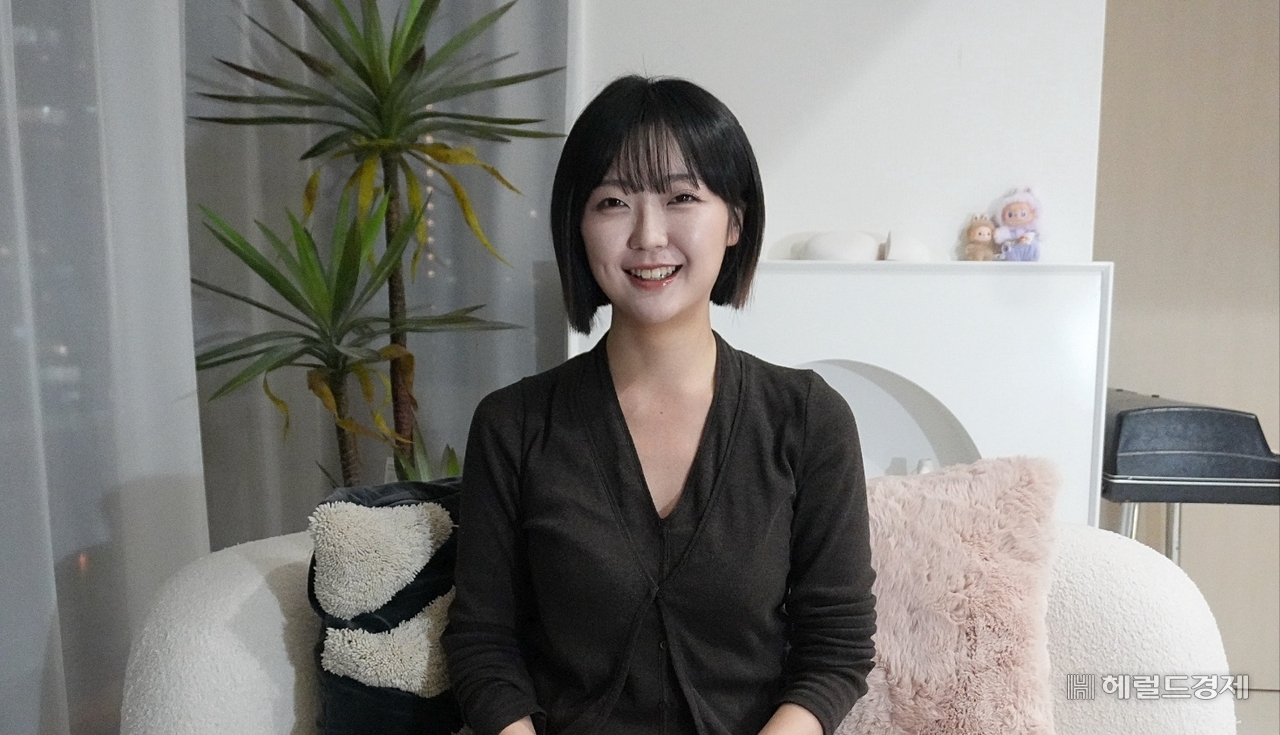
Lee Hyun-ji, the head of LEVRES who works as a hair and makeup artist and educator in Japan, described the shifting landscape of beauty education there in a written interview. On top of the longstanding flow of Korean beauty professionals traveling to Japan to learn techniques, Lee said a clear reverse movement has emerged — Japanese students and professionals are now actively seeking to learn Korean-style beauty.
Lee entered the beauty industry in 2016 and currently runs a mobile hair, makeup and wardrobe team in Japan while also teaching at a beauty vocational school's hallyu department.
Lee handles hair, makeup and wardrobe for the Japanese and overseas tours of numerous Korean artists — including BoA, OrBIT, TrES, Gyubin, Kim Jae-joong and Boyfrend — while simultaneously teaching students.
Lee noted that Korean students who studied beauty in Japan in the past focused primarily on hair techniques. Today, makeup education in Japan has branched into specialized tracks covering art, fashion, beauty and hallyu, and the "omotenashi" culture of attentive, detail-oriented customer care continues to shape both education and service, Lee said.
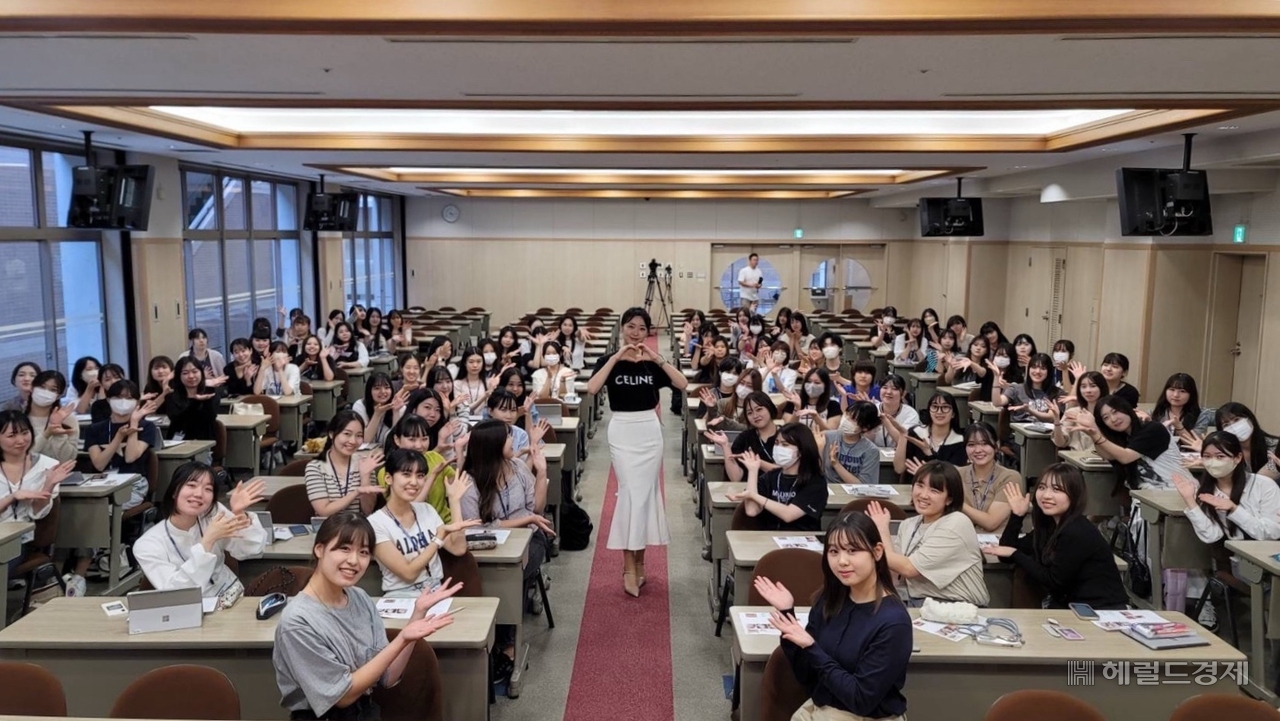
Interest in K-beauty is now being reflected in school curricula as well.
Through the hallyu department at Vantan Design Institute, students learn Korean-style hair and makeup techniques and the Korean language, and are guided toward study programs in Korea. Tokyo's Belleepoque Beauty College also teaches K-pop artist makeup as part of its hair and makeup program.
Lee said the changes on the ground go beyond simply copying Korean styles. "Even professionals who do not specialize in Korean-style hair and makeup show a broadly high level of interest," Lee said. "In Japan's industry, a fused Korean-Japanese style is carving out its own space, and more people are gravitating toward it."
The way people learn is also changing. The biggest factor, Lee said, is social media. Trends and techniques can now be absorbed quickly without traveling abroad, and short-term courses and special lectures — where educators travel to the students — have multiplied. "Over the past three years, there has been a noticeable increase in educators traveling on-site to deliver short professional training sessions and special lectures," Lee said. "Younger generations have been exposed to K-beauty from an early age through K-pop, and they are showing interest in studying in Korea too." Lee added that a reverse trend has also taken hold, with Koreans seeking out local hair styling experiences while traveling in Japan.
Still, it is difficult to conclude from these observations that the overall number of Korean beauty students studying in Japan has declined. Lee said the sense from the educational settings Lee has encountered is that the number of foreign beauty students has fallen, but offered no school-by-school or nationality-by-nationality figures to support that impression. Lee also said the weak yen has not been strongly felt as a factor in beauty study-abroad decisions on the ground.
On the differences between Japanese and Korean makeup, Lee emphasized distinct strengths rather than any hierarchy. Judged by broadcast and wedding makeup standards, Japan excels at customer service and meticulous finishing techniques, while Korea's strengths lie in speed, rapid trend adoption and the ability to highlight the features a client most wants to enhance.
"Korea is fast at picking up and expressing trends, while Japan places great importance on service and customer care," Lee said, advising Korean artists who want to work in the Japanese market to prepare beyond technical skills alone. Even where demand for Korean-style makeup exists, Lee said, building competitiveness requires mastering the way clients are received and their concerns attended to.
Demand in Japan for learning K-beauty is expanding beyond students to working professionals and general clients, Lee said. Lee described a training program run by a professor who previously held Lee's teaching role — one that brought Korean makeup artists to Japan and combined on-site lectures, brand collaborations and model shoots.
"I participated once with my staff, and the Japanese attendees learned with real passion while the Korean instructors tried to share every last thing they knew," Lee said. "The process of meeting in person, learning techniques, creating work together and exchanging ideas was genuinely impressive."
Lee said studying abroad and working locally in Japan should be evaluated separately. For those who plan to settle and build a career in Japan, gaining experience in local foundational training and service culture can be valuable. But for those who intend to return to Korea soon after, the time and cost need to be weighed carefully. For Koreans who want to work with Japanese clients in Korea, Lee suggested studying the language and customer service approach independently as an alternative.
Licensing and visa status are conditions that must be confirmed at the actual stage of entry. According to Japan's Ministry of Health, Labour and Welfare, sitting for the national cosmetologist examination requires completing a curriculum at a designated training institution — at least two years for standard day or evening programs, and at least three years for correspondence courses. Obtaining a license and securing a visa status that permits employment are separate matters, and Tokyo's program for developing foreign cosmetologists also involves procedures including hiring, approval of a training plan and a change of visa status.
Lee predicted that K-beauty will establish itself even more firmly as a distinct genre in Japan over the next five years. At the same time, Lee noted that Chinese influencer-driven makeup and color cosmetics are also advancing rapidly, and said the scope of exchange needs to broaden beyond the Korea-Japan comparison.
"For K-beauty — which is quick to absorb and apply new ideas — to grow more internationally, we need to build systems that allow us to learn from each other's strengths not only with Japan but also with the Chinese-speaking world and beyond," Lee said.
Toward the end of the interview, after discussing shifts in technology and the market, Lee turned to what beauty means at its core — finding its essence in the relationships between people.
"Beauty is a warm profession that can make someone feel confident and let them shine. Even in the age of AI, I hope more people come to feel the value of this work — one that allows you to share so much with another person."
sjkim@heraldcorp.com





