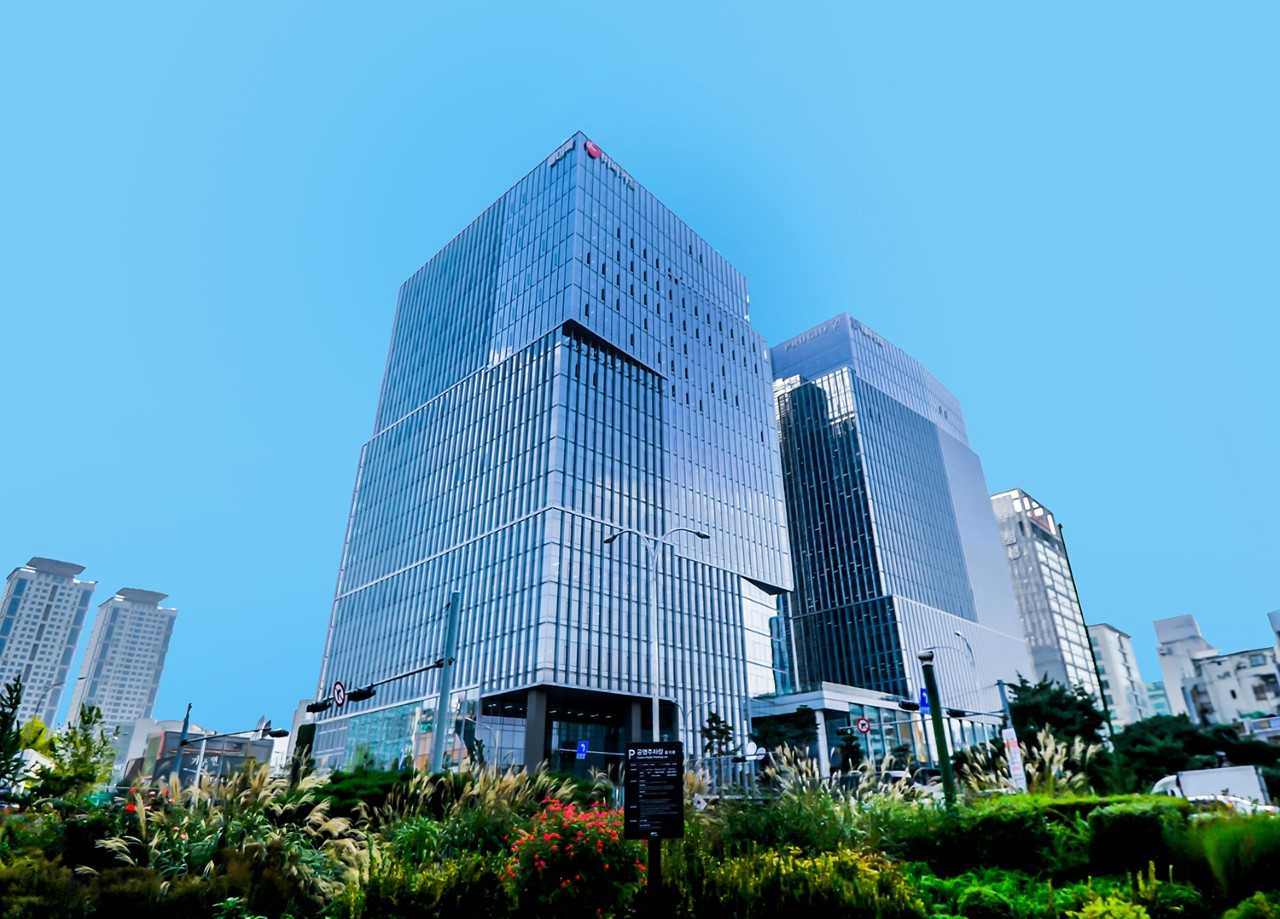
2,191 apartments, 125 officetels — all units 84 sq. m.
Special supply on Dec. 7; staggered announcement dates allow up to 3 applications per person
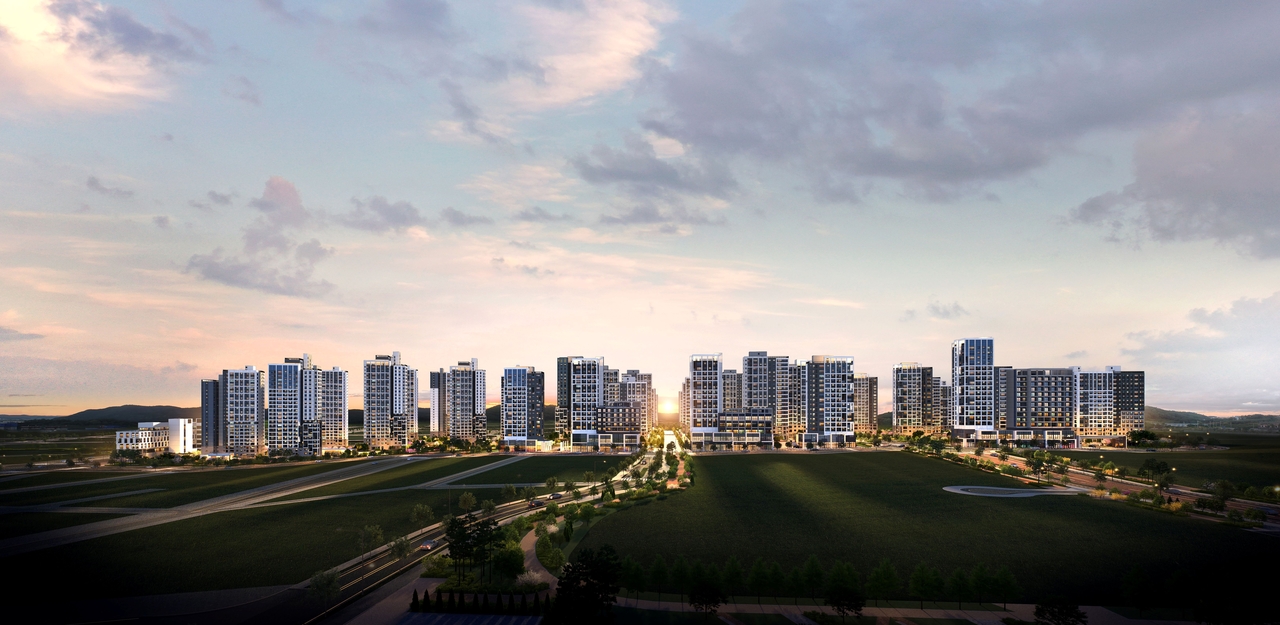
Sejong Smart City El Sujaein, the first large-scale residential complex in the Sejong Smart City national pilot zone, opens its model home Friday and launches pre-sales. The complex is the first major housing supply in the pilot zone's leading district and will sit within a "Smart Living Zone" planned to offer services including car-sharing, smart parking and patrol robots.
The development spans four blocks in the Hapgang-dong 5-1 residential district of Sejong — Block 16 (6BL), Block 24 (7BL), Block 26 (8BL) and Block 28 (11BL) — and will comprise 2,191 apartments and 125 officetels for a total of 2,316 units. Sejong Smart City Co., a special purpose company (SPC), is the project developer, and BS Hanyang is the contractor. The apartment buildings will rise up to 27 stories above ground with two basement levels across 36 buildings, and every unit will have an exclusive use area of 84 square meters. By block, the breakdown is 818 units in Block 16, 648 in Block 24, 218 in Block 26 and 507 in Block 28.
The subscription schedule calls for special supply on Dec. 7, first-priority applications on Dec. 8 and second-priority on Dec. 9. Winners will be announced in stages — Blocks 16 and 24 on Dec. 15, Block 28 on Dec. 16 and Block 26 on Dec. 17 — with formal contracts signed by block between Dec. 27 and Dec. 31.
The site is public land subject to the price ceiling on new apartments. Because it falls outside a regulated zone, the resale restriction period is one year and there is no mandatory residency requirement. Applicants who have continuously lived in Sejong since before Nov. 27, 2025, may apply as local residents; those who have lived in Sejong for less than a year, or who reside elsewhere in the country, may apply as non-local residents. Because winner announcement dates differ across blocks, applicants may submit multiple entries — up to three per person under the general supply category. The intended approach is to apply to one of Blocks 16 or 24 (which share an announcement date), plus Block 26 and Block 28 separately; if a person wins in more than one block, the result from the block with the earlier announcement date takes precedence.
Each unit type features a customized floor-plan design. The 84A and 84B types adopt a four-bay flat-slab layout with cross-ventilation, an entryway pantry and a walk-in closet in the master bedroom. The 84A, 84B and 84C series include a movable partition between the second and third bedrooms, allowing residents to keep them separate or open them into a single larger room. The 84D type places two children's rooms side by side and positions the master bedroom across the hallway, creating a clear separation between the children's and parents' spaces. Terrace-style units will also be available in select homes.
From the complex entrance to individual units, a "Sujaein Smart Zone" will incorporate fine-dust-reducing tree species, mist sculptures, elevator air-purification devices and an automatic air-quality ventilation system. Community amenities — distributed across the blocks — will include a fitness center, a golf practice range, a Pilates room, a small library, a study cafe, a shared office and a children's cafe. Block 26's Building 2602 will feature a sky lounge on the 17th floor with a lounge area and rooftop garden.
The Sejong 5-1 residential district was designated a Smart City national pilot zone in January 2018. The project covers roughly 2.744 million square meters around Hapgang-dong and will integrate residential, commercial and office facilities with advanced urban services. The leading district is divided into a residential-focused Smart Living Zone (about 176,000 square meters) and an Innovation Venture Startup Zone (about 178,000 square meters) geared toward business and startup support. The Smart Living Zone is planned to offer mobility services — an integrated mobility platform, personal mobility options, car-sharing and smart parking — as well as lifestyle innovation services such as luggage-carrying robots and patrol robots. These services will be built and operated separately by the project developer as part of the national pilot zone's smart city construction program.
The location also offers strong live-work proximity. The 5-1 district sits between Government Complex Sejong and the Myeonghak Industrial Complex. Samsung Electro-Mechanics' Sejong plant in the Myeonghak complex is planning a 4.27 trillion won ($3.18 billion) expansion of its semiconductor package substrate (FC-BGA) production facilities. Forty-four central government agencies and affiliated bodies currently based in the greater Seoul area — with a combined authorized headcount of 9,929 — are also scheduled to relocate to Sejong in phases between 2027 and 2031. The presidential Sejong office is targeted for completion in August 2029, and the National Assembly's Sejong chamber is set to open in the second half of 2033.
"This is the first large-scale residential complex to debut in the national pilot zone's leading district — a development that layers smart-service-based living onto Sujaein's residential spaces," a sales official said.
Meanwhile, the Korea Research Institute for Human Settlements' consumer sentiment survey on the real estate market for October showed Sejong's housing transaction sentiment index rose 7.8 points from the previous month to 133.1, surpassing Seoul's reading of 129.6.
hwshin@heraldcorp.com