11 jurisdiction dispute cases filed at Constitutional Court as of November
Annual record of 12 set in 2009 could be broken before year's end
PPP files disputes over re-nomination demand, 'fabricated indictment' special prosecutor act
Active prosecutors also turn to court over prosecution-reform legislation
Two public hearings held this year, both on court petition cases
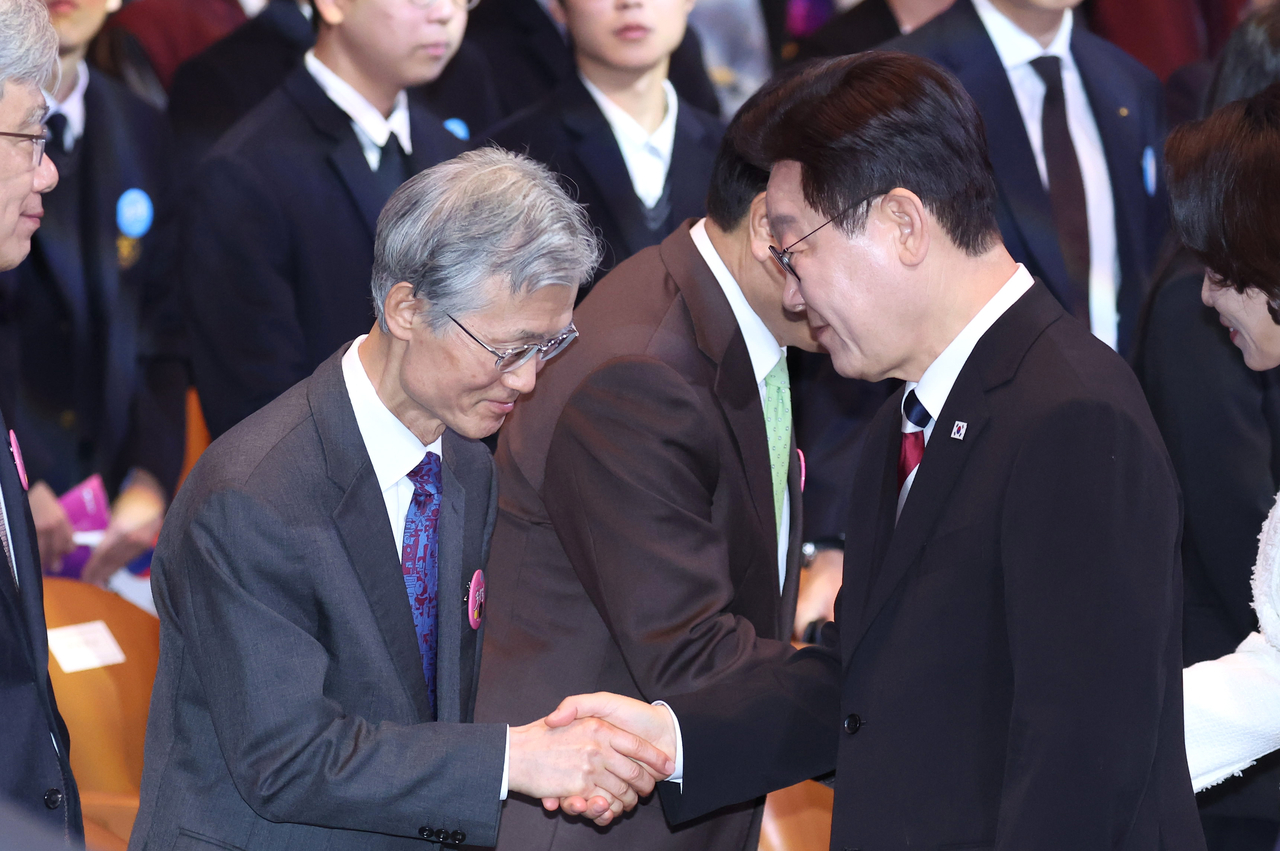
President Lee Jae Myung's demand that Chief Justice Jo Hee-dae re-nominate a Supreme Court justice candidate, the ruling camp's prosecution-reform legislation in the National Assembly, and the handling of a special prosecutor act tied to Lee's own criminal cases — the sharpest political fault lines of the year are now queued up as jurisdiction dispute cases before the Constitutional Court. Observers say the pattern reflects a broader "judicialization of politics," with constitutional institutions choosing to seek a judicial winner rather than resolve conflicts through compromise.
Rulings on each case, however, are unlikely to come quickly. Not a single public hearing — a prerequisite for a ruling on the merits in jurisdiction dispute proceedings — has been held this year, and the chances of one being scheduled before year's end are slim. Most of the cases are expected to carry over into next year.
As of Friday morning, the Constitutional Court had received 11 jurisdiction dispute cases this year — matching the second-highest annual tally since the court was established in 1988, a figure last reached in 2005. One more filing before year's end would tie the all-time record of 12 set in 2009; two more would break it.
This year has been notable for the sheer number of political and legal disputes that have escalated into formal cases. Every case filed involves a question about where the boundaries of authority between state institutions lie.
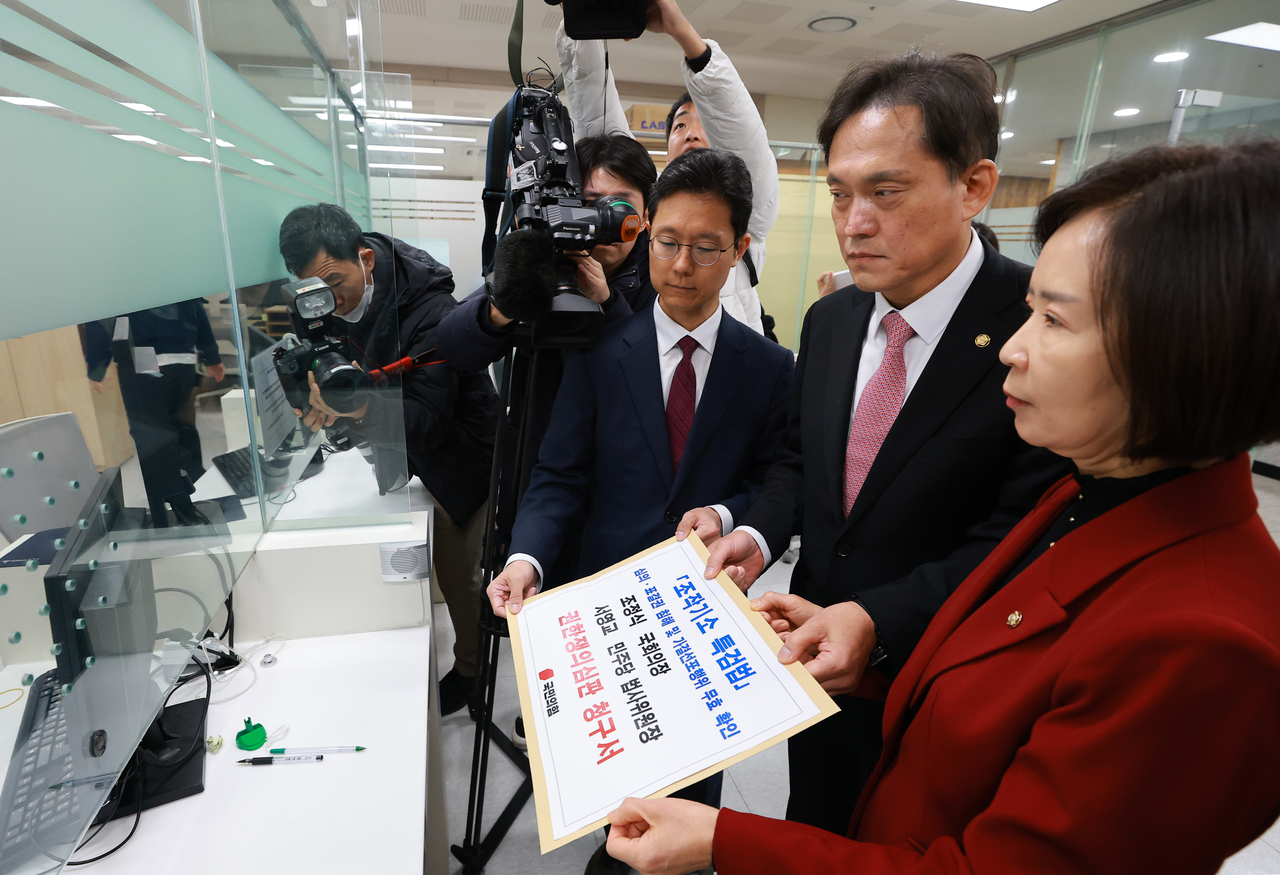
Disputes over the president's appointment powers and the Assembly's legislative and procedural authority have been particularly prominent. People Power Party lawmakers filed a jurisdiction dispute petition against President Lee in September, arguing that his demand that Chief Justice Jo re-nominate a Supreme Court justice candidate infringed on the Assembly's right to consent to judicial appointments.
The same lawmakers filed another petition Monday, naming National Assembly Speaker Jo Jeong-sik and Legislation and Judiciary Committee Chair Seo Yeong-gyo as respondents, alleging that their constitutional right to deliberate and vote on legislation was violated when the Democratic Party of Korea pushed the fabricated-indictment special prosecutor act through a plenary session. Separately, People Power Party Assembly member Lee Jin-suk and others filed a petition on Oct. 15 against Science, Technology, Information, Broadcasting and Communications Committee Chairman Song Gi-heon after the committee voted to exclude Lee from a Korea Communications Commission national audit. The Constitutional Court partially granted Lee's accompanying request for a stay of that decision.
In an unusual development, sitting prosecutors also filed jurisdiction dispute petitions against the Assembly over the ruling camp's prosecution-reform legislation. In May, Seoul High Prosecutors' Office prosecutor Song Yeon-gyu — now with the Seoul Metropolitan Public Prosecution Office — asked the court to rule on whether the establishment of a new public prosecution office and a serious crimes investigation agency, along with a new criminal provision penalizing the distortion of law, were unconstitutional. In September, Oh Se-hyeon, a prosecutor at the Yeongwol branch of the Chuncheon District Prosecutors' Office — now the Yeongwol branch of the Chuncheon District Public Prosecution Office — filed a petition challenging amendments to the Code of Criminal Procedure that abolished prosecutors' direct and supplementary investigative powers. In a post on the prosecutors' internal network, Oh wrote: "I filed the jurisdiction dispute petition and a request for a stay not out of any grand sense of justice or passion, but merely because I wanted to resolve lingering questions I had about the amended Code of Criminal Procedure."
Under the Constitutional Court Act, the court must hold oral arguments before ruling on whether a petitioner's claimed infringement of authority actually occurred. An exception applies when a petition is procedurally defective and the defect cannot be remedied — in that case the court may dismiss it without a hearing.
From 2021 through last year, the Constitutional Court held public hearings on jurisdiction dispute cases at least twice annually. This year, not a single hearing date has been set. A court official said the delay appeared to reflect ongoing internal review of the admissibility requirements for the filed cases. Given that the court typically notifies parties of a hearing date one to two months in advance to allow time to prepare written arguments, scheduling a hearing before the end of the year is not realistically feasible.
The two public hearings the court did hold this year were both in court petition cases — a category introduced in March. The first, on Oct. 21, involved attorney Kim Yeong-su, who had been subjected to a search and seizure as a witness during the investigation into the death of late Master Sergeant Lee Ye-ram and challenged the court's failure to provide a copy of the search warrant. Two days later, on Oct. 23, the court heard a case involving GC Biopharma's vaccine bid-rigging. Court petitions are a form of constitutional complaint decided in principle on written submissions, though the court may hold a hearing when it deems one necessary. A public hearing in a court petition filed by a wheelchair user with a physical disability is scheduled for Jan. 14.
yg@heraldcorp.com