
Over 3 years of preparation for China rebound
'Must change everything from specs to standards'
Expanding ties with CATL, Momenta and other local firms
Mass-production development of Ioniq Earth underway
'Hydrogen policy must be pursued with consistency'
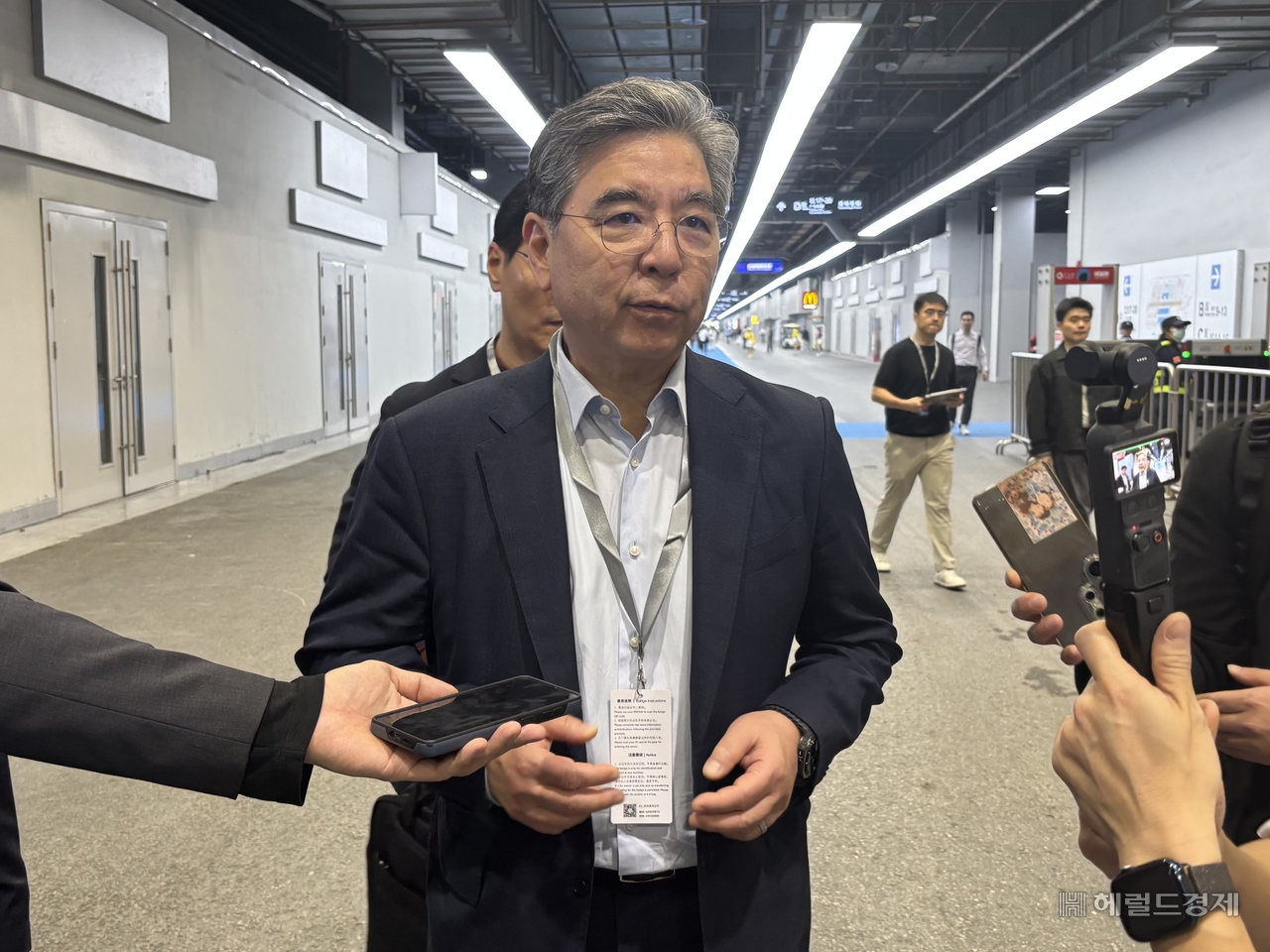
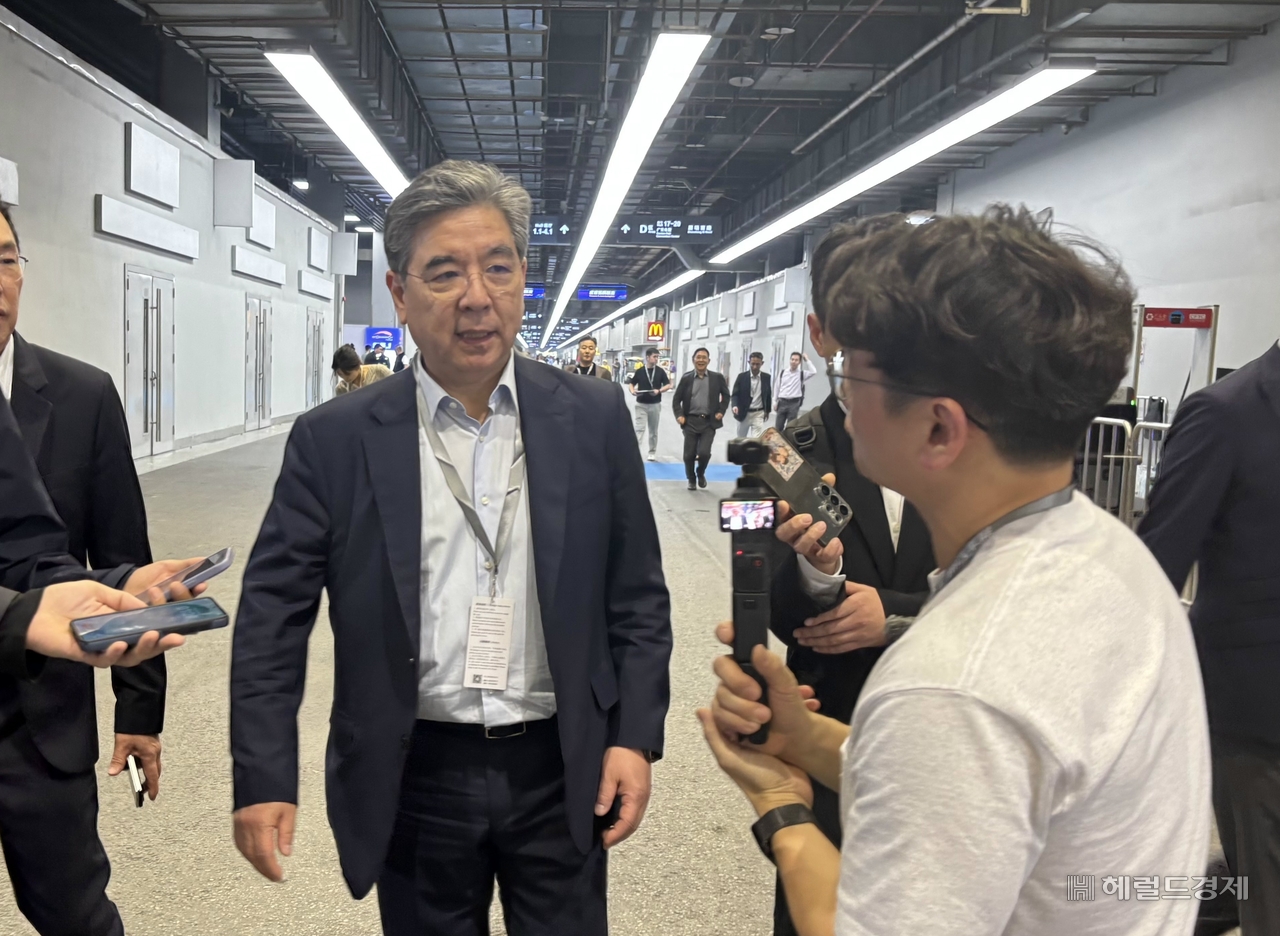
Hyundai Motor Group Vice Chairman Jang Jae-hoon said Friday that the company faces a roughly 30 percent cost gap with Chinese automakers and pledged to close it as much as possible within three years. The strategy involves a wholesale review of vehicle development methods, specifications and standards to build cost competitiveness, while differentiating through brand value and sales and service quality.
Speaking with reporters at the 2026 Guangzhou International Motor Show, Jang said the company estimates a cost difference of "about 30 percent" compared with Chinese rivals. "We have set specific cost-reduction targets," he said. "Within the next three years, we will do as much as we can to narrow the gap."
He added that the company has long operated with the conviction that "we cannot win unless we change everything — from specifications to standards," and said he would soon disclose specific cost-reduction targets and a plan for strengthening competitiveness in the Chinese market.
Chinese automakers have built cost advantages by leveraging economies of scale from their vast domestic market and tapping local supply chains for batteries and electronic components. As price competition intensifies, particularly in the electric vehicle segment, global automakers including Hyundai Motor have found their footing in China increasingly difficult.
The scale of Hyundai Motor's retreat in China is stark. Beijing Hyundai sold about 1.14 million vehicles annually in China in 2016, but its domestic sales fell from 27,000 units in the first quarter of this year to just 9,303 units in the third quarter.
To rebuild cost competitiveness and local product appeal, Hyundai Motor has been deepening collaboration with Chinese companies — shifting away from adapting global models for the Chinese market toward integrating local technology and supply chains from the earliest stages of vehicle development.
The Ioniq V electric sedan, launched in China in September, runs on a platform co-developed with joint-venture partner Beijing Automotive Group. Its battery was supplied by CATL, while Momenta handled the advanced driver-assistance system.
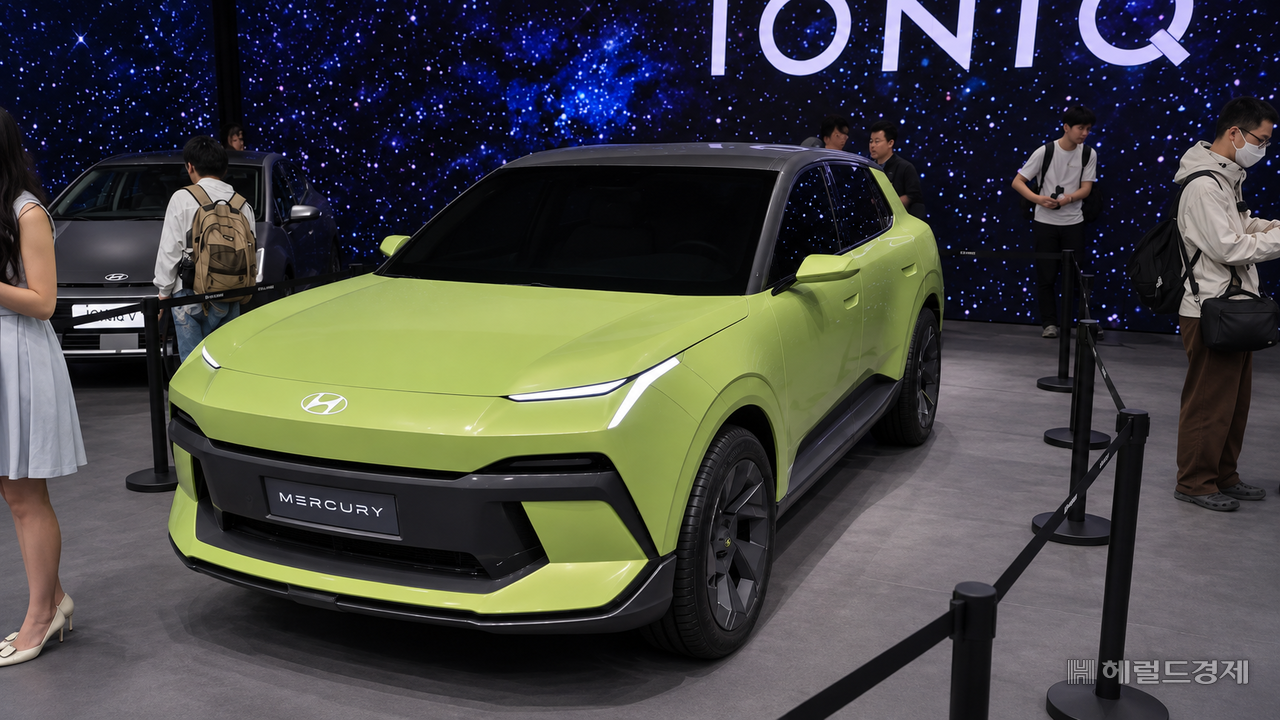
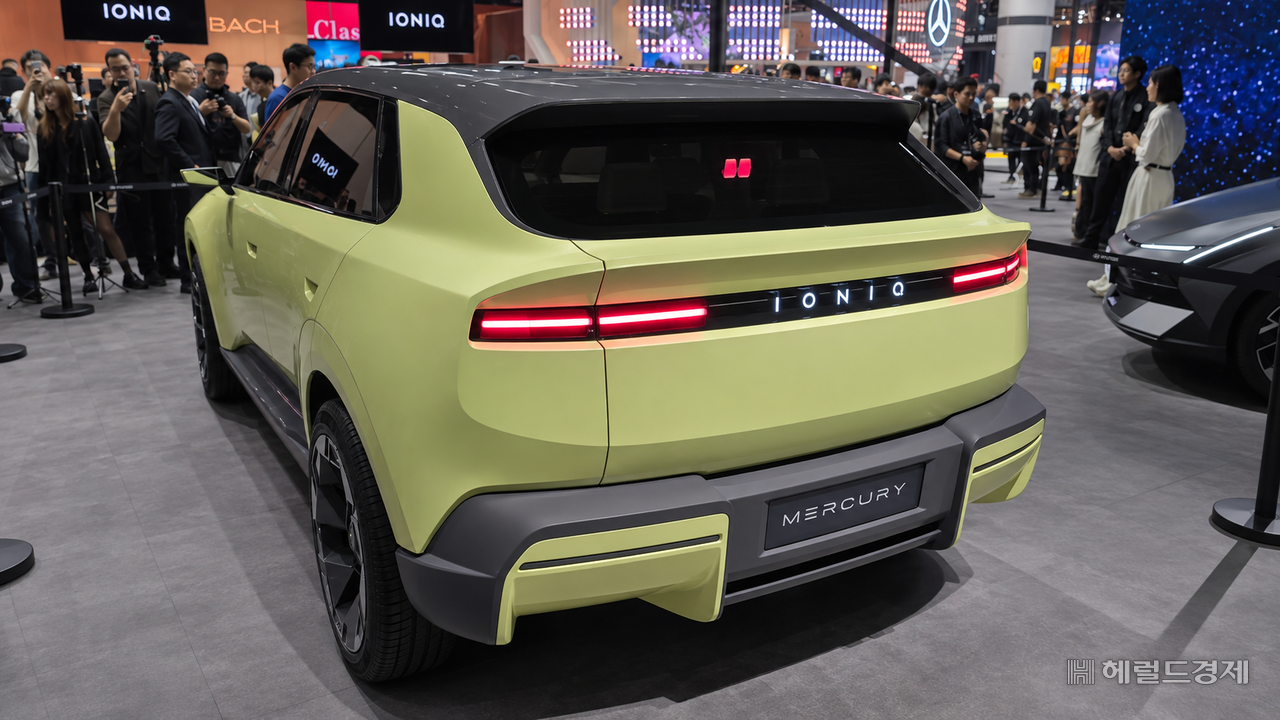
The production version of the Mercury Concept unveiled Friday — to be called the Ioniq M — will also incorporate a wide range of Chinese technology. It will feature driving-assistance technology from ZYT and a ByteDance AI-powered smart cockpit. In collaboration with CATL, Hyundai Motor will also introduce a battery-swappable model, a first among joint-venture automakers in China.
Even as Hyundai Motor works to close the cost gap, Jang said the company intends to differentiate on brand, sales and service. "We want to take a premium approach" on brand value, sales channels and service competitiveness, he said, adding that he would share more details soon.
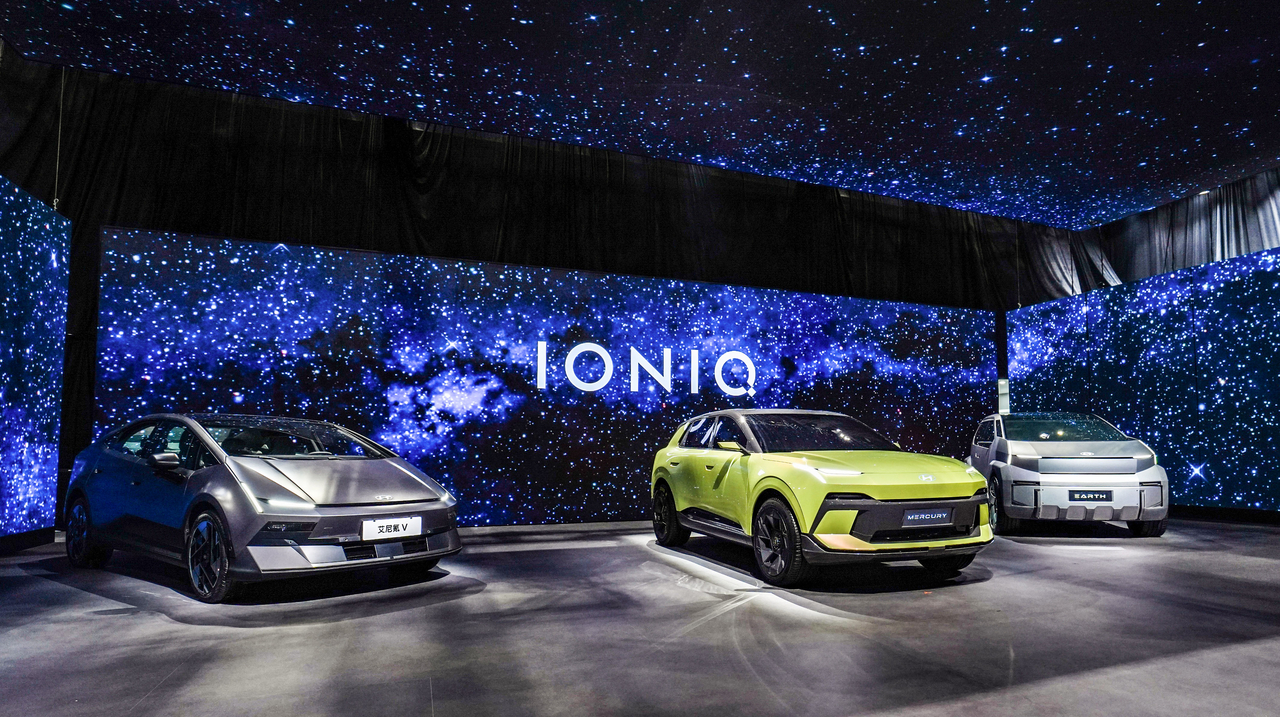
Jang said Hyundai Motor's push to regain competitiveness in China "is not something that started yesterday or today — it has been more than three years in the making." He described the Ioniq V, first unveiled at the Beijing Motor Show in April, and the Mercury Concept shown Friday in Guangzhou as the tangible results of that effort.
While the Ioniq V focuses on design innovation and repositioning the brand, the Mercury Concept is aimed at bringing that vision to a broader audience. Its production version, the Ioniq M, is set to launch in the Chinese market in the first half of next year.
Jang said Hyundai Motor has raised its competitiveness in both cost and advanced driver-assistance systems to a level where it can compete with Chinese rivals. He added that the company overhauled its development approach because the pace of change in the Chinese market made it impossible to keep up using its conventional global model development process.
"I am sorry to the customers who have been waiting, but I believe our development plans going forward will allow us to catch up," he said. "What you see today is the result of everyone — from product planning to all of R&D — putting their heads together."
Jang also said development of the production version of the Earth Concept, a family electric SUV, has already begun. Hyundai Motor plans to launch that model in 2028 and bring a total of 24 models to the Chinese market by 2030.
"We will find the right way to overcome China through China," Jang said. Asked by reporters whether he was confident about the Chinese market, he replied: "I think we have to be."
Jang spent much of Friday touring the exhibition halls of both global and Chinese automakers to assess the competition. Before Hyundai Motor's press conference, he visited the stands of Mercedes-Benz, Beijing Automotive Group and Huawei. Afterward, he made his way through the displays of Lincoln, MG, Roewe, Toyota, Volkswagen, BYD, Zeekr and Xiaomi, closely examining exterior and interior design, pricing, autonomous driving features and driving performance.
Jang also weighed in on China's rapidly expanding hydrogen industry, which has been fueled by large-scale government support. He said South Korea has built a solid institutional foundation for hydrogen and that maintaining policy consistency is now the critical priority.
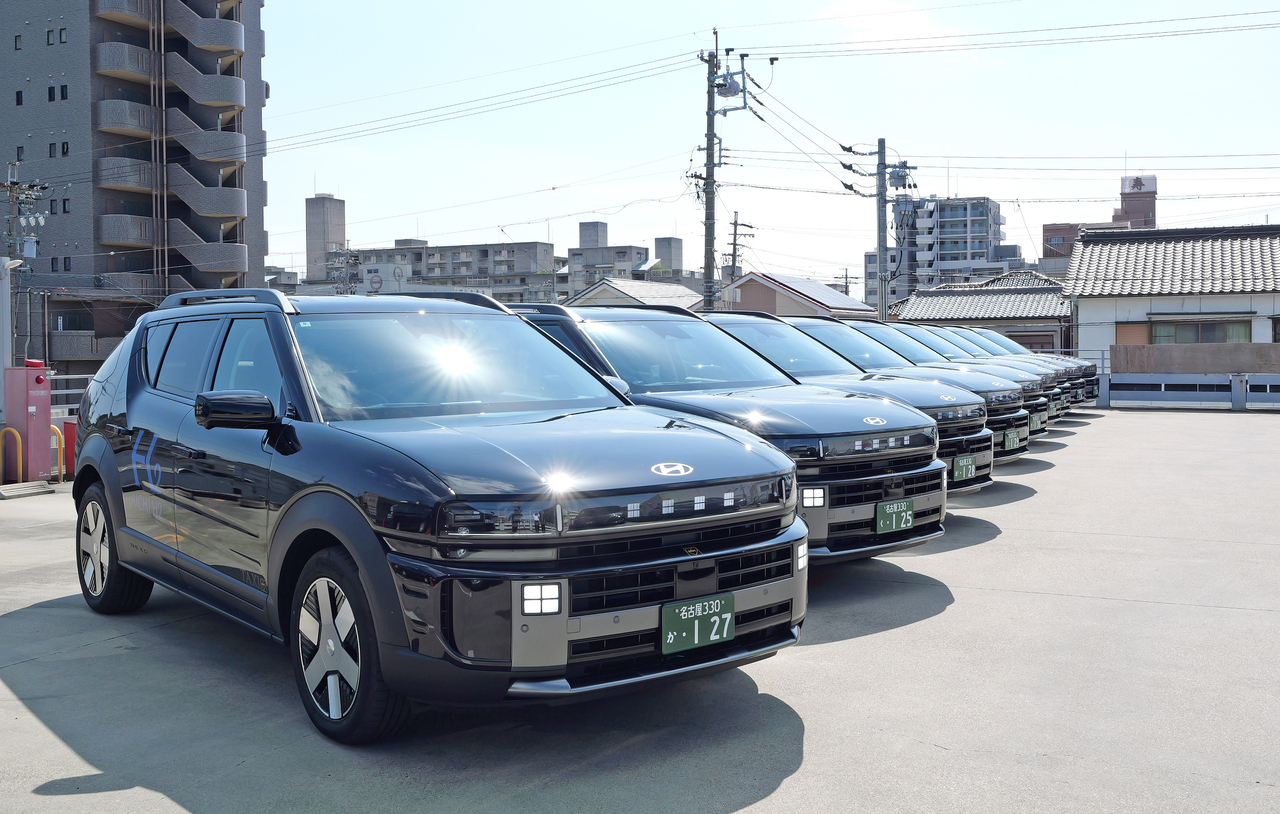
Hyundai Motor leads the global hydrogen fuel cell vehicle market. According to market research firm SNE Research, the company sold 5,304 hydrogen fuel cell vehicles worldwide in the first nine months of this year, giving it a 69.9 percent global market share — first place. Cumulative domestic sales of hydrogen fuel cell vehicles also surpassed 50,000 units at the end of September.
However, China's push to develop its hydrogen industry through massive fiscal support has raised concerns that South Korea could lose the market lead it has built. China sold 7,797 hydrogen fuel cell vehicles last year, surpassing South Korea's 6,802.
Last month, the Chinese government launched the second phase of its hydrogen pilot city cluster program, committing up to 8 billion yuan ($1.2 billion) over four years across five regions, allocated based on performance. The goal is to bring cumulative hydrogen fuel cell vehicle deployment to 100,000 units by 2030.
South Korea, by contrast, is moving in the opposite direction. The Ministry of Climate, Energy and Environment's proposed budget for next year's hydrogen fuel cell vehicle deployment program stands at 445.7 billion won ($332 million), down 22.6 percent from this year. In some cases, already-allocated national subsidies have gone unspent because of the fiscal strain on local governments.
"In the hydrogen sector, I believe South Korea's government support and policy backing have not fallen behind any other country," Jang said. "Korea was the first in the world to enact a hydrogen economy law, and we have consistently been building the related ecosystem."
"Ultimately, the key lies in how consistently we pursue these policies and investments," he added. "Since this is a challenge that requires the entire hydrogen ecosystem — not just hydrogen mobility — to move together, we will continue to communicate with the government and work together to build that ecosystem."
Hyundai Motor Group completed HTWO Guangzhou in 2023 — the group's first overseas hydrogen fuel cell production base — in the southern Chinese city. The facility has an annual production capacity of 6,500 hydrogen fuel cell systems and is expanding its business with a focus on China's hydrogen commercial vehicle market.
kwater@heraldcorp.com





