Regular coffee imports down 10.9%
Decaf imports set to hit record high
Consumers trimming specific ingredients, not drinks
Trend mirrors zero-sugar, non-alcoholic preferences
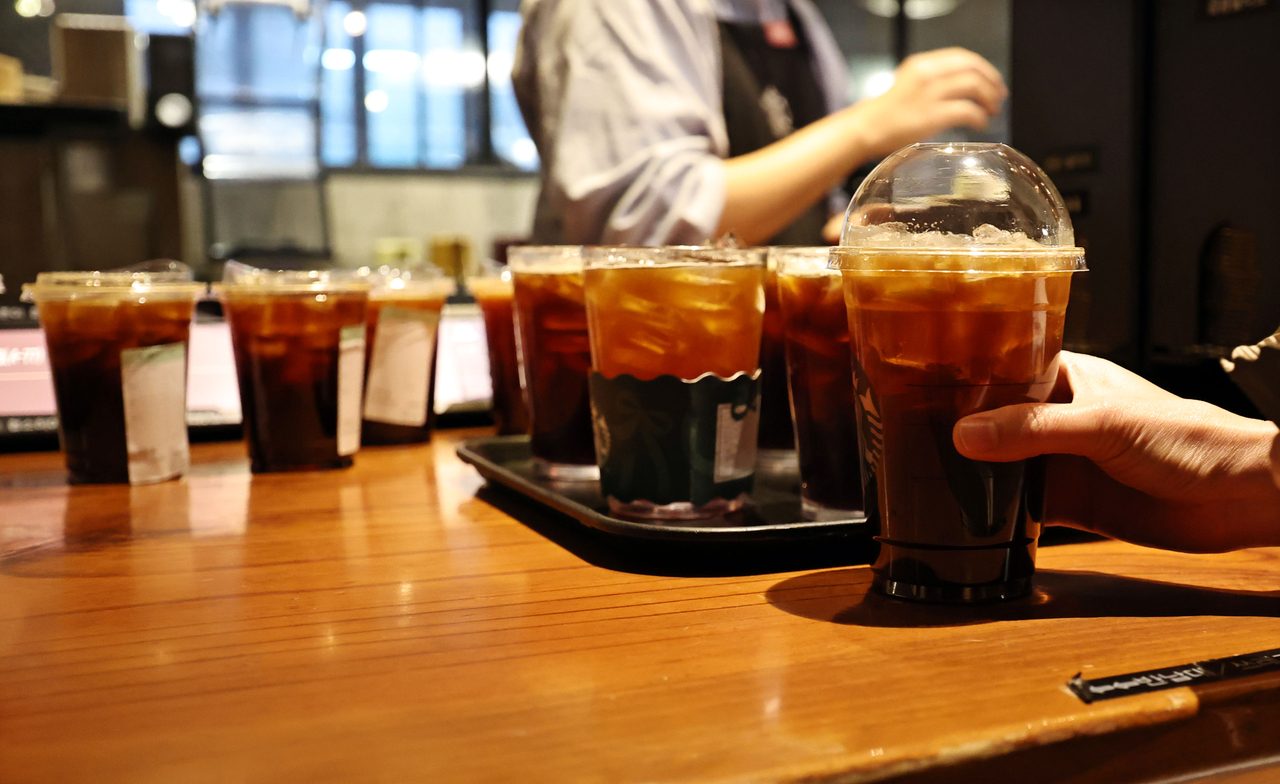
As South Korea's coffee market matures, decaffeinated coffee is emerging as a new growth category. Regular coffee imports have fallen more than 10 percent this year, while decaf imports are on track to set an all-time record. Analysts say the shift reflects a growing number of consumers who would rather manage their caffeine intake than give up coffee altogether.
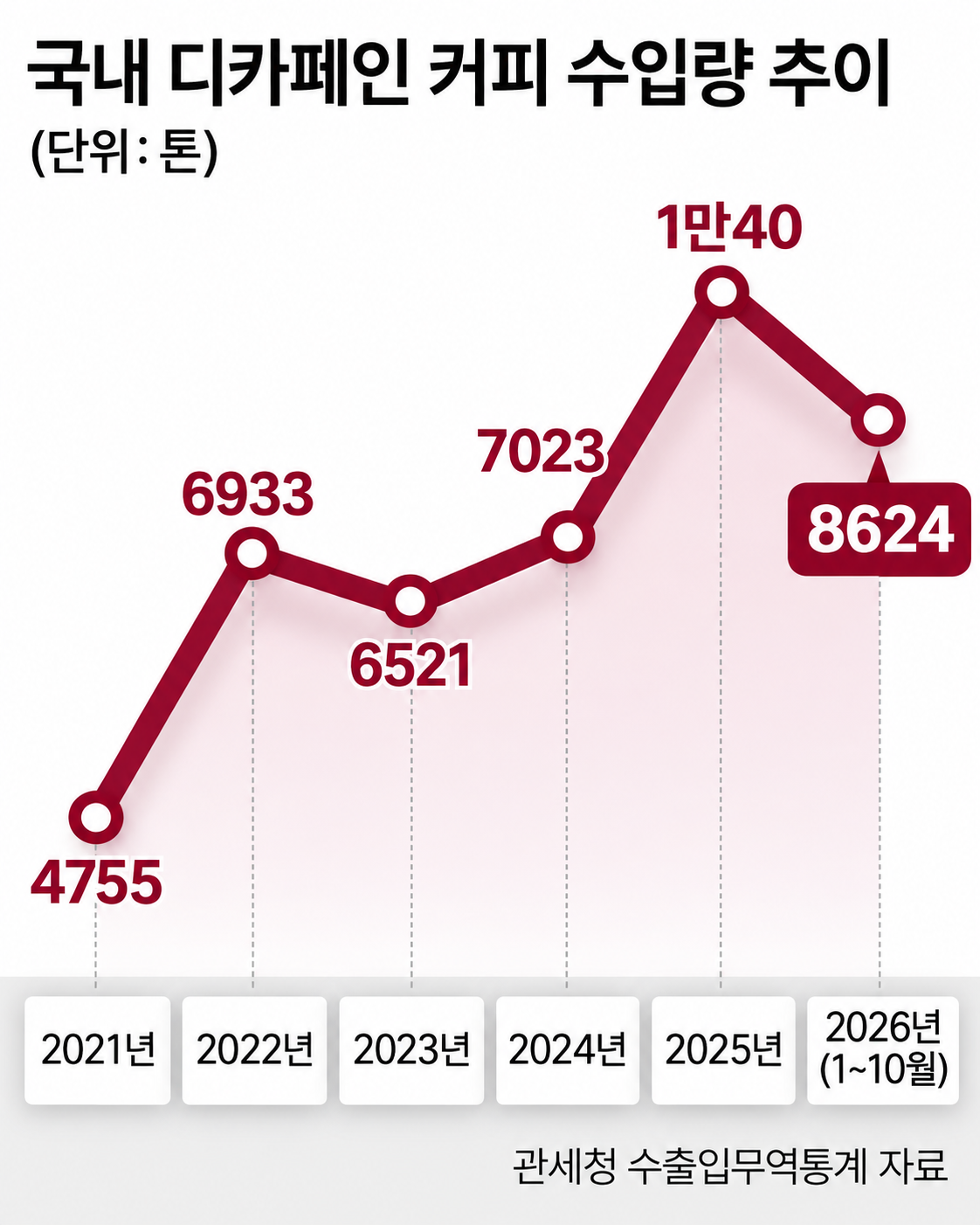
Decaf green bean and roasted bean imports totaled 8,624 tons in the January–October period this year, up 4.4 percent from 8,263 tons in the same period last year, according to Korea Customs Service trade statistics.
Decaf imports have broadly trended upward, rising from 4,755 tons in 2021 to 6,933 tons in 2022, before dipping to 6,521 tons in 2023 and recovering to 7,023 tons in 2024. Last year they surpassed the 10,000-ton mark for the first time, jumping 43 percent year-on-year to 10,040 tons. At the current pace, this year is expected to set another record.
Regular (non-decaf) green bean and roasted bean imports, meanwhile, fell 10.9 percent year-on-year to 142,138 tons in the first 10 months of this year. Slowing growth in the overall coffee market, combined with high bean prices and cost pressures from a weak won, are seen as contributing factors. Over the four years from 2021 through last year, decaf imports more than doubled while regular coffee imports grew just 2.5 percent.
The trend is equally visible in consumer spending. An analysis by Macromill Embrain using its purchase deep-data platform covering major retail channels from October last year through September this year found that total estimated coffee purchases reached 1.92 trillion won ($1.43 billion), up just 0.1 percent from the same period a year earlier. The number of transactions actually fell 5.3 percent. Estimated spending on decaf coffee, by contrast, rose 12.1 percent to 84.1 billion won.
Behind the rise in decaf demand is a broader shift in how consumers approach health. Rather than cutting out certain foods or drinks entirely, more people are seeking products that simply reduce the ingredient they find problematic — much as they have with zero-sugar beverages and non-alcoholic drinks. According to the Ministry of Agriculture, Food and Rural Affairs, consumption of non-alcoholic beverages rose 20 percent over the past year compared with the preceding two years, zero-sugar drink consumption climbed 18.3 percent, and decaf beverage consumption increased 22.4 percent.
The decaf shift is no longer limited to people sensitive to caffeine. Regular coffee drinkers are also reaching for decaf depending on the situation. According to Open Survey's "Cafe Trend Report 2026," the most common reason consumers chose decaf was wanting to enjoy the taste of coffee while avoiding caffeine, cited by 65.1 percent of respondents. Drinking coffee in the evening or at night came second at 62.8 percent, followed by having already had coffee earlier in the day at 51.9 percent.
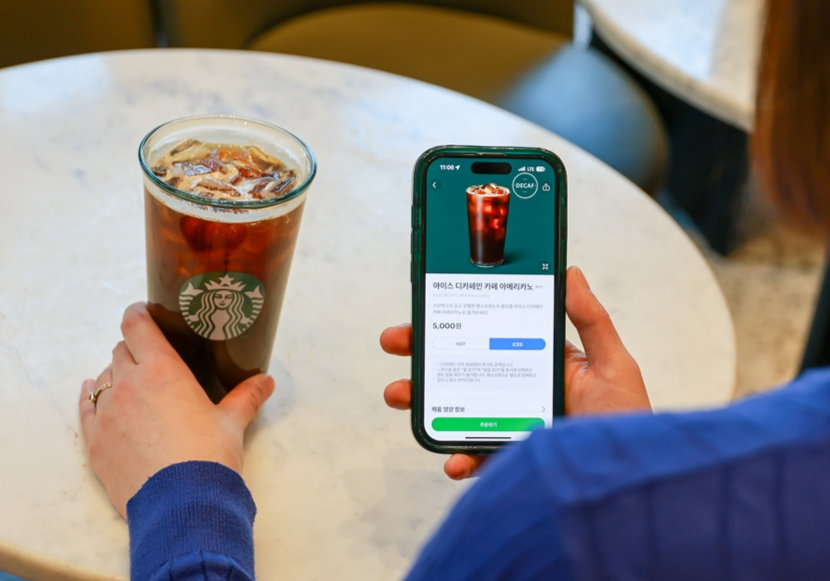
Coffee chains and retailers are taking note. Starbucks Korea sold 45.5 million cups of decaf coffee last year, a 39 percent increase from the year before. A Twosome Place saw its decaf coffee sales rise 19 percent year-on-year in the first half of this year. Mega MGC Coffee reported a roughly 36 percent increase in decaf coffee sales in July compared with the same month last year.
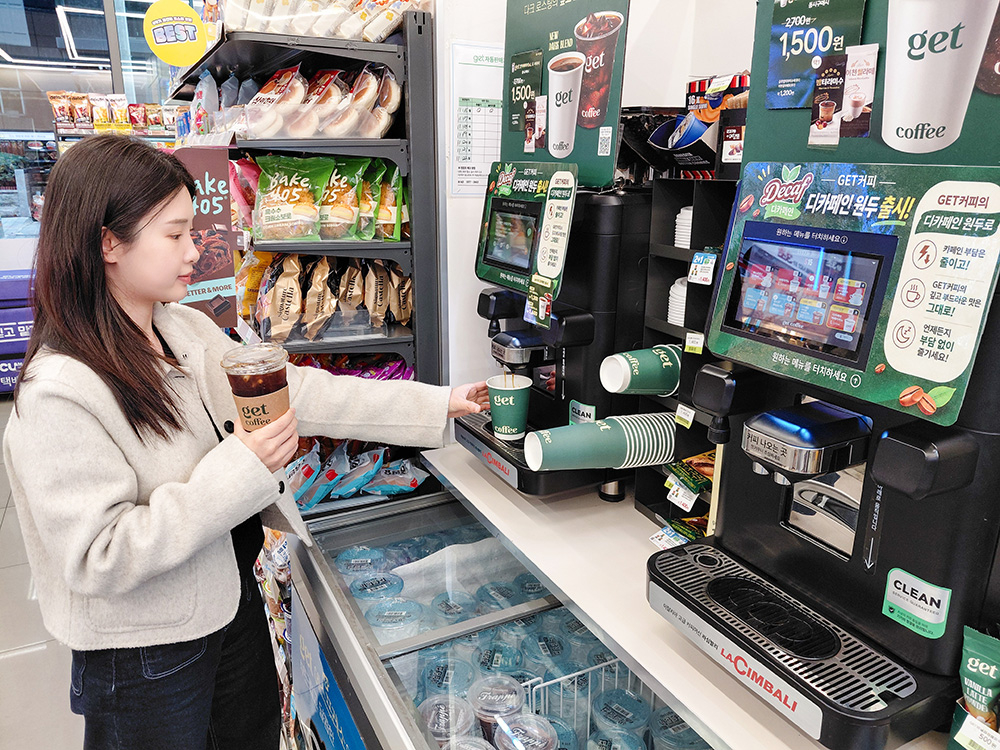
Competition in decaf bean coffee is also heating up among convenience store chains. CU launched a decaf Americano under its in-house bean coffee brand "get Coffee" on Nov. 17, initially rolling it out at high-volume stores with plans to expand. CU's decaf chilled coffee sales rose 13.2 percent in 2024, 81.1 percent last year, and 36.1 percent in the January–October period this year, all compared with the prior-year periods.
Decaf chilled coffee accounted for 28.4 percent of CU's sales between 6 p.m. and midnight this year, outpacing regular Americano at 16.9 percent by 11.5 percentage points — a concrete sign that evening consumers are actively choosing decaf.
GS25 has offered decaf options through its in-house bean coffee brand "Cafe25" since 2022. Decaf menu sales at Cafe25 rose 10.5 percent year-on-year in the January–October period this year, according to GS25. Seven-Eleven added decaf to its in-house bean coffee brand "Seven Cafe" in 2024.
A market for caffeine-free coffee alternatives — products that use no coffee beans at all — is also growing. Lotte Mart launched two varieties of "Chico," an alternative coffee made from chicory root to replicate the flavor of coffee, in July. Lotte Mart's sales of decaf and caffeine-free coffee rose 27.6 percent and 70 percent, respectively, in the July–October period compared with the same period last year.
Signaite, the corporate venture capital arm of Shinsegae Group, invested last year in Wake, a startup behind the caffeine-free alternative coffee brand Sans. Sans blends 12 ingredients — including jujube seeds, chicory root and barley — to recreate the taste and aroma of coffee. The brand has operated a pop-up store at the Sweet Park section of Shinsegae Department Store's Gangnam branch since last year.
"In the past, decaf coffee was mainly sought out by customers sensitive to caffeine, but recently even regular coffee drinkers are choosing decaf much more often," an industry official said. "The growth of decaf coffee is clearly showing up in actual sales figures."

korean@heraldcorp.com