SBHI slides from 84.8 in September to 79.8 in December, staying below 100 threshold
Large-firm exports up 103.5% in Q3; SME exports rise just 10.7%
Over half of SMEs cite sluggish sales as top business challenge
South Korea's exports continue to surge on the back of the semiconductor industry, but small and medium-sized enterprises are growing more pessimistic — with their business confidence index falling for three consecutive months. While large conglomerates more than doubled their exports in the third quarter from a year earlier, SME export growth remained stuck in the low double digits. More than half of SMEs identified sluggish sales as their biggest operational challenge.
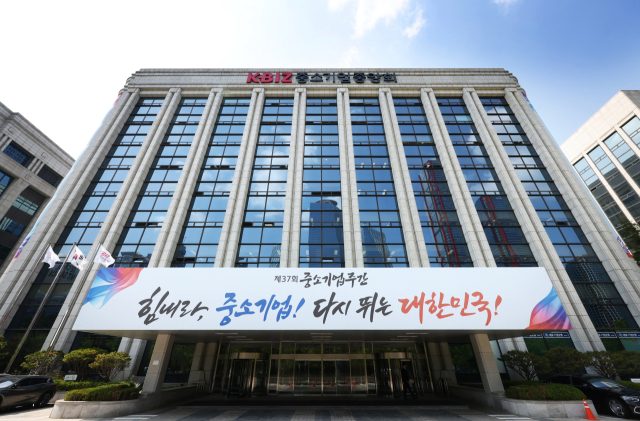
According to a December business outlook survey released Friday by the Korea Federation of SMEs, the Small Business Health Index for December stood at 79.8, down 1.7 points from the previous month. The federation surveyed 3,074 SMEs from Nov. 12 to Nov. 18.
The index has now declined for three consecutive months, slipping from 84.8 in September to 83.3 in October and 81.5 in November before reaching 79.8 in December — a drop of 5.0 points over that period. A reading below 100 means more companies expect business conditions to worsen in the coming month than to improve.
The trend stands in sharp contrast to export performance driven by semiconductors. According to the Korea Customs Service, semiconductor exports totaled $38.5 billion from Nov. 1 to Nov. 20, a 294.4 percent increase from the same period a year ago and the largest figure ever recorded for that stretch. In October, semiconductor exports reached $56.7 billion, extending a streak of 20 consecutive months of growth.
The gap in export growth between large and small firms is also widening. Preliminary trade statistics by company type for the third quarter, released by the Korea Customs Service and the Ministry of Statistics, show large enterprises posted export growth of 103.5 percent year-on-year, while mid-sized firms and SMEs grew by just 12.8 percent and 10.7 percent, respectively. The top 10 exporters accounted for 60.9 percent of total exports, up 20.3 percentage points from a year earlier.
Breaking down the December SME outlook by sector, the manufacturing index fell 2.7 points to 83.0, while the non-manufacturing index dropped 1.1 points to 78.4. Among 22 manufacturing subsectors, 14 saw their outlooks deteriorate. The wood and wood products sector fell from 79.4 to 64.6, and the leather, bags and footwear sector dropped from 80.7 to 70.5.
The construction sector index also slid from 69.3 to 65.4. The beverage manufacturing index climbed from 77.4 to 90.2, and the accommodation and food service sector rose from 83.3 to 88.5.
Across all business management categories, outlooks weakened from the prior month — exports (86.5 to 83.9), domestic sales (81.5 to 79.6), financial conditions (80.9 to 79.2) and operating profit (78.8 to 78.0) all declined.
When asked about their biggest management challenges in November, SMEs most frequently cited sluggish sales at 51.7 percent. Rising raw materials costs (37.8 percent), higher labor costs (31.6 percent) and intensifying competition among businesses (29.5 percent) followed.
Meanwhile, the average operating rate at small and medium-sized manufacturers in October stood at 75.7 percent, up 0.3 percentage points from the previous month. The rate for small enterprises rose 0.5 percentage points to 71.9 percent, while medium-sized firms gained 0.3 percentage points to reach 78.0 percent.
hong@heraldcorp.com