

What if an asteroid struck Earth, or a climate catastrophe made the planet uninhabitable? Elon Musk has long argued that confining humanity to a single planet is an unacceptable risk — and that conviction is what gave birth to SpaceX. The company that turned the idea of a private space age into reality is now preparing to go public.
SpaceX filed a confidential draft registration statement with the SEC on April 1, taking the first formal step toward an initial public offering. The company is targeting a June listing, according to people familiar with the matter.
SpaceX is aiming for a valuation of $1.75 trillion. Bloomberg has reported that the company has since raised its IPO target valuation to $2 trillion.
In February, SpaceX completed a merger with Musk's AI startup xAI, with the combined entity valued at roughly $1.25 trillion at the time. A successful listing at the target valuation would immediately place SpaceX sixth among the world's most valuable publicly traded companies.
The offering is expected to be unprecedented in scale. Market estimates put the fundraising range at between $40 billion and $75 billion — far surpassing the $29 billion record set by Saudi Aramco's 2019 IPO.
From a rocket company on the brink of failure to the dominant force in space
SpaceX is shaking global capital markets with what promises to be a blockbuster IPO. But how did the company get here?
The story begins in 2002. Musk had long held the belief that humanity must eventually expand beyond Earth. The intellectual roots of that conviction trace back to Isaac Asimov's science fiction series "Foundation," in which a genius who foresees the collapse of a galactic empire devises a grand plan to shorten civilization's dark age. Musk drew a clear conclusion from the story: Earth alone is not enough, and humanity needs a "Plan B" for survival.
That conviction became SpaceX's founding purpose. Musk's stated vision is to send humans to Mars by 2029 and build a self-sustaining city there by 2050 — making humanity a multiplanetary species.
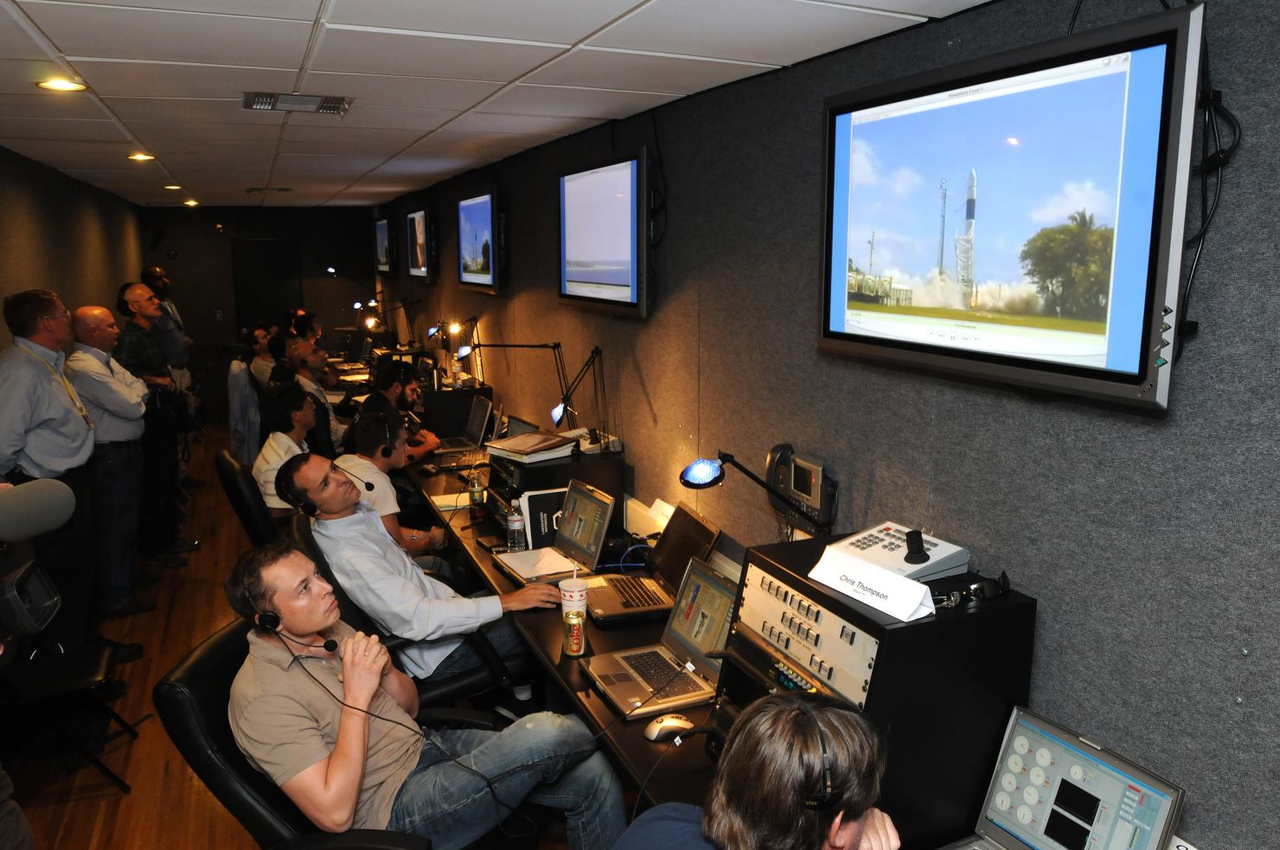
The problem was that no rocket existed to get to Mars. Musk's initial idea was to repurpose intercontinental ballistic missiles developed during the Soviet era as launch vehicles.
He called aerospace consultant Jim Cantrell and introduced himself in terms that left little doubt about his intentions.
I'm Elon Musk. I'm an internet billionaire. I founded PayPal and X.com. I sold X.com to Compaq for $165 million. I could spend the rest of my life drinking mai tais on a beach.
But I believe that for humanity to survive, we need to become a multiplanetary species. I want to demonstrate that possibility with my own money. I need Russian rockets.
The two men traveled to Russia, where rocket engineers either refused to sell or quoted wildly inflated prices.
On the flight home, Musk opened his laptop and began calculating what it would actually cost to build a rocket from scratch. Breaking down the raw material costs — aluminum, copper, carbon fiber — he found they accounted for only a tiny fraction of the final price. He concluded that the existing aerospace industry was riddled with cost inefficiencies and bloat.
Convinced that building a reusable rocket could dramatically lower the cost of launch, Musk founded SpaceX in May 2002.
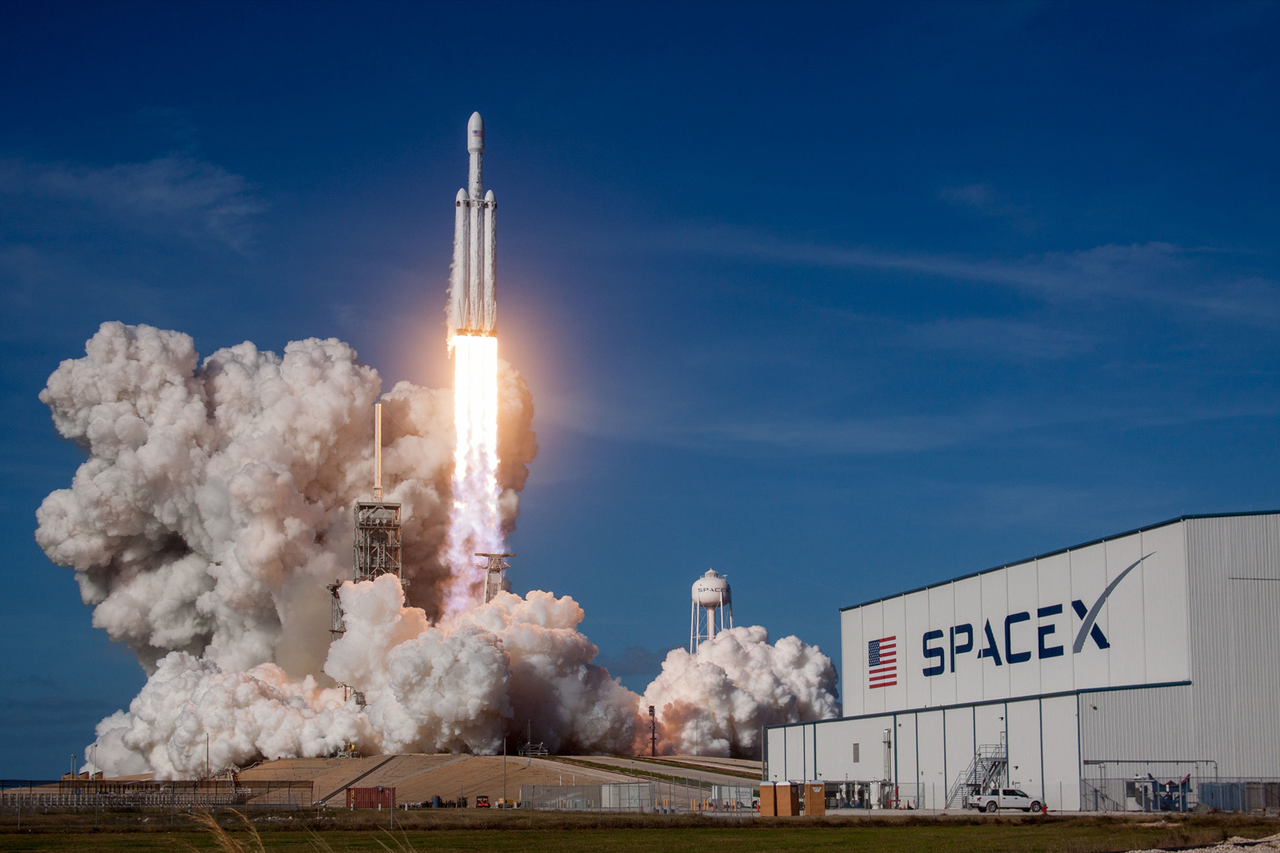
Musk invested $100 million of the proceeds from the PayPal sale into developing SpaceX's first rocket, the Falcon 1. After three failed launches, the vehicle successfully reached orbit in 2008 — the first liquid-fueled rocket built by a private company to do so.
SpaceX then developed the reusable Falcon 9, dismantling the cost barriers that had long defined the space industry. NASA estimated that developing an equivalent rocket in-house would have cost roughly $4 billion. SpaceX built it for $400 million.
That cost revolution translated into market dominance. In 2024, SpaceX placed 2,390 satellites and spacecraft into orbit — roughly 83 percent of all launches worldwide. The global commercial launch market had effectively come under the control of a single private company.

Growing faster than a rocket: SpaceX's revenue trajectory
SpaceX's business rests on two pillars: Starlink, its satellite internet service, and its launch services division.
Starlink delivers high-speed internet globally through a low-Earth orbit satellite network. The subscription-based model generates recurring revenue and now accounts for roughly 70 percent of SpaceX's total sales — the company's most reliable earner.
The launch services arm uses the reusable Falcon 9 to carry satellites into orbit for NASA, national security agencies and commercial satellite operators. SpaceX currently holds the highest launch cadence of any provider in the world, giving it an unmatched competitive position in the market.
Revenue growth has been steep. According to financial industry estimates, SpaceX's sales have grown at an average annual rate of roughly 48 percent since 2020 and are expected to maintain that pace through this year. Last year's revenue is estimated at around $15 billion, with projections for this year ranging from $20 billion to $23.8 billion.

Breaking down the figures by segment, Starlink revenue is projected to reach roughly $18.7 billion this year — growth of about 80 percent from the prior year. Launch services revenue is forecast at approximately $4.8 billion, up about 9 percent.
Profitability is also improving rapidly. SpaceX has recently turned profitable, with rising Starlink subscriber numbers driving the gains. Market estimates put last year's EBITDA at roughly $8 billion, rising to approximately $11 billion this year.
That trajectory is widely cited as the core justification for SpaceX's $1.75 trillion IPO valuation target.
'No IPO before Mars' — why Musk changed his mind
Musk had long insisted that SpaceX would not go public until regular flights to Mars were underway. Staying private shielded the company from investor pressure and allowed Musk to pour resources into financially demanding space projects without quarterly scrutiny. That private status is widely credited with enabling SpaceX to become the most valuable unlisted company in the United States.
The AI era changed the calculus. The Wall Street Journal reported that developing an orbital data center — once a long-term ambition — became Musk's top priority last year, drawing intense market attention to SpaceX's plans in that area.
The primary driver behind the IPO push is the need to raise enormous sums of capital. Musk is pursuing a plan to build space-based data centers powered by solar energy, a project estimated to require tens of billions of dollars.
Competition in AI infrastructure is another factor. Industry estimates suggest xAI's infrastructure spending runs at roughly $1 billion a month. Some analysts say the IPO is also a strategic move to secure access to capital markets ahead of rivals OpenAI and Anthropic, both of which are also pursuing listings.
A record-breaking IPO — will Musk's fandom fuel the offering?
SpaceX's approach to the listing breaks with convention in several ways. Most notably, the company is considering allocating up to 30 percent of shares to retail investors — far above the typical 5 to 10 percent in a standard IPO. The move appears designed to tap Musk's devoted following. The expected free float after listing is around 3 to 5 percent.
The timeline is taking shape. A roadshow is planned for late May, followed by an investor presentation for 125 analysts from 21 banks on June 8. A separate session for 1,500 retail investors is scheduled for June 11.
Corporate governance is another point of interest. A dual-class share structure is under serious consideration, which would allow Musk to retain control of the company even as the shareholder base expands — meaning that regardless of how many investors buy in, decision-making authority would remain with Musk alone.
SpaceX also negotiated hard with exchanges. The company made early index inclusion a condition of listing on Nasdaq, and the exchange responded with a series of unusual concessions: waiving the minimum free-float requirement of 10 percent, shortening the index inclusion waiting period to 15 trading days, and exempting existing shareholders from the standard 180-day lockup. In effect, Nasdaq rewrote its own rules to land SpaceX.
Reshaping the Musk empire — merger talk with Tesla gains traction
With SpaceX's listing on the horizon, market attention is turning to the broader question of where Musk's sprawling empire is headed. The possibility of a merger between Tesla and SpaceX has emerged as the most closely watched scenario.
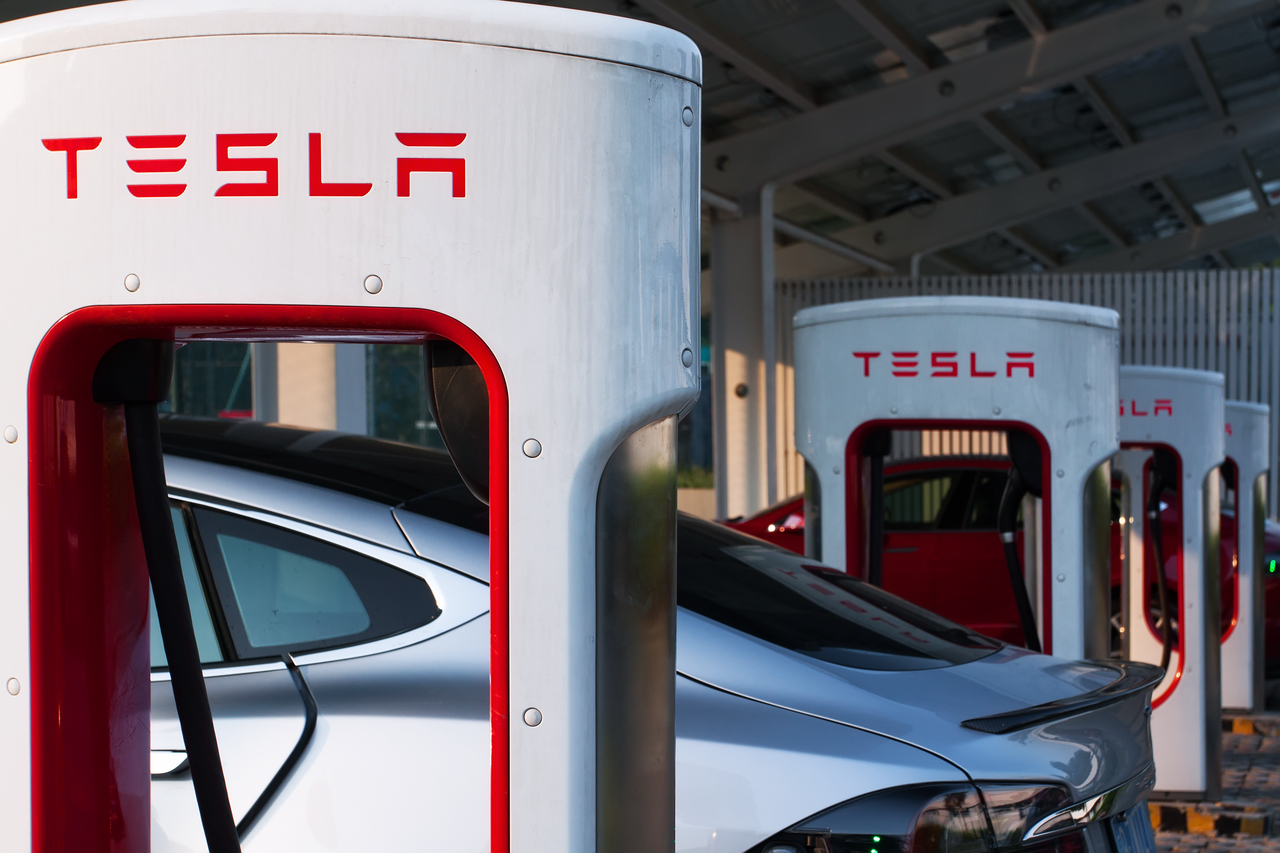
Barclays analyst Dan Levy wrote in a February report that "the question investors ask most is whether Elon Musk ultimately plans to merge Tesla and SpaceX into a larger company — something like 'Elon Inc.'"
Levy said a near-term merger looked unlikely but added that "over the long term, the possibility cannot be ruled out."
Musk's own comments have added fuel to the speculation. He has repeatedly suggested that his various companies are converging into a single ecosystem, and he has recently unveiled a series of collaborative projects linking Tesla, SpaceX and xAI.
Among the most prominent is Terafab, a semiconductor factory that integrates chip production across the Musk empire. There is also Digital Optimus, an AI agent project designed to unify software development across Tesla and xAI.
Musk has also outlined a long-term vision of building space-based data centers to address Earth's energy constraints and applying Tesla's AI technology to the space industry. As these plans have become public, merger speculation has intensified.
Lee Sang-su, a researcher at iM Securities, said that while opinions differ on whether SpaceX would absorb Tesla or whether a separate entity would be created, "either scenario could give Tesla — which has lacked momentum recently — a new catalyst and a fresh valuation framework."
A successful SpaceX IPO could also accelerate listings by other major AI companies that have delayed going public, with OpenAI and Anthropic among those expected to follow.
moon@heraldcorp.com





