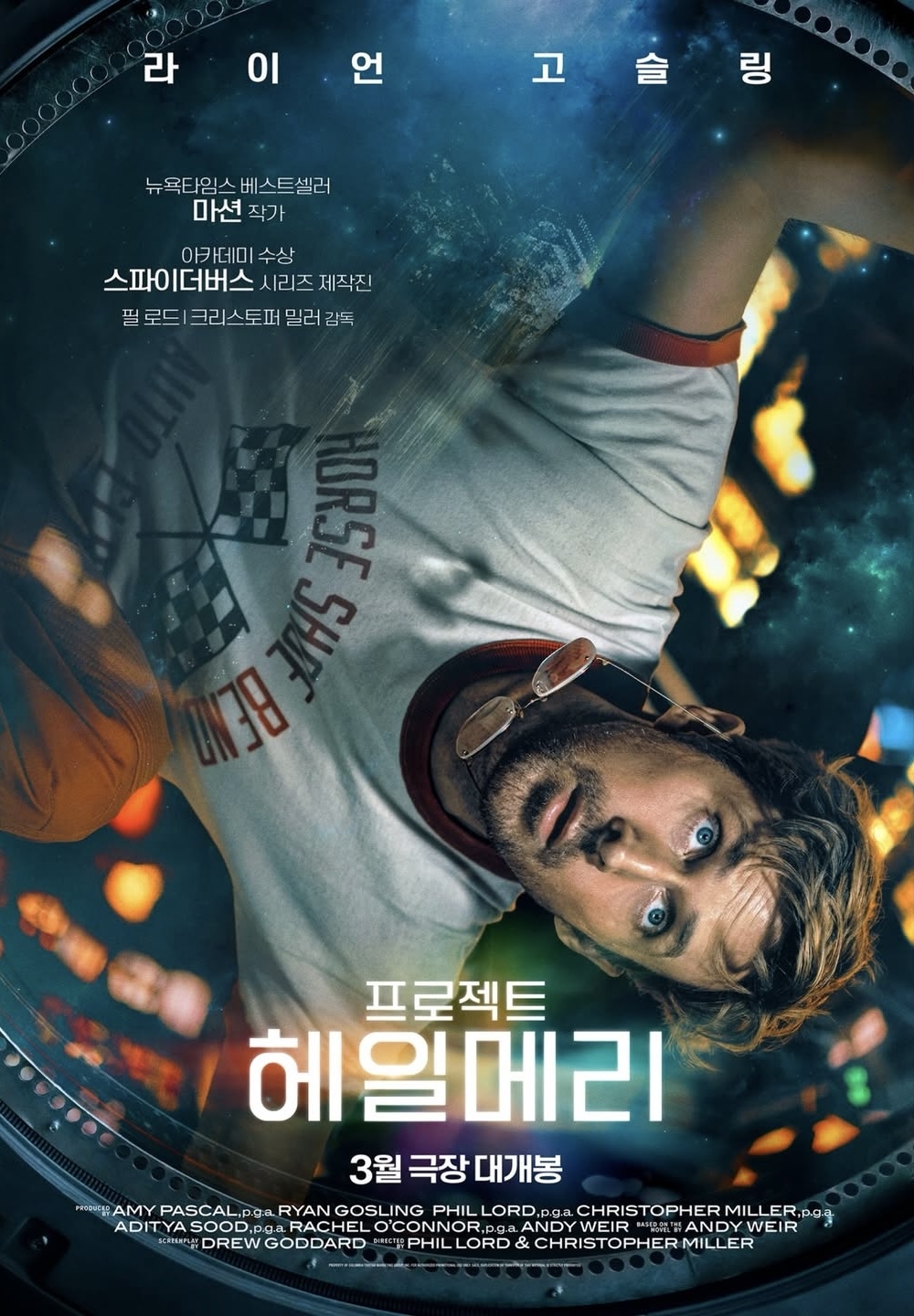
Since opening March 18, "Project Hail Mary" has topped the domestic box office and drawn more than 1.7 million viewers. Globally, the film has crossed $400 million in cumulative revenue, setting off a worldwide box office sensation.
And something about this film feels different.
CGV Golden Egg index: 100 percent. Rotten Tomatoes freshness: 95 percent. Popcorn index: 96 percent. On the surface it looks like a straightforward science-fiction film — yet the audience response has been startlingly warm.
Sci-fi movies tend to come with a familiar set of clichés. A lone hero shoulders the fate of humanity, willingly sacrifices himself and saves the Earth. An astronaut battles an alien invasion and pulls off a last-second reversal aboard a ship on the verge of destruction.
Or the narrative deepens into conflict as an astronaut at the scene clashes with governments back on Earth over what to do next. These are stories we know well — and precisely because we know them, we can see where they are going.
So what makes "Project Hail Mary" different enough to earn such extraordinary praise?
Here are three reasons.
The strangest form, the most human bond
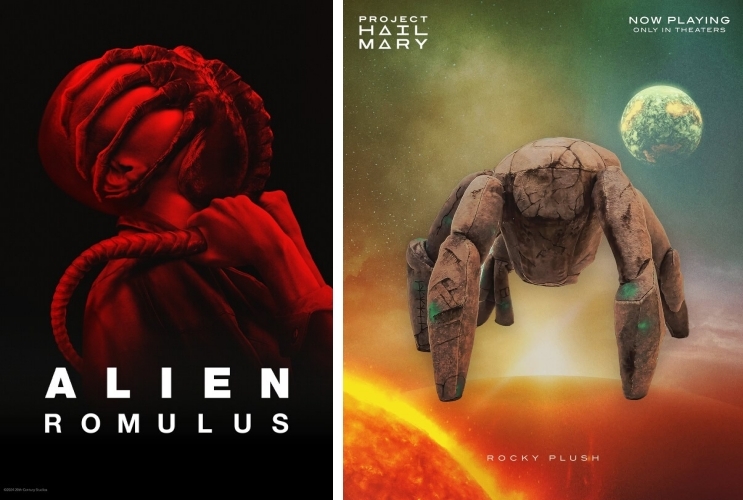
In most sci-fi films, spider-like or tentacled aliens are portrayed as objects of fear and menace. In "Alien: Romulus" (2024), tentacled creatures reproduce by using humans as hosts in horrifying fashion, as do the spider-like organisms in "The Mist" (2008).
In "Sting" (2024), a tiny spider that arrives from space transforms into a monster and goes to war against humanity.
Had you walked into "Project Hail Mary" knowing nothing about it, Rocky's first appearance — a spider-shaped alien — might well have triggered every instinct honed by sci-fi disaster films.
After all, the aliens we tend to picture are closer to the humanoid form of E.T. (1982) than to anything spider-like or tentacled.
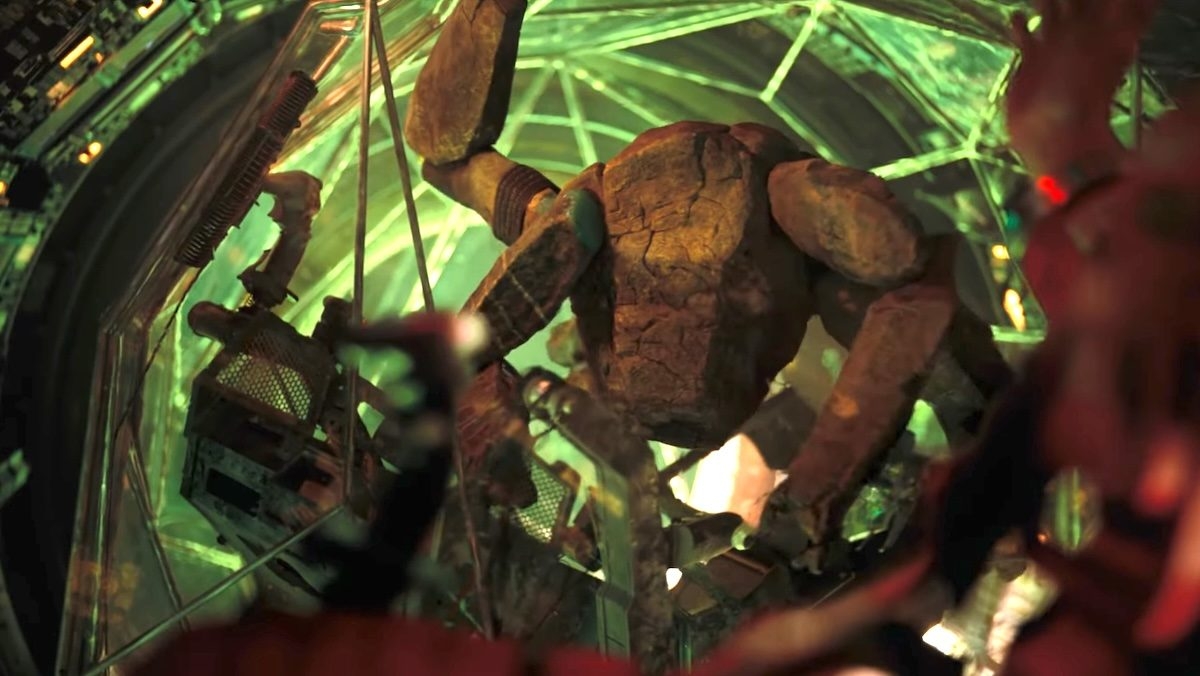
Yet Rocky in "Project Hail Mary" (2026) belongs to none of those categories.
His appearance is unfamiliar, but the connection he forges runs deeper than anything a humanoid alien has managed on screen. The scenes in which Rocky — with his spider-like body built from rock — communicates with a human are particularly striking: the strangeness of his form makes the moments of genuine connection all the more moving.
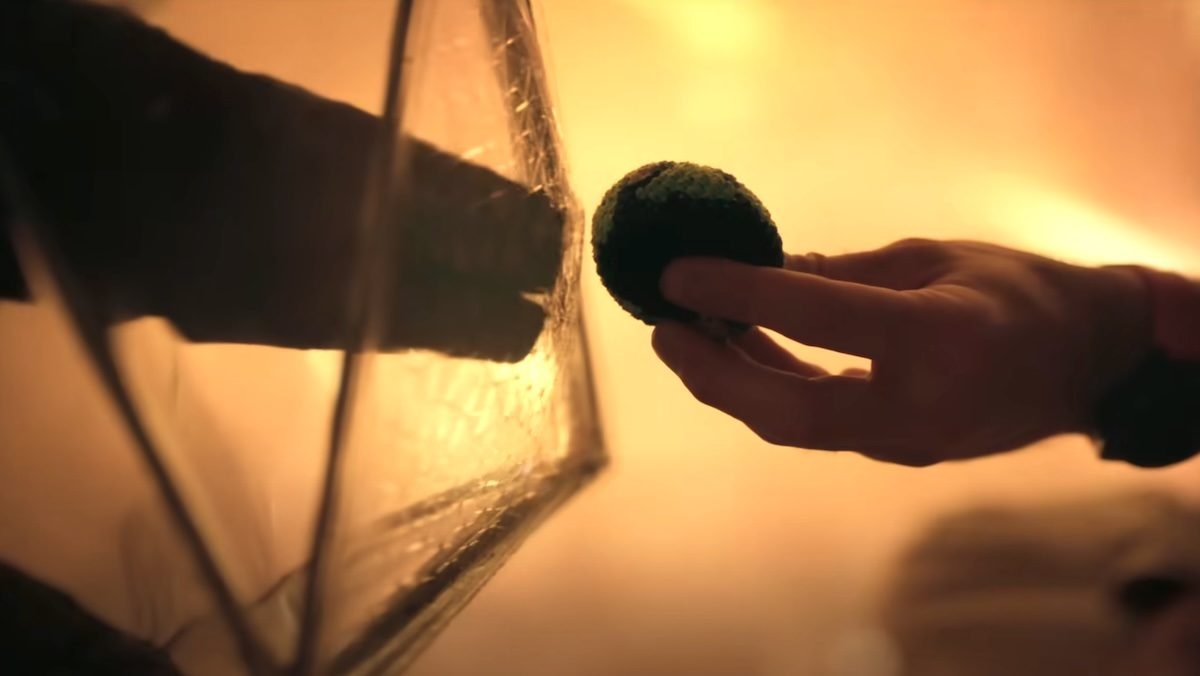
Separated by a pane of glass, the two beings tap, embrace, mimic each other and watch each other sleep — small gestures that accumulate into the most unlikely friendship imaginable.
Through that process, each becomes the other's entire world.
Two beings who could not look more different end up willing to risk their lives for each other. That is the first reason "Project Hail Mary" feels so fresh.
A hero who really didn't want to be here
Sci-fi films have long enshrined a particular cliché: the hero who sacrifices himself for his crew or for humanity and ultimately saves the world. Think of Harry in "Armageddon" (1998), who volunteers to stay behind on the asteroid in place of a colleague, or Cooper in "Interstellar" (2014), who joins the mission to save his children and the human race.
The choices these self-sacrificing protagonists make are moving — but they can also feel strangely remote. How many people, faced with a situation that demands someone step forward and die, would actually do it?
Watching film heroes make that agonizing decision without a moment's hesitation, we often feel a quiet sense of unreality.
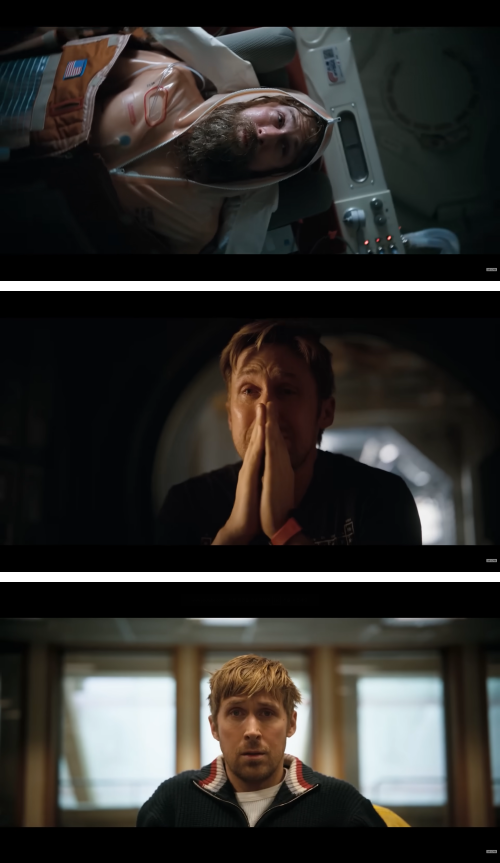
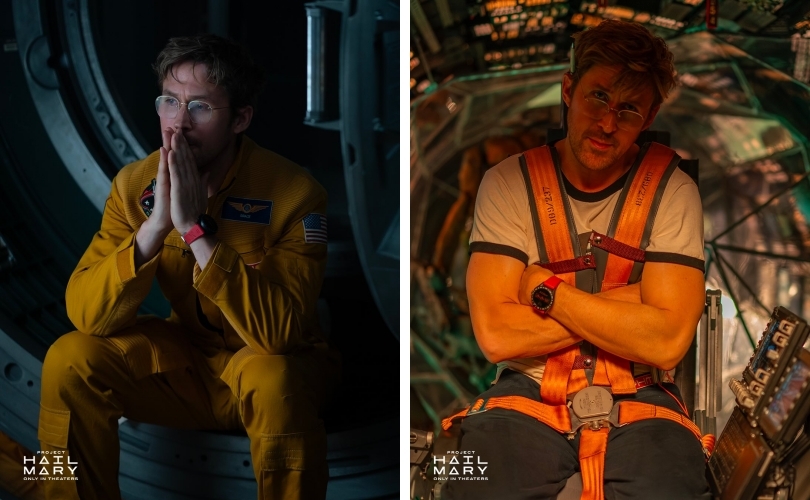
Ryland Grace in "Project Hail Mary" (2026) is different.
The film takes its name from the "Hail Mary" pass in American football — a long, low-probability throw launched in the final seconds in a desperate bid to turn the game around. The project itself is exactly that: a last-ditch gamble staked on a dying sun and a planet on the brink of extinction.
The mission required three astronauts willing to board a one-way spacecraft. Grace's response was to refuse outright, flee from the researchers trying to recruit him and ultimately get sedated and, quite literally, dragged aboard.
That single scene — human avoidance in place of heroic aura — upends the sci-fi cliché in one stroke.
And yet Grace, who wanted nothing to do with space and now faces death in it, ultimately decides he is willing to die for Rocky. It is one of the moments that has moved audiences to tears.
Perhaps the line he heard before the mission departed holds the key to the whole film: "We don't need brave genes. We just need someone who gives you the courage."
Then comes the moment Rocky tells him: "Grace. Bravest human I meet." Grace — a man with no immediate family, no partner, not even a dog — discovers a courage he never knew he had, throws himself into danger for someone else and becomes, to that someone, a hero.
By the film's end, Grace saves everyone in the most dramatic fashion, but the starting point was always Rocky. One final extraordinary choice delivers an ending unlike anything else in the genre.
A quietly passive, seemingly ordinary person who ultimately becomes someone capable of choosing — for another's sake. That is the second reason "Project Hail Mary" feels so fresh.
Sci-fi as backdrop, friendship as the point

Sci-fi films are often defined first by visuals no other genre can match — Earth seen from space in "Gravity" (2013), the endless desert of the planet Arrakis in "Dune" (2021).
"Project Hail Mary" (2026) delivers that spectacle in full: a green-hued planet, a burst of crimson light, the spacecraft Rocky arrived in. Shot with IMAX cameras, the film raised expectations among IMAX fans and contributed to a string of sold-out screenings.
Even so, what holds the audience's gaze is not the grandeur of the backdrop but the relationship between Grace and Rocky. As the film moves into its second half, the emotional stakes deepen and the two characters pull focus away from everything else.
Anyone who has seen the film might answer the question "What kind of movie is it?" with a single phrase: a buddy movie — one where two protagonists team up and their friendship takes center stage.
The film's true subject is not how Grace completes Project Hail Mary. It is the friendship itself.
The film's memorable lines are part of what makes it worth watching.
Rocky communicates in an alien language, and the slightly stilted quality of his translated speech becomes the perfect vessel for unfiltered emotion. Lines like "Grace Rocky save star" and "Good, good, good!" make the feelings behind the clumsy words all the more vivid.
Rocky's way of speaking draws laughter almost automatically — and then, without warning, certain lines hit somewhere deeper. When Grace hands Rocky a knitted Earth doll before their farewell, Rocky says: "Rocky not forget. I give nothing." Grace answers: "You gave me everything." That brief exchange captures everything the two have already become to each other.
The deeper you sink into their relationship, the more clearly the sci-fi setting reveals itself as just that — a setting, a vehicle for the message.
It is not a grand space mission that completes this film. It is the sight of two beings saving each other's planets, and ultimately each other.
That is the final reason "Project Hail Mary" feels so fresh.

"Project Hail Mary" is the best buddy movie of the year.
It leaves you with the conviction that what changes the world, in the end, is the feeling two beings have for each other — and the courage that feeling makes possible.
This spring, it might be just the film to end your day with a warm heart.
By Kim Ju-yeon, Content Operator
Editing by Min Sang-sik
mss@heraldcorp.com