
Porsche calls Hyundai's virtual shift technology 'very interesting,' says 'they really did a great job'
Global brands take note of the Ioniq 5 N's N e-Shift feature
'Driving fun' emerges as the new frontier for high-performance electric vehicles
![The Hyundai Motor Ioniq 5 N. [Provided by Hyundai Motor]](https://wimg.heraldcorp.com/news/cms/2026/06/09/news-p.v1.20250625.95f070a468f74ed3aa594054a5f447b2_P1.jpg)
The sensation of shifting gears — long assumed to be a casualty of the electric vehicle era — is emerging as a new competitive dimension in the high-performance EV market. Hyundai Motor Co's virtual gear-shift technology, fitted to the Ioniq 5 N, is gaining recognition as a solution for delivering driving engagement that rivals or exceeds that of internal combustion engines. Global performance brands are now moving to benchmark it.
Porsche is closely examining Hyundai Motor's virtual shift technology, according to foreign media reports and industry sources. Porsche spokesperson Ben Weinberger, in an interview with automotive media outlet CarSales late last month, described the technology as "something we're looking at with great interest," adding: "It's very interesting. Honestly, they really did a great job."
The technology Weinberger was referring to is N e-Shift, which Hyundai Motor applies to the Ioniq 5 N and Ioniq 6 N. The software-based feature simulates gear changes and accompanying sounds in electric vehicles that have no actual multi-speed transmission. Drivers can use paddle shifters behind the steering wheel to experience virtual upshifts and downshifts.
The system combines artificial rev limiting, momentary power interruption, and interior and exterior sounds calibrated to match virtual engine speed and gear position — recreating the feel of a dual-clutch transmission in a high-performance combustion car. Afterfire and burbling sounds when the driver lifts off the accelerator, along with a sharp "bang" at the moment of an upshift under hard acceleration, deepen the sense of immersion. Shift logic also varies by driving mode, giving drivers a distinct feel and sound in different situations.
![The N e-Shift feature on the Hyundai Motor Ioniq 5 N. N e-Shift uses software to simulate gear-change sensations and sounds in an electric vehicle without a physical transmission, enhancing the high-performance driving experience. [Provided by Hyundai Motor]](https://wimg.heraldcorp.com/news/cms/2026/06/09/news-p.v1.20260605.96a4c9c0ff144bdc8564c134d0ebc5e2_P1.jpg)
Electric vehicles typically use a single-speed reducer, which means they produce none of the shift jolts or engine-speed fluctuations found in combustion cars. The ability to deliver strong torque from a standstill is an advantage, but some drivers find that the absence of tactile feedback and engagement makes the experience feel flat.
Hyundai Motor zeroed in on that gap. Rather than simply chasing faster acceleration, the company focused on making drivers feel as though they were actively interacting with the vehicle.
The feature was initially dismissed by some as a "fake gear shift." But the mood shifted after the Ioniq 5 N went on sale. International automotive media and drivers began praising it for bringing genuine driving fun to an electric vehicle, and brands including Porsche have since publicly expressed interest.
The Ioniq 5 N, launched in 2023, was the first dedicated electric vehicle from Hyundai Motor's high-performance N brand. The model distills high-performance electrification technology validated through motorsport data gathered from competitions including the World Rally Championship and through Hyundai's "rolling lab" testing program, with a focus on delivering both track capability and driving enjoyment — not merely outright speed. N e-Shift grew directly from that philosophy and is regarded as a defining feature of the electrification era, designed to keep drivers actively engaged with the car.
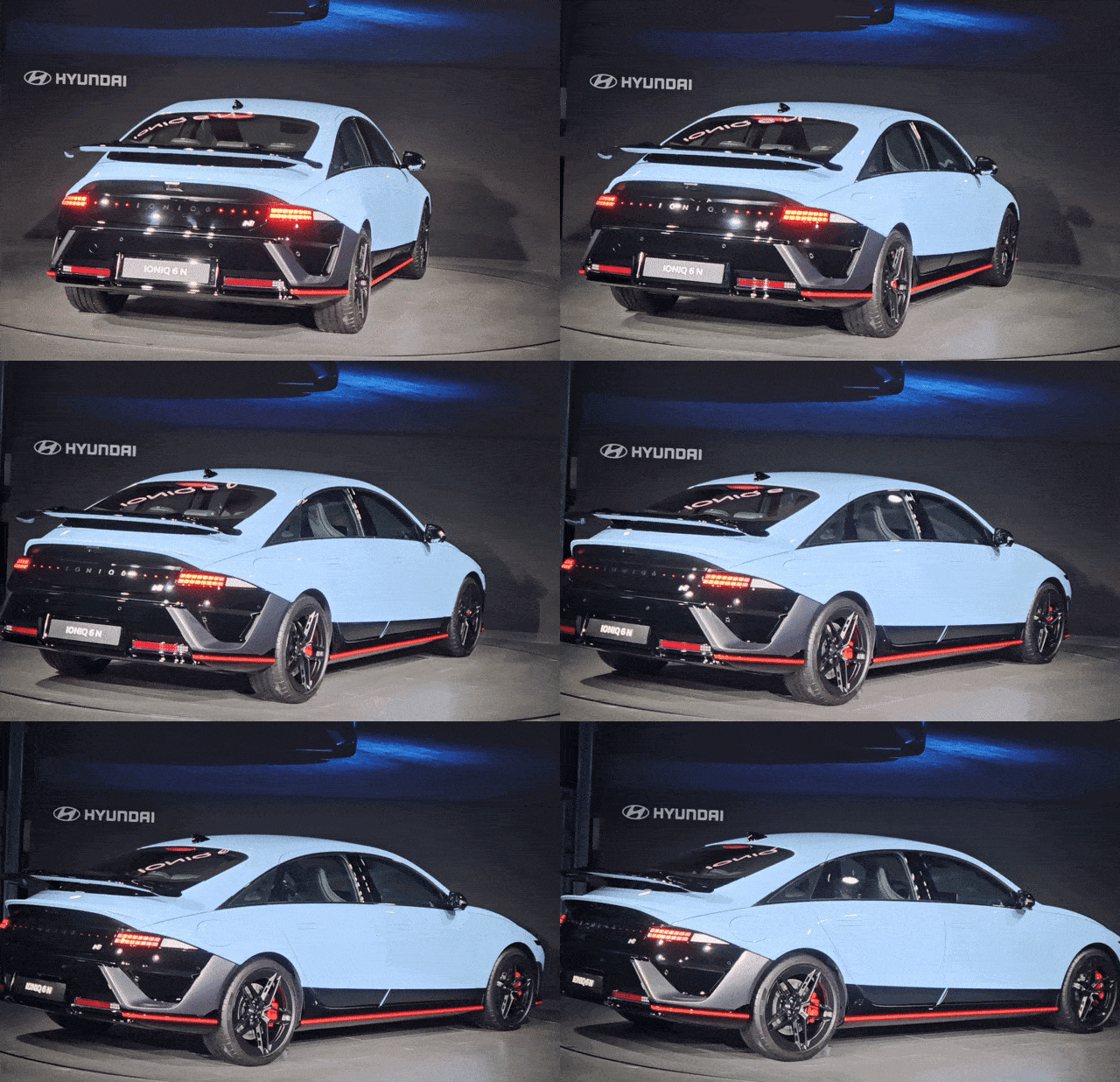
Porsche is weighing whether to adopt technology similar to Hyundai Motor's. Spokesperson Weinberger said no decision had been made, but added: "If we do it, it will be a Porsche solution." Industry observers have raised the possibility that Porsche could apply a similar feature to future models such as the electric 718 Boxster and Cayman.
Should Porsche develop its own virtual shift system and accompanying sounds, analysts suggest it could recreate the engine note and shift feel of its existing sports cars in electric form — including a reinterpretation of the brand's signature flat-six engine sound. Michael Hedtwick, complete vehicle manager for the Porsche Cayenne Electric, also left the door open to adding virtual shift functionality to future electric models, saying the company would "listen to what customers want."
Porsche is not the only brand paying attention to Hyundai Motor's virtual shift technology. BMW is reportedly planning to incorporate its own virtual gear-shift function into next-generation electric M models. Ferrari is also said to be exploring the use of paddles in its electric vehicles to adjust regenerative braking and torque delivery. The approaches differ, but all share the same underlying ambition: restoring the sensation of actively operating a car in a high-performance electric vehicle.
"The Ioniq 5 N was the first case where Hyundai Motor demonstrated that driving fun is achievable in an electric vehicle," an industry official said. "In the past, Porsche, Ferrari and BMW M set the benchmark for high-performance cars. In the EV era, we now have a situation where traditional sports car brands are looking to Hyundai Motor's solutions for reference."
The official added that "as EV performance converges across brands, how each brand expresses its own driving character is becoming more important," and that "Hyundai Motor's virtual shift technology is significant because it created space for driver involvement even in an electric vehicle."
kwater@heraldcorp.com





