
German Federal Motor Transport Authority approves new system
Supports intersection turns, traffic light stops and more
Preview program in December; commercial launch in first half of next year
Remains Level 2 — driver oversight still required
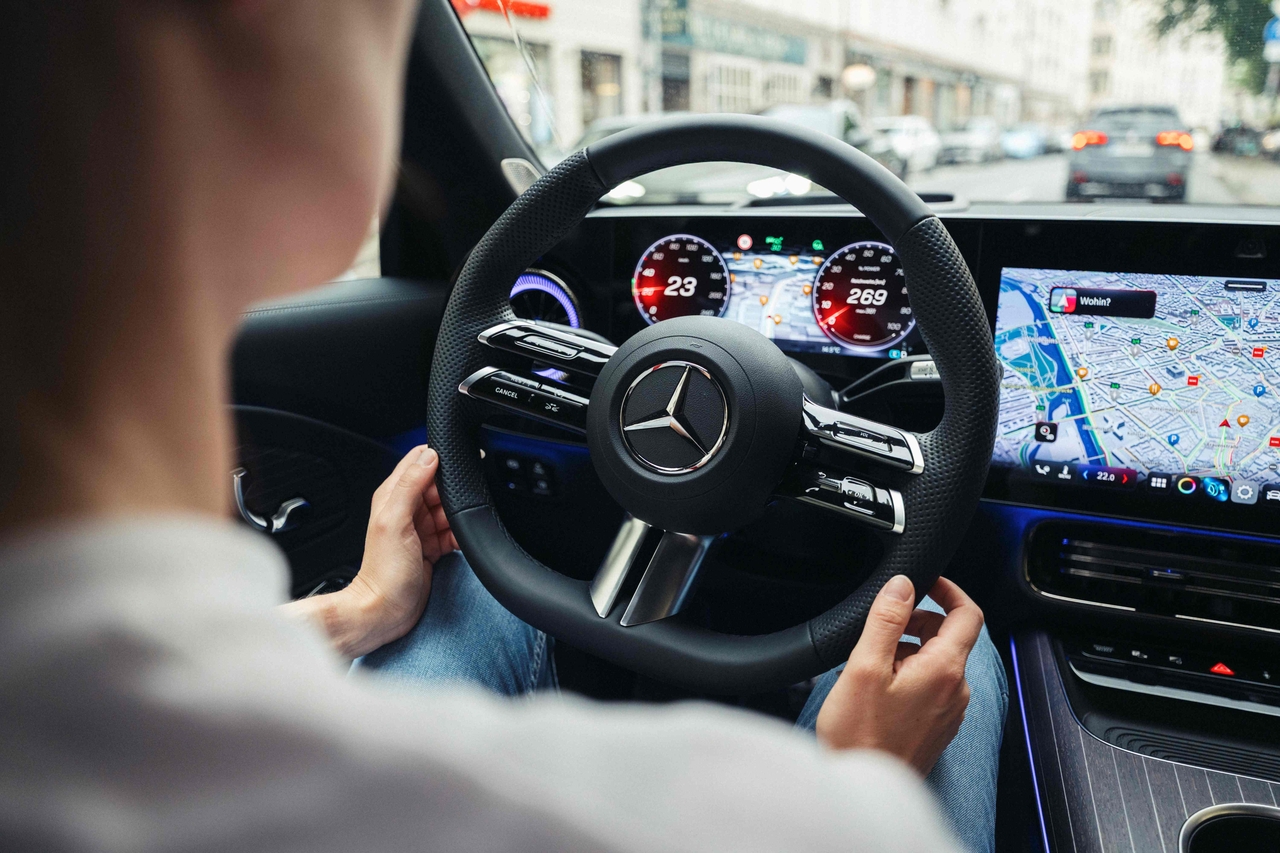
Mercedes-Benz has received German government approval for an advanced driving assistance system that supports drivers from origin to destination — not just on highways, but through complex urban roads as well. The system extends driver-assistance functions beyond the highway to ordinary roads and city streets, with a commercial launch in Germany planned for the first half of next year.
Mercedes-Benz announced Tuesday that it had obtained regulatory approval from Germany's Federal Motor Transport Authority (KBA) for its next-generation driving assistance system, MB Drive Assist Pro. It marks the first time a point-to-point driving assistance system — one that guides a driver along a full route from departure to destination — has been approved in Germany.
The approval is based on UN Regulation No. 171, which sets out safety requirements for driver control assistance systems. The regulation is an international standard covering the safety of advanced driving assistance technology and driver intervention requirements; a unified regulatory regime under the standard is set to take effect in January next year.
Mercedes-Benz said the approval lays the groundwork for expanding the technology to markets outside Germany, though actual adoption and timing will vary depending on each country's relevant laws and certification procedures.
The defining feature of MB Drive Assist Pro is that it extends driving assistance across the entire navigation route. While existing systems have primarily supported highway driving — maintaining following distance and keeping the vehicle centered in its lane — the new system continues to assist the driver after leaving the highway, on ordinary roads and in heavy urban traffic.
Once a destination is set in the navigation system, the driver activates the feature by pressing a button on the steering wheel. The system then handles lane changes, merging into other lanes and turning at intersections along the route. It also slows the vehicle for traffic lights, brings it to a stop and pulls away again when the light changes.
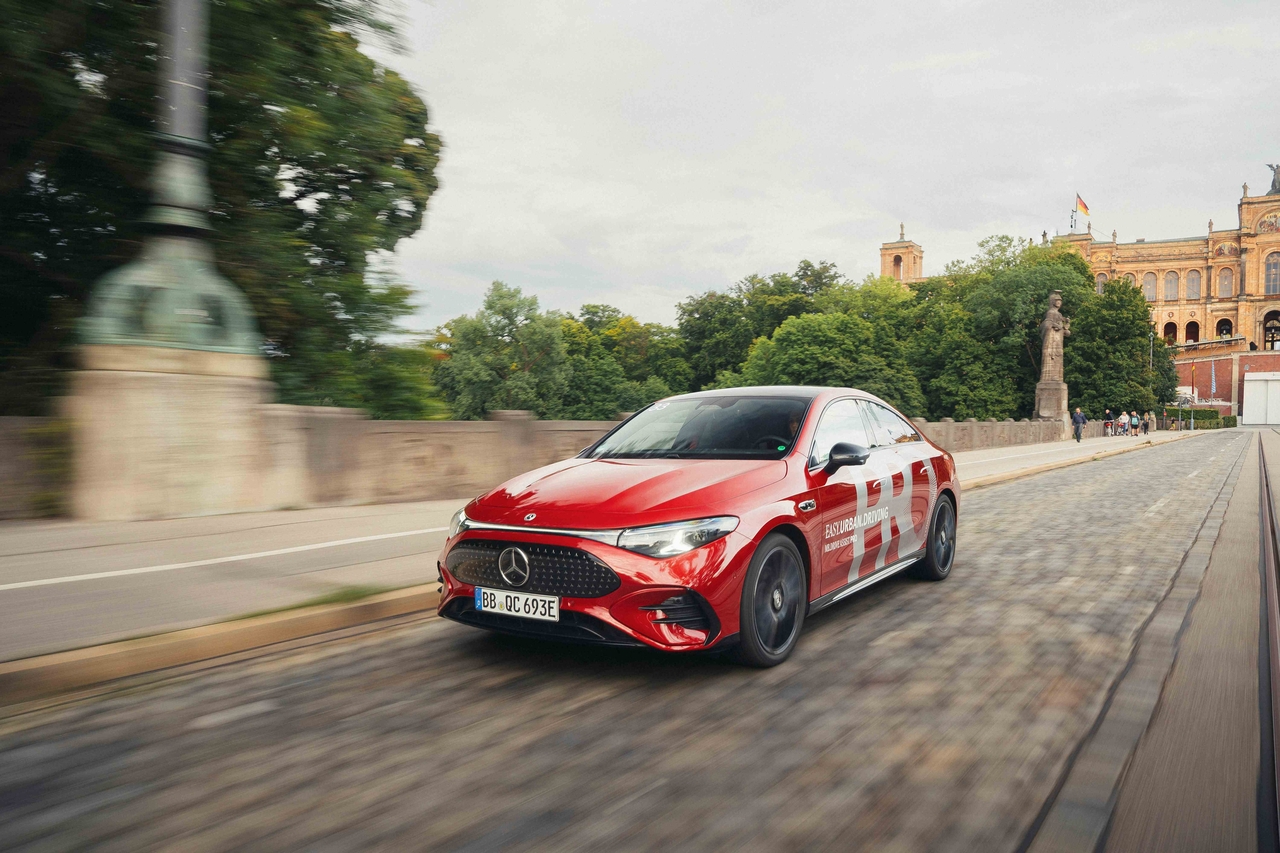
The system is not, however, a fully autonomous driving system that allows the driver to hand over complete control of the vehicle. Rated at Level 2 under the Society of Automotive Engineers scale, it requires the driver to continuously monitor the driving situation and take immediate control when necessary.
The system uses 27 sensors in total — 10 cameras, five radar units and 12 ultrasonic sensors. Data collected by the sensors is processed by a high-performance computer capable of up to 254 trillion operations per second. Mercedes-Benz developed the system by combining its proprietary operating system, MB.OS, with Nvidia's AI and computing technology.
Joerg Burzer, chief technology officer of Mercedes-Benz Group, said the system "reduces driver workload and delivers a more relaxed driving experience through intelligent driving support — from congested city centers to ordinary roads and highways."
Mercedes-Benz will first run a preview program for select customers in Stuttgart and Munich in December, collecting user experiences and feedback from real-world driving before the official launch and incorporating the findings into future improvements.
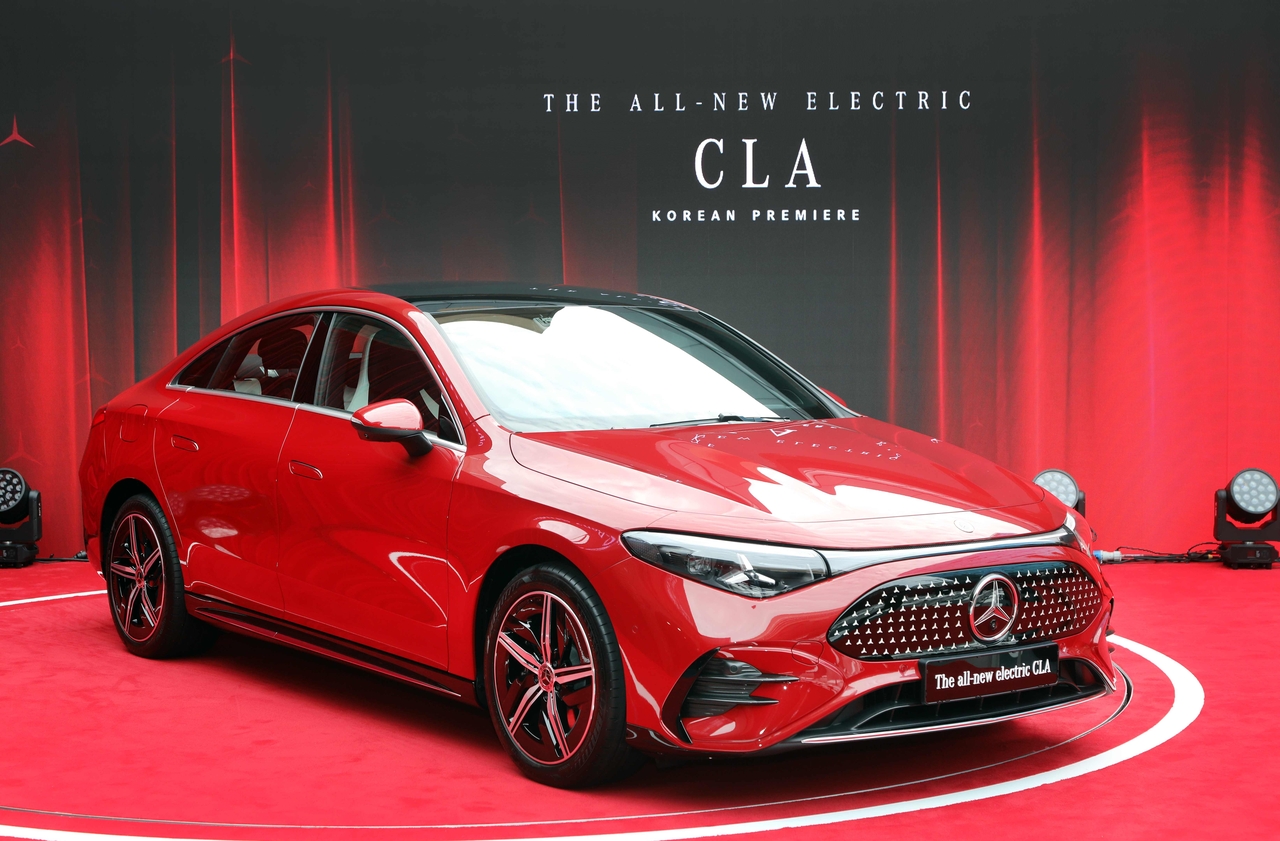
The official launch in Germany is scheduled for the first half of next year. Mercedes-Benz plans to gradually expand the system to its passenger car and van lineups regardless of powertrain, covering both electric vehicles and internal combustion engine models.
Existing vehicle owners whose cars are equipped with the required hardware will be able to add the feature after launch via an over-the-air software update. Compatible models and pricing will be announced in line with each market's launch schedule.
Mercedes-Benz also plans to introduce the point-to-point driving assistance feature in the United States in the first half of next year. In China, the company already offers a comparable system through the new CLA.
Whether the system will be offered in South Korea has yet to be determined. Even features approved in Germany must be assessed against local safety standards and road conditions before they can be introduced domestically. Mercedes-Benz said the functions available and the launch timeline may differ by country depending on each market's regulatory regime and conditions.
kwater@heraldcorp.com





