Interview with Kim Young-seok, CEO of Bonanza Factory
Exec stresses need to look beyond customers to wallets and transaction flows
Banks issuing real-name accounts explore on-chain AML
Bank infrastructure can follow once stablecoins are adopted
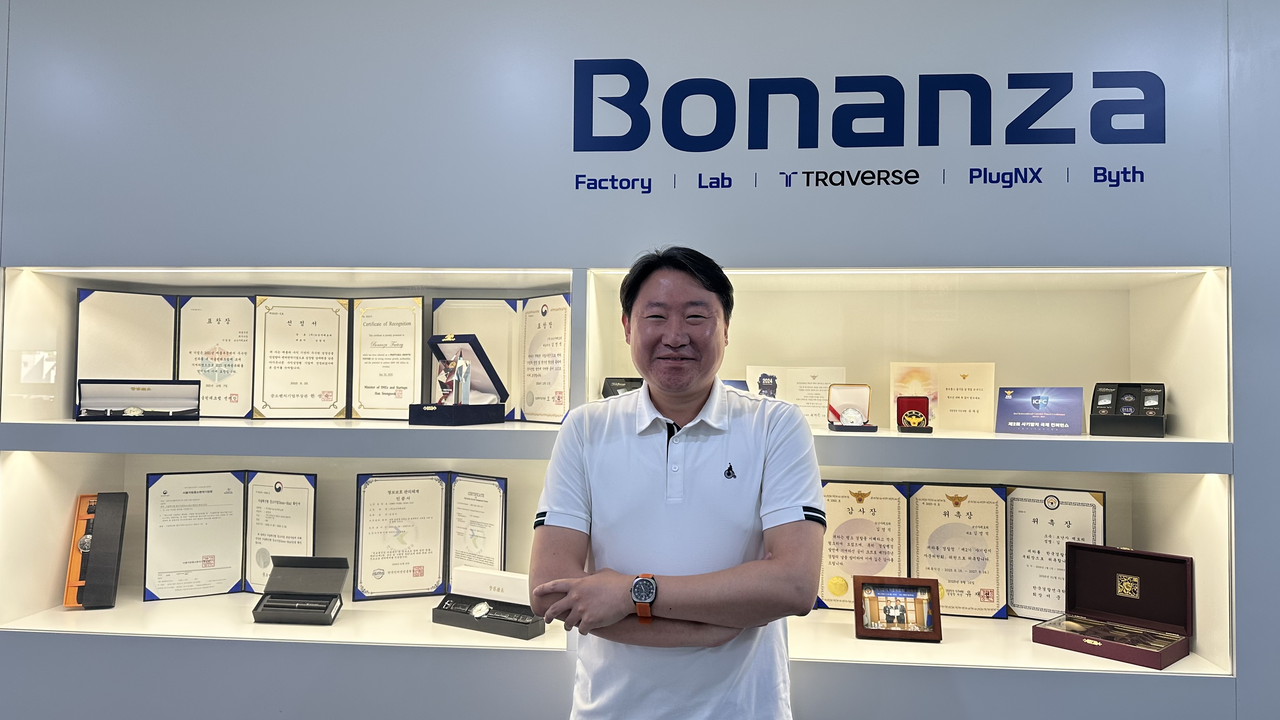
"When digital assets enter the regulated financial system, knowing your customer — KYC — is no longer enough. Know Your Wallet, or KYW, and Know Your Transaction, or KYT, must work alongside it."
Kim Young-seok, CEO of Bonanza Factory, made the remarks in an interview on June 8. His point: while traditional financial anti-money laundering, or AML, frameworks are built around customer identity and account-level transactions, a financial environment that incorporates digital assets requires institutions to also track wallet addresses and on-chain transaction flows.
Financial institutions' AML compliance systems are designed around customer due diligence and account information — determining who the customer is and whether their account activity is normal. But as digital assets move into regulated financial services, a new type of account enters the picture: the digital asset wallet.
"The biggest difference from a traditional bank account is that a single entity can create a virtually unlimited number of wallets, and for many of those wallets, ownership information and risk profiles are not clearly identified," Kim said. He added that institutions need to assess, in near real time, whether a given wallet is linked to high-risk addresses, what path funds traveled, and what connections exist to mixers, bridges, illicit services or sanctioned addresses.
Bonanza Factory's on-chain AML solution, Transight, targets exactly this space. Unlike approaches that query external APIs to verify transaction relationships one by one, Transight accumulates major on-chain data in its own database, enabling rapid tracing of fund flows between wallets. "The key question now is how to incorporate on-chain risk information as a new variable inside banks' existing customer risk-assessment models," Kim added.
Banks issuing real-name accounts show clear on-chain AML demand. Kim identified two main reasons banks need on-chain monitoring. The first is tightening management responsibilities for banks that issue real-name verified deposit and withdrawal accounts. From an AML standpoint, he said, demand has grown to more closely verify the origin of funds transferred out of exchanges.
"Banks that issue real-name accounts have had limited visibility into where and how the Korean won deposited into exchanges ultimately flows," Kim said. "The intent is for banks to comprehensively monitor whether exchanges are transacting with high-risk wallets, wallets linked to money laundering, or sanctioned addresses."
Interest in on-chain AML frameworks is growing across the broader traditional financial sector, not just at Shinhan Bank, which recently signed an MOU with Bonanza Factory. "Banks that have issued real-name accounts are showing the most immediate interest," Kim said. "Two institutions have already indicated they intend to adopt the system this year."
Building on-chain AML infrastructure also serves a forward-looking purpose: preparing for digital asset financial services. Banks can initially use the system to review past transactions at exchanges where they have issued real-name accounts, and once stablecoins are introduced, the same infrastructure could become a core part of a bank's basic operations. Setting up custodial and non-custodial wallets carries significant costs amid lingering regulatory uncertainty, but on-chain monitoring systems are comparatively less burdensome.
Kim said that if stablecoins move into payments, remittances and foreign exchange, banks' AML frameworks will need to change as well. The most urgent shift, he said, is tighter integration between fraud detection systems, known as FDS, and AML operations.
"In the banking sector, FDS and AML have operated as fairly distinct functions," he said. "FDS has focused primarily on detecting anomalous transactions and preventing incidents — real-time blocking and customer protection — while AML has centered on money laundering risk assessment, suspicious transaction reporting, post-hoc monitoring and regulatory compliance."
That separation has been workable until now, but the introduction of stablecoins changes the equation. Funds linked to hacking, phishing, illegal gambling, sanctions exposure, or mixers and bridges can simultaneously constitute fraud risks and AML targets.
"On-chain transactions move fast and are difficult to recover once transferred, so post-hoc analysis alone is not sufficient," Kim said. "A bank's AML framework needs to connect real-time detection, transaction holds, risk-path analysis, customer risk assessment and suspicious transaction reporting into a single, integrated flow."

Blanket reporting threshold scrapped, but 'exchange liability may grow.' Kim also weighed in on the revised enforcement decree of the Act on Reporting and Using Specified Financial Transaction Information, welcoming the financial authorities' decision to walk back a plan that would have required all virtual asset transactions of 1 million won ($730) or more to be filed as suspicious transaction reports, or STRs. The Financial Intelligence Unit recently held meetings with exchange operators and shifted toward allowing each business to run its own AML management system based on a risk-based approach, or RBA.
"The RBA ultimately comes down to what efforts an operator has made to reduce risk," Kim said, while cautioning that deregulation does not mean reduced accountability. Removing a uniform threshold and leaving judgment to individual operators could in fact raise the stakes for exchanges' own AML systems and their after-the-fact liability.
A separate plan to extend the travel rule to transactions below 1 million won is expected to remain in place. Under current rules, the information-sharing obligation applies to transfers of 1 million won or more between domestic virtual asset service providers; the revised decree would extend that requirement to transactions below that threshold.
"If the travel rule is applied too aggressively, it could push activity toward peer-to-peer wallet transactions as a workaround," Kim said. "The practical effectiveness of the regime needs to be assessed with an eye on flows moving outside centralized exchanges."
Fund movements through personal wallets and overseas exchanges also intersect with tax authorities' efforts to track digital asset tax evasion. Tax authorities face a growing need to distinguish between different types of irregular fund flows — irregular gifting, overseas asset concealment and evasion of tax arrears, among others. When assets move through overseas exchanges or personal wallets, existing financial data often cannot confirm the final destination or holding status of the funds.
Bonanza Factory was recently selected as a transaction-tracking software provider for the National Tax Service's digital asset tax evasion response program. Kim linked the selection to the concept of "sovereign KYT." "If intelligence on domestic tax and investigative agencies' digital asset tracing accumulates only in foreign solutions, the foundation of the compliance industry could weaken," he said. "We will continue to advance a domestically built AML system."
![“7천만달러→7.8억달러” 스페이스X에 거액 몰려…토큰화 주식까지 빨아들인다 [크립토360]](https://wimg.heraldcorp.com/news/cms/2026/06/10/news-p.v1.20260608.0604ef485fbf43a2939c4970860b9741_T1.jpg)
kyoung@heraldcorp.com