A drug addiction treatment and rehabilitation program developed through a government-funded national R&D project is set to enter full-scale clinical trials.
The Research Consortium on Drug Abuse and Addiction — supported by the Ministry of Health and Welfare's Mental Health R&D Project Group and led by Lee Hae-kook, a professor at the Catholic University of Korea College of Medicine — announced it has completed a "Korean-style cognitive behavioral therapy (CBT)-based addiction treatment program" ready for immediate application in domestic clinical settings. The achievement is grounded in findings recently published in international academic journals. The consortium said the program marks a departure from the previous practice of directly adopting Western-centered treatment models and manuals, instead producing a tailored program that addresses the practical limitations unique to South Korea.
The scientific foundation for the CBT-based program was established through research by a team led by Kim Jong-tae, a professor at the Catholic University of Korea College of Medicine, with Im Hyun-woo of the Department of Preventive Medicine serving as corresponding author. Building on that work, a team led by Na Eui-hyun at Soonchunhyang University College of Medicine developed the final "Korean standard psychosocial treatment program for drug addiction," incorporating the lived experiences of domestic patients and clinicians as well as real-world clinical needs.
The Korean standard program is designed in four distinct versions to allow flexible application across different institutional settings and treatment environments. The four components are: a short-term community and outpatient interview program for use at community counseling and rehabilitation centers and clinic-level outpatient facilities; a "first step" program aimed at boosting patients' treatment motivation and retention; a craving management and alternative behavior program for intensive inpatient and outpatient treatment; and an emotion regulation program to support patients' psychological stability. The programs can be deployed in combination, tailored to the needs of individual patients and treatment institutions.
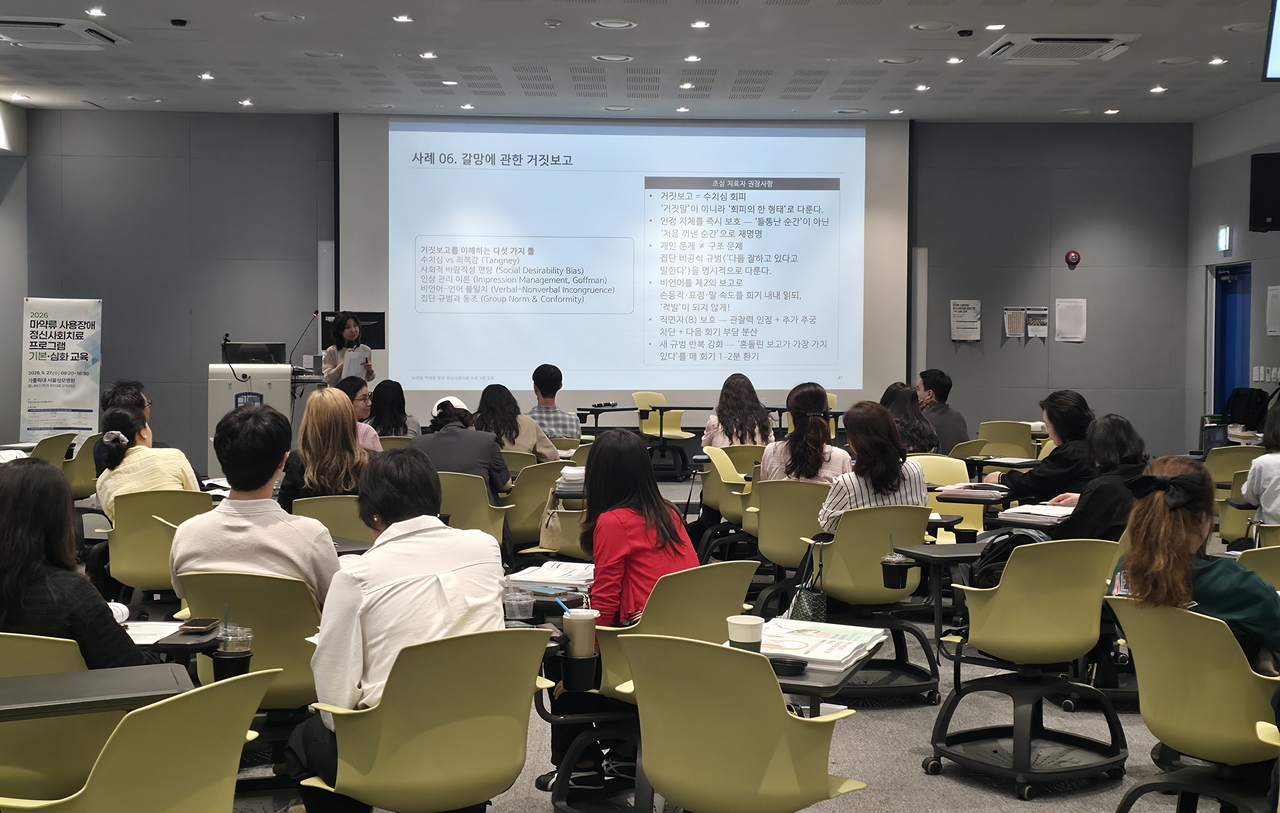
To help embed the completed programs in clinical practice, the research team successfully conducted two rounds of training for hospital and community-based practitioners nationwide, covering teaching methods and manual use. Beginning in July, a first-phase pilot study to verify the programs' effectiveness is scheduled at Daegu Daedong Hospital and Incheon Chamsarang Hospital, two of South Korea's leading designated drug addiction treatment facilities.
Lee, the consortium chair, called the outcome "an exemplary case of organic, government-funded R&D — one that built on Professor Kim Jong-tae's world-first meta-analysis evidence, allowed Professor Na Eui-hyun's team to complete four standard programs suited to domestic clinical settings, and advanced all the way to the clinical verification stage." He urged the government to concentrate drug-related R&D investment in clinical research to verify the effectiveness not only of the Korean-style CBT program but also of a broader range of treatment approaches.
kty@heraldcorp.com