Water quality monitoring network and priority reservoirs expanded to strengthen early algae surveillance
Diagnostic sensors and AI prediction systems deployed to supply clean agricultural water
Korea Rural Community Corp. (KRCC), led by President Kim In-jung, said Monday it is strengthening algae management measures and taking proactive steps to supply clean agricultural water in line with the Ministry of Climate, Environment and Energy's launch of the first Algae Seasonal Management Program.
The risk of algae blooms has grown as climate change and abnormal heat intensify. According to the Ministry of Climate, Environment and Energy, the number of algae alert sites among 29 national monitoring points doubled from seven in 2023 to 14 in 2024, while total alert days rose from 530 to 882 over the same period. In response, the ministry introduced the first Algae Seasonal Management Program, running from May 15 to Oct. 15, to fundamentally prevent algae blooms and protect public health.
KRCC said it plans to shift its agricultural water quality management to a science-based, proactive framework and strengthen the foundation for supplying water that farmers and the public can trust.
KRCC is deploying a tighter algae surveillance system to achieve its goal of supplying clean agricultural water. The corporation increased the monitoring frequency of its agricultural water quality measurement network from four times a year in 2023 to seven times a year, and expanded the number of surveyed sites from 975 in 2025 to 1,053 to reinforce its inspection system.
Intensive management is also under way during summer, when algae blooms are most likely. The number of priority-managed reservoirs has grown from 356 last year to 369 this year, with reservoirs used for water activities and leisure now included in the management scope. KRCC also designated May through September as an enhanced algae surveillance period, during which priority reservoirs receive on-site inspections at least twice a month.
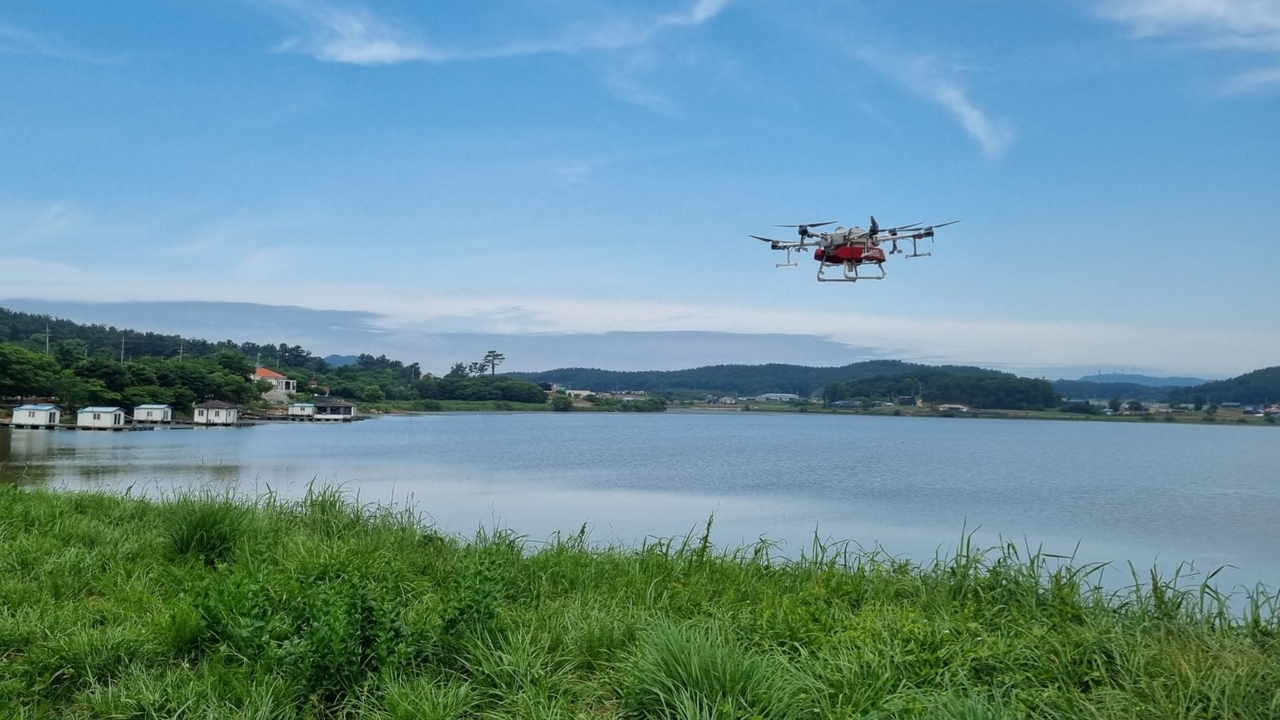
KRCC has upgraded its algae detection technology to build a scientific monitoring system capable of catching early-stage blooms invisible to the naked eye. The corporation introduced algae diagnostic sensors this year that allow immediate on-site assessment of algae conditions. Previous water quality testing required two to three weeks from sample collection to laboratory analysis of chlorophyll-a levels, limiting the speed of response. The new portable sensors enable rapid detection of early-stage algae and allow control work to begin without delay.
Chlorophyll-a is a key indicator used to measure the quantity of algae-causing phytoplankton.
AI-based prediction runs alongside the sensor system. An AI water quality prediction system trained on historical water quality data and meteorological records identifies reservoirs at risk of algae blooms in advance and alerts facility managers to enable swift responses.
When algae blooms occur, KRCC responds in stages based on severity. The corporation classifies algae conditions into four levels — Attention (chlorophyll-a at or below 35 mg/m³), Caution (35–69 mg/m³), Alert (70–99 mg/m³) and Serious (100 mg/m³ or above) — and applies corresponding measures including algae-removal agent spraying, bloom-blocking barriers and algae-removal vessels. By the end of May this year, KRCC had completed control work at 12 reservoirs that exceeded management thresholds.
When chlorophyll-a levels reach 70 mg/m³ or above, triggering the Alert level, KRCC conducts algae toxin investigations. The corporation said it will manage agricultural water safety by surveying the entire water supply chain from source reservoirs to farmland.
KRCC also plans to continuously upgrade its science-based proactive management framework. It will develop an algae prediction model using satellite observation data to improve the AI water quality prediction system, identify and adopt promising private-sector technologies through new-technology briefings, and work with relevant agencies to verify the safety and effectiveness of algae-reduction technologies.
"Managing agricultural water quality is a critical task directly tied to the livelihoods of farmers and the food supply of the public, especially as algae blooms increase due to abnormal climate conditions," said Choe Hyeon-su, KRCC's director of water resources management. "We will supply clean agricultural water based on a science and technology-driven proactive management system."
kkm9971@heraldcorp.com