Red bricks laid by students of the old Yuhan vocational school reused to preserve 100 years of heritage
Thirty years after its first technology export to Japan in 1994, Yuhan's Lazertinib rewrites Korean pharma history
A digital 'mind-diagnosis tea lounge' offers emotional healing and personalized tea tastings
Yuhan becomes the 11th listed Korean company to mark its centennial founding anniversary
The willow tree — Yuhan's enduring symbol — has been reborn as a modern healing space, drawing on digital media technology and historical archives. Willow House, a cultural complex Yuhan opened to mark its centennial, brings together the entrepreneurial spirit and independence-movement legacy of the late founder Dr. Yoo Il-han alongside the company's pharmaceutical and biotech vision for the next century, weaving them into interactive content that leaves a strong impression on visitors.
Located in Daebang-dong, the complex was created by renovating Yuhan's former headquarters — a building that held the company's history for 35 years from 1962 — into an open cultural space for the surrounding community. It opened June 20 to coincide with Yuhan's centennial. According to the Korea Listed Companies Association, Yuhan is the 11th listed company in South Korea to reach its 100th founding anniversary.
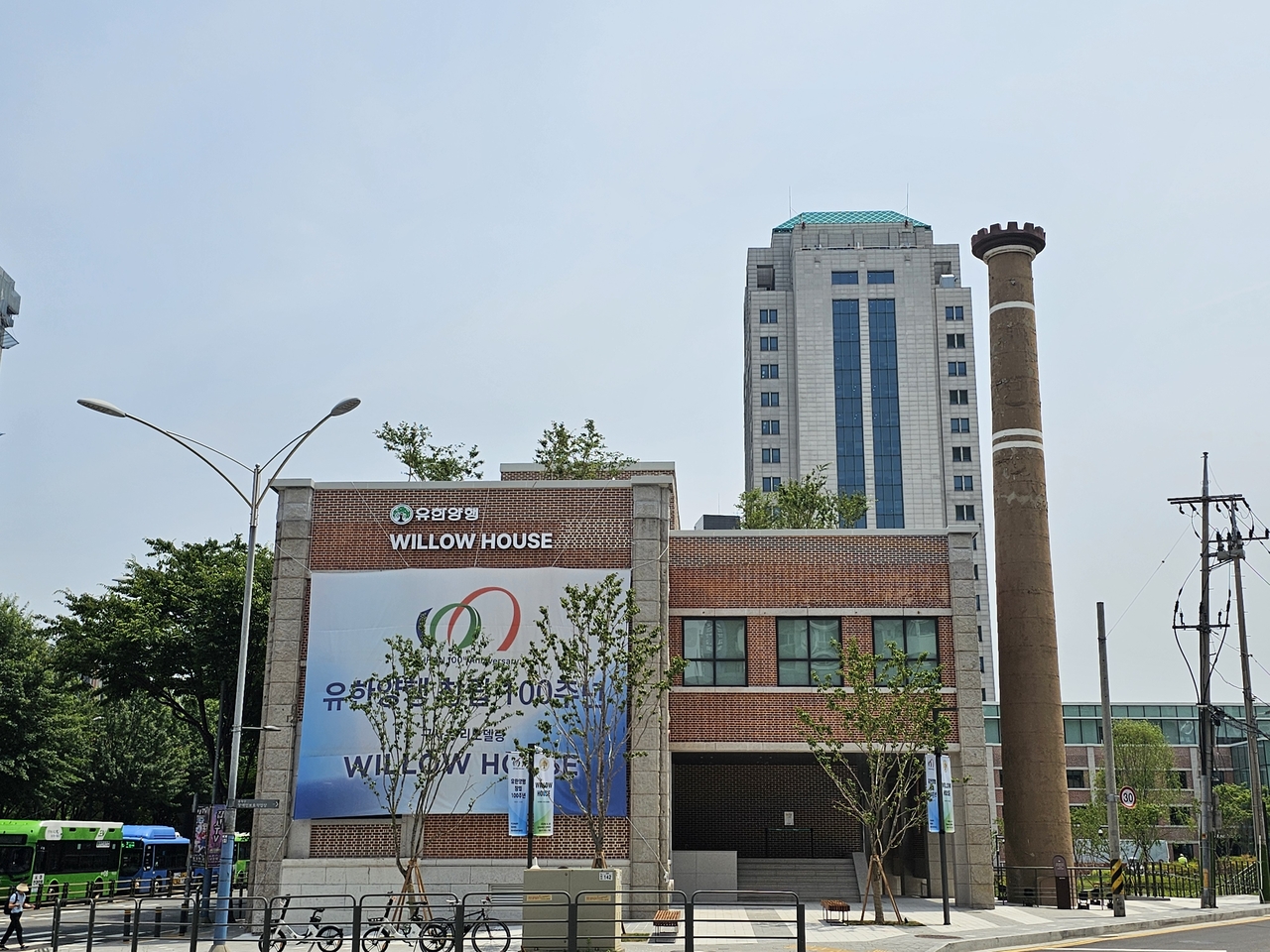
The red brick walls adorning Willow House's exterior are a legacy of the old building, laid by hand by faculty and students when Yuhan Vocational High School was established in 1961. Rather than demolishing those traces of the past, Yuhan reused the historic bricks in their entirety to rebuild the outer walls, physically preserving a century of heritage in permanent form.
In the outdoor garden — Willow Park — in front of the main entrance stands a landscape stone pagoda that once sat in the garden of Dr. Yoo's private residence, relocated and preserved in its original form. It stands as a testament to a founder who valued quiet daily reflection amid a frugal life. On Tuesday, a centennial time-capsule sealing ceremony was held in the garden, attended by CEO Cho Wook-je and the chairs of the Yuhan Foundation and Yuhan School Foundation. A time capsule containing 56 items — including the company's flagship products and handwritten letters from employees — was buried to be opened 50 years from now, in 2076.
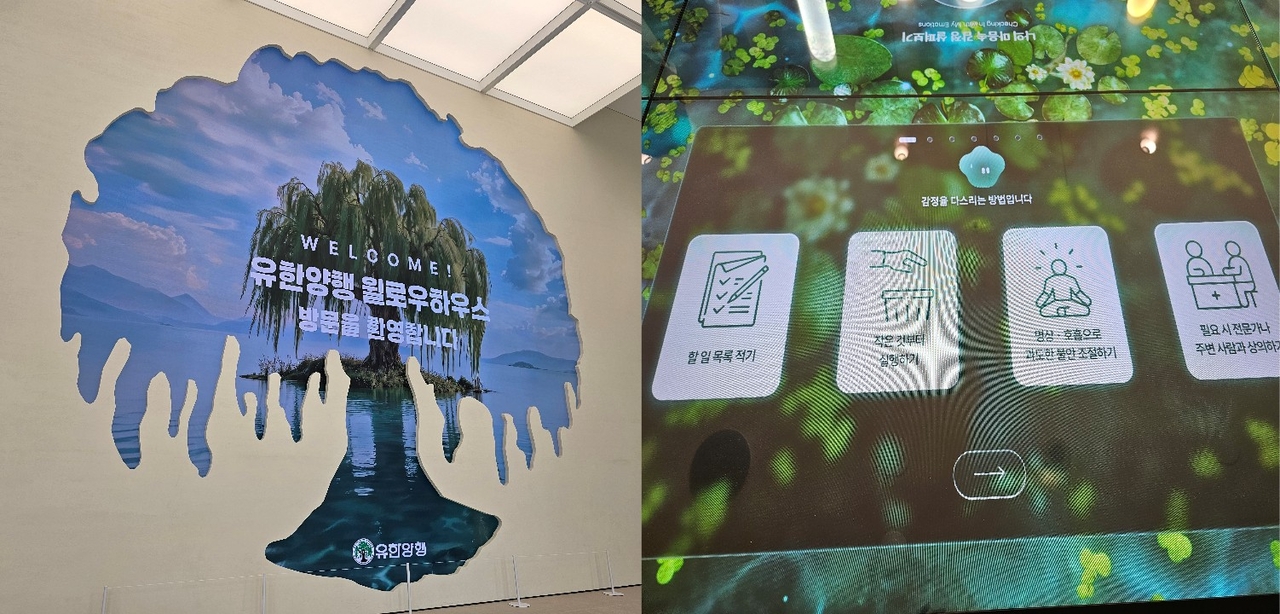
Stepping inside Willow House, visitors are greeted first by a towering LED screen shaped like a great willow tree. The welcome wall renders the healing journey of "nature saving people" in abstract graphics, evoking a sense of visual calm.
The digital interactive exhibition on the first floor is the space's most distinctive feature, designed for visitors to discover and restore their inner selves through five types of emotional self-diagnosis. Using a kiosk, visitors assess their inner emotions and move through a self-analysis system based on the Johari Window theory. Once the diagnosis is complete, visitors receive a five-tier personalized tea kit matched to their temperament and emotional state. In a lounge where willow-leaf sculptures sway gently overhead, visitors can savor their own blend of tea and take time for quiet reflection, easing the stress of daily life.
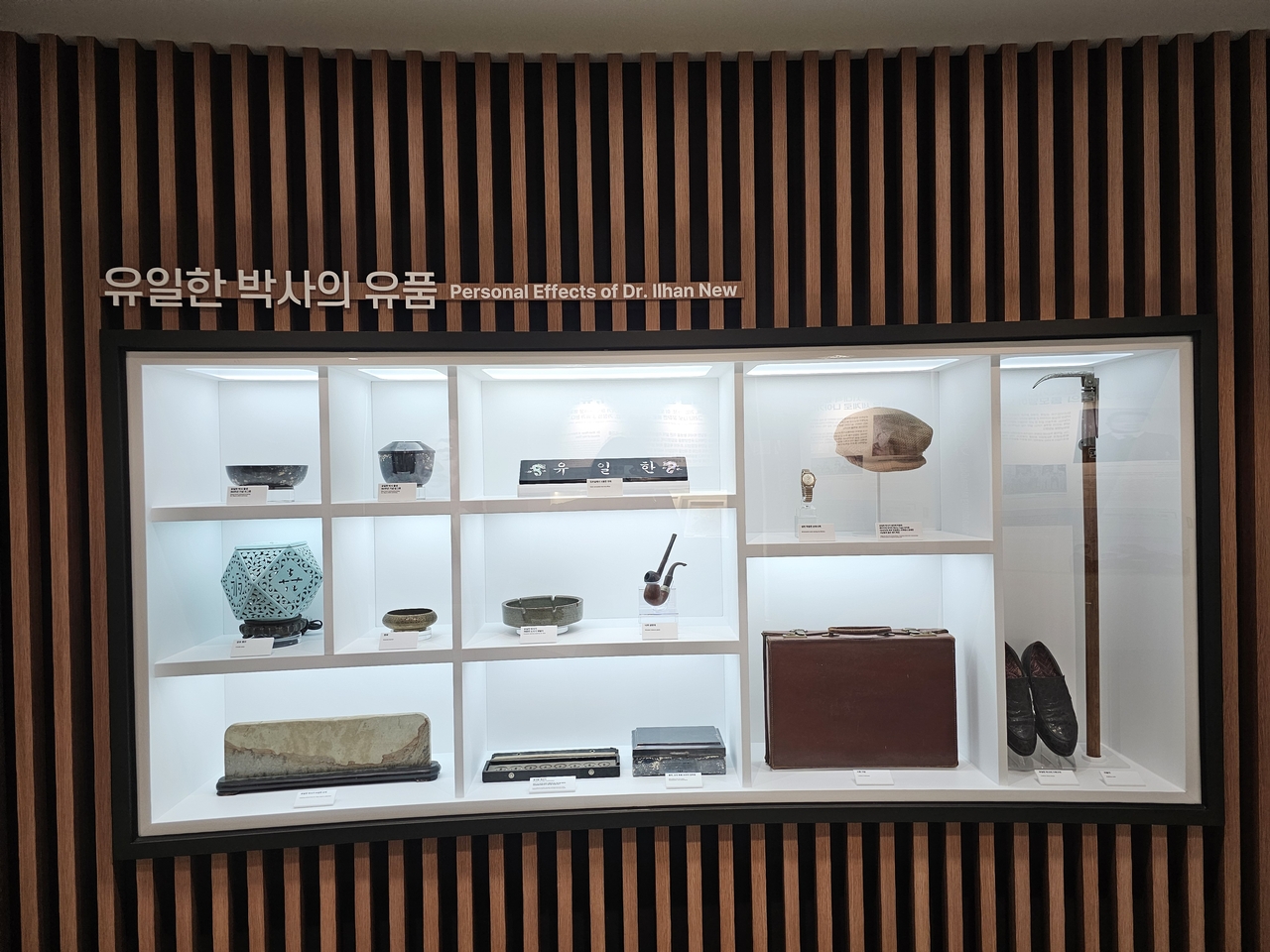
At the heart of the history wing, the second-floor Memorial Hall leads into a permanent exhibition chronicling the life of Dr. Yoo Il-han, the root from which Yuhan grew. Organized around the central proposition "A lifelong path of love for his country — Yoo Il-han was an independence activist," the exhibition traces his footsteps across boyhood, youth and middle age. Records of his teenage years — when he enrolled at a Korean youth military school in the United States at 14 and underwent military training that deepened his national consciousness — reveal the origins of the fierce patriotism that defined his entire life. The exhibition also meticulously archives his role in organizing the Korean National Guard in America and his participation in the NAPKO Project, a special infiltration operation run by the US Office of Strategic Services.
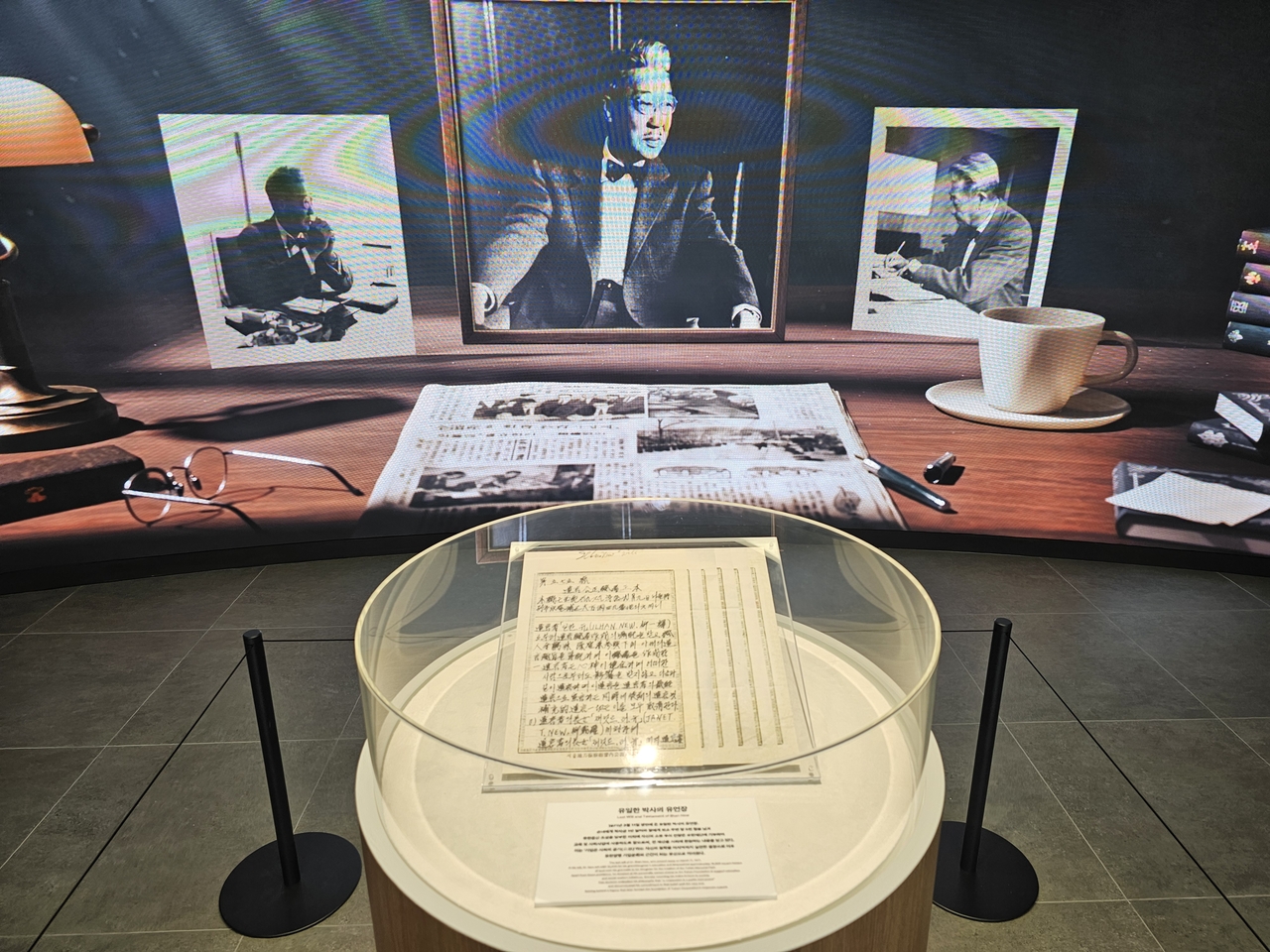
At the center of the exhibition hall, a glass showcase holds the original handwritten will Dr. Yoo left at his death, preserved with quiet solemnity. A leather briefcase, worn shoes and other modest personal effects bear witness to his frugal daily life. The will urged his children toward self-reliance and pledged his entire estate to society and educational foundations. Displayed alongside it are the Mugunghwa Medal of the Order of Civil Merit — the nation's highest honor, awarded by the government in recognition of his wishes — as well as the Order of Merit for National Foundation's Independence Medal and Peony Medal, each exhibited with the historical records of their conferral.
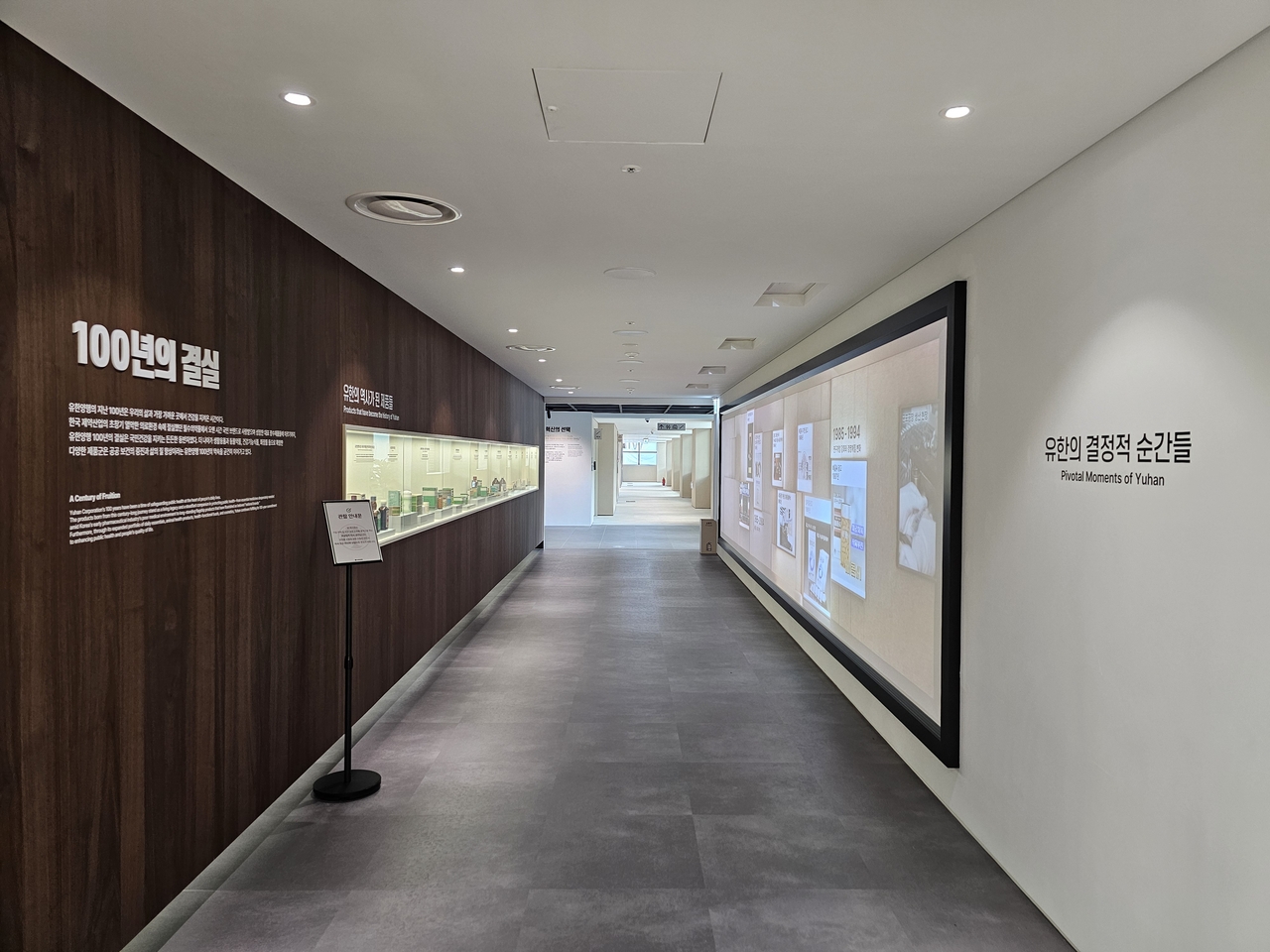
A history tunnel running along the exhibition walls, stretching back to 1926, compresses the vast arc of Yuhan's journey. In 1994, the company exported the technology for YH439 — a new drug it had developed in-house for liver disease treatment — to Japan, marking the first milestone at which Yuhan's R&D competitiveness won recognition in the global market. The company continued to pour resources into R&D through numerous setbacks, and exactly 30 years later, Lazertinib received US Food and Drug Administration approval in 2024. Three decades of long-term investment and perseverance bore fruit as a homegrown new-drug success story that reshaped the landscape of South Korea's pharmaceutical industry.
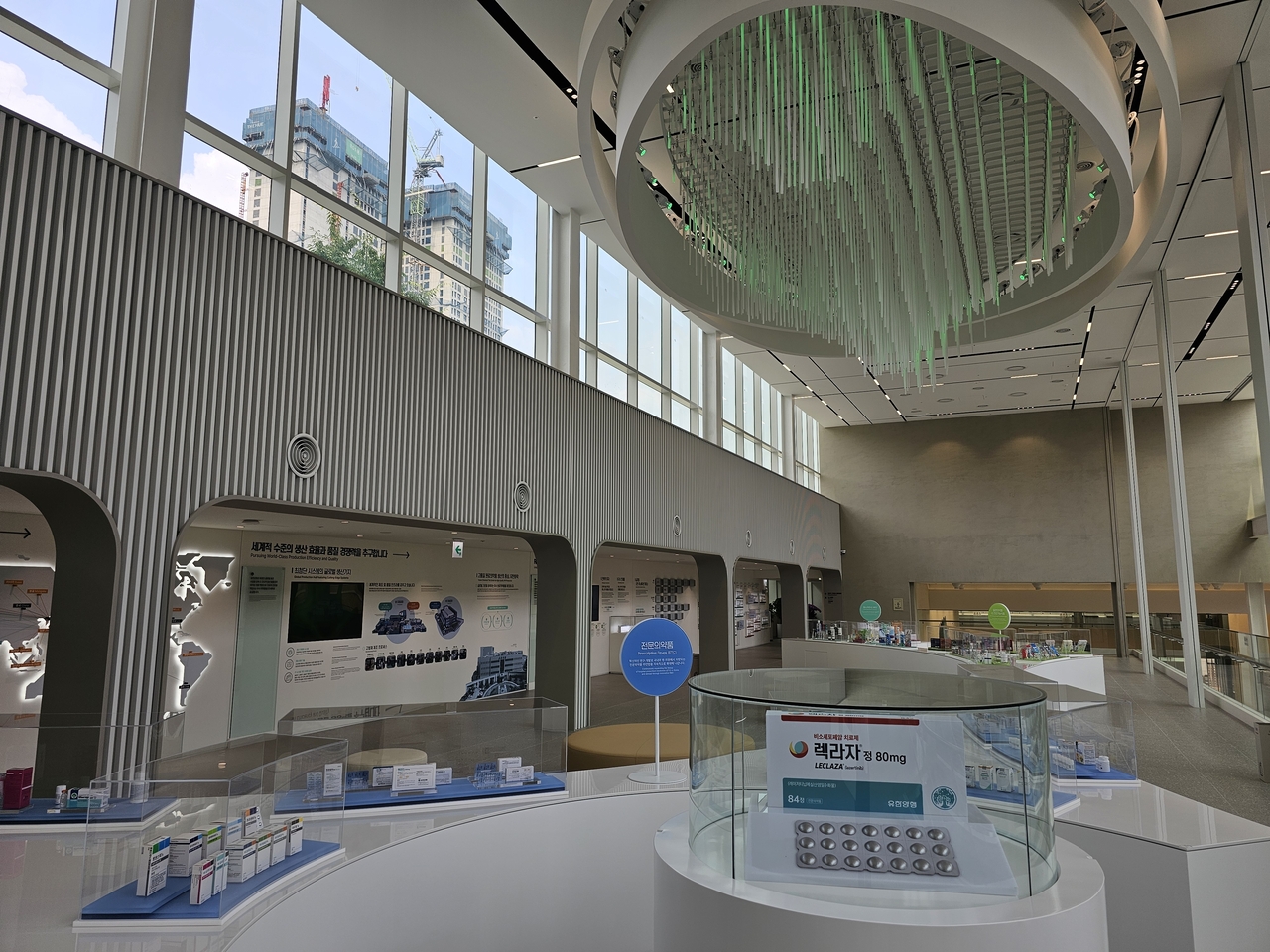
The third-floor Vision Hall is a grand space showcasing Yuhan's current and next-generation R&D capabilities. From the high, open ceiling hangs a massive media sculpture evoking the gentle sway of willow leaves, moving softly with the air to create a striking visual. At the center of this expansive modern space, displayed inside a circular showcase, is Lazertinib — the lung cancer treatment born of Yuhan's R&D work and the first drug developed by a Korean pharmaceutical company to receive FDA approval.
The guestbook holds entries such as "It was a rewarding time catching a glimpse of Dr. Yoo Il-han's footsteps" and "I was moved by this bridge connecting past and present." Willow House is not simply a display case preserving the glories of a century gone by. The founder's core values — his philosophy of non-possession and patriotism — meet the innovation represented by cutting-edge digital content and a globally recognized new drug, and the space itself proves that they have been elevated into a forum for communication that resonates across generations.
In his commemorative address, CEO Cho Wook-je said the company's journey toward its "Great Yuhan, Global Yuhan" vision — advancing as a global innovative pharmaceutical company and contributing not just to the health of Koreans but to the health of all humanity — had begun anew. "Upon 100 years of trust, we will add 100 years of promise," he said.
silverpaper@heraldcorp.com