
Case 1: A 50-year-old housewife identified as A had been experiencing recurring dizziness for several months. She gradually noticed a decline in her sense of balance, and her morning headaches grew increasingly severe. When she visited a hospital and underwent an MRI, doctors found a brain tumor in her cerebellum.
Case 2: A 62-year-old man identified as B, who had a history of high blood pressure, suddenly developed severe dizziness one morning along with nausea and vomiting, prompting a visit to the emergency room. He had no ringing in the ears or hearing loss. The attending physician initially suspected benign paroxysmal positional vertigo or vestibular neuritis, but hours later B began staggering and repeatedly falling to one side. An MRI confirmed a cerebellar infarction.
Case 3: A 45-year-old woman identified as C was exercising when she was suddenly struck by an excruciating headache — described as feeling like her head was about to explode — accompanied by vomiting. Assuming it was a migraine, she took a painkiller, but the pain kept worsening. A hospital CT scan confirmed a subarachnoid hemorrhage caused by a ruptured cerebral aneurysm.
Repeatedly stumbling while walking, feeling as though you are about to black out and collapse, or losing your sense of balance should not be dismissed as ordinary dizziness. What patients loosely describe as feeling "dizzy" can in practice be a warning sign of a serious condition such as a stroke. Vertigo, fainting and balance or gait problems can each point to different underlying conditions, and when symptoms recur or interfere with daily life, an accurate diagnosis is essential. Kim Yun, a neurology professor at Gangdong Kyung Hee University Hospital, explains the causes, treatments and prevention of dizziness-related symptoms.
Not all dizziness is the same. Dizziness is a common symptom that most people experience at some point, but it does not always stem from the same cause. Patients often use the word "dizzy" to describe a spinning sensation, a sudden darkening of vision, difficulty standing upright or staggering while walking. In practice, however, these experiences fall into distinct categories: rotational vertigo, pre-syncope and balance or gait disturbance. Because the nature of the symptom differs, so does the underlying condition, and lumping them all together as simple dizziness can be misleading.
A spinning or swaying sensation is characteristic of rotational vertigo, which is frequently linked to problems in the vestibular system of the inner ear. Common causes include benign paroxysmal positional vertigo, vestibular neuritis and Meniere's disease. Most cases improve with appropriate treatment, but persistent or recurring symptoms warrant a medical evaluation. A sudden darkening of vision or a feeling of impending collapse, on the other hand, may be related to syncope. In such cases, a temporary drop in blood flow to the brain — often due to orthostatic hypotension — can cause dizziness, fainting and unsteady gait. If symptoms recur when standing up quickly, or if the person has actually fallen, a thorough evaluation is needed.
When balance problems are severe enough that a person cannot sit or stand alone and struggles to walk even with wall support, an immediate hospital visit is warranted. Sudden gait disturbance accompanied by one-sided paralysis, sensory loss, slurred speech, double vision or severe headache may indicate a stroke and requires urgent medical attention. Dismissing such symptoms as ordinary dizziness can delay diagnosis of the underlying condition and lead to secondary injuries such as falls and fractures.
Because dizziness has many possible causes, a professional examination and testing are essential rather than relying on symptoms alone. Accurate diagnosis begins with assessing the nature, duration, triggers and accompanying symptoms. Doctors then evaluate pupillary reflexes, eye movement, speech, muscle strength, sensation and gait to determine whether the problem originates in the ear or in the brain and nervous system. When a central nervous system condition is suspected, brain MRI and other imaging studies are used to identify the cause.
Treatment varies depending on the underlying condition. When acute cerebrovascular disease such as a cerebral infarction is suspected, the timing of symptom onset and imaging results must be assessed quickly to determine whether acute-phase treatment is needed. Drug therapy — including antithrombotic and lipid-lowering agents — along with management of vascular risk factors such as high blood pressure, diabetes and hyperlipidemia is typically required. If Parkinson's disease is the cause of the gait disturbance, dopamine-related drug therapy is used alongside exercise and rehabilitation to reduce gait problems and balance impairment. When peripheral nerve abnormalities or vitamin deficiency are identified, nutritional treatment and correction of the underlying cause help manage symptoms. Regardless of the cause, rehabilitation — including balance training, gait training and lower-body strengthening — plays an important role in restoring walking ability and preventing falls.
Maintaining balance and preventing falls requires consistent attention to lifestyle habits. Regular aerobic exercise such as walking, combined with lower-body strengthening, helps preserve physical balance. Staying well hydrated can prevent orthostatic hypotension, and vascular risk factors including high blood pressure, diabetes and hyperlipidemia should be consistently managed. Older patients in particular need to be especially vigilant about fall prevention. Because falls can lead to serious injuries such as fractures, actively using assistive devices such as canes and walkers is advisable, and pushing through dizziness to keep walking is best avoided. Slippery floors and raised thresholds should be addressed, and adequate lighting — particularly at night — should be ensured to keep the home environment safe.
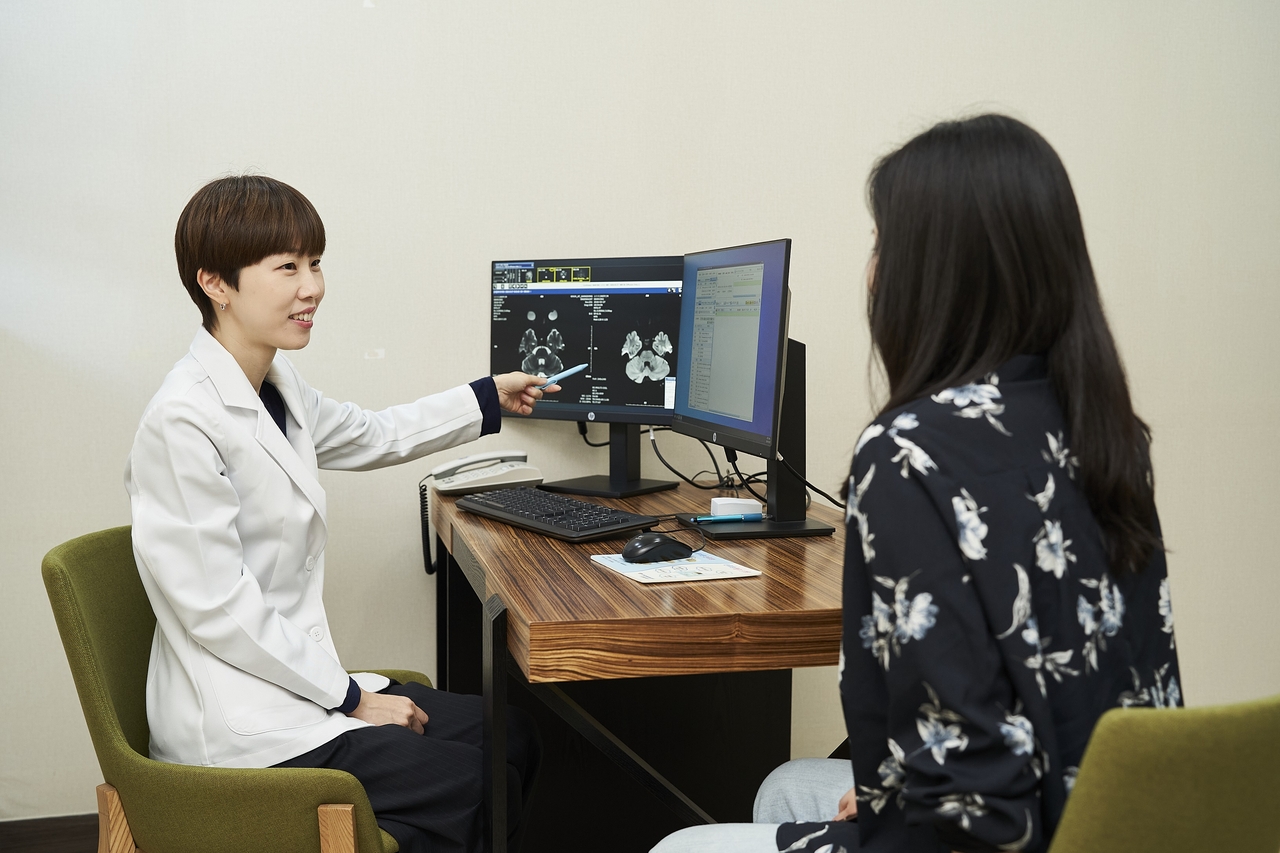
"Among the symptoms patients describe as dizziness, balance disturbance can signal stroke and gait problems can signal Parkinson's disease — it is important not to take these symptoms lightly," said Kim Yun, a neurology professor at Gangdong Kyung Hee University Hospital. "Practicing regular exercise, managing vascular risk factors and following fall-prevention guidelines in daily life can all make a real difference."
kty@heraldcorp.com