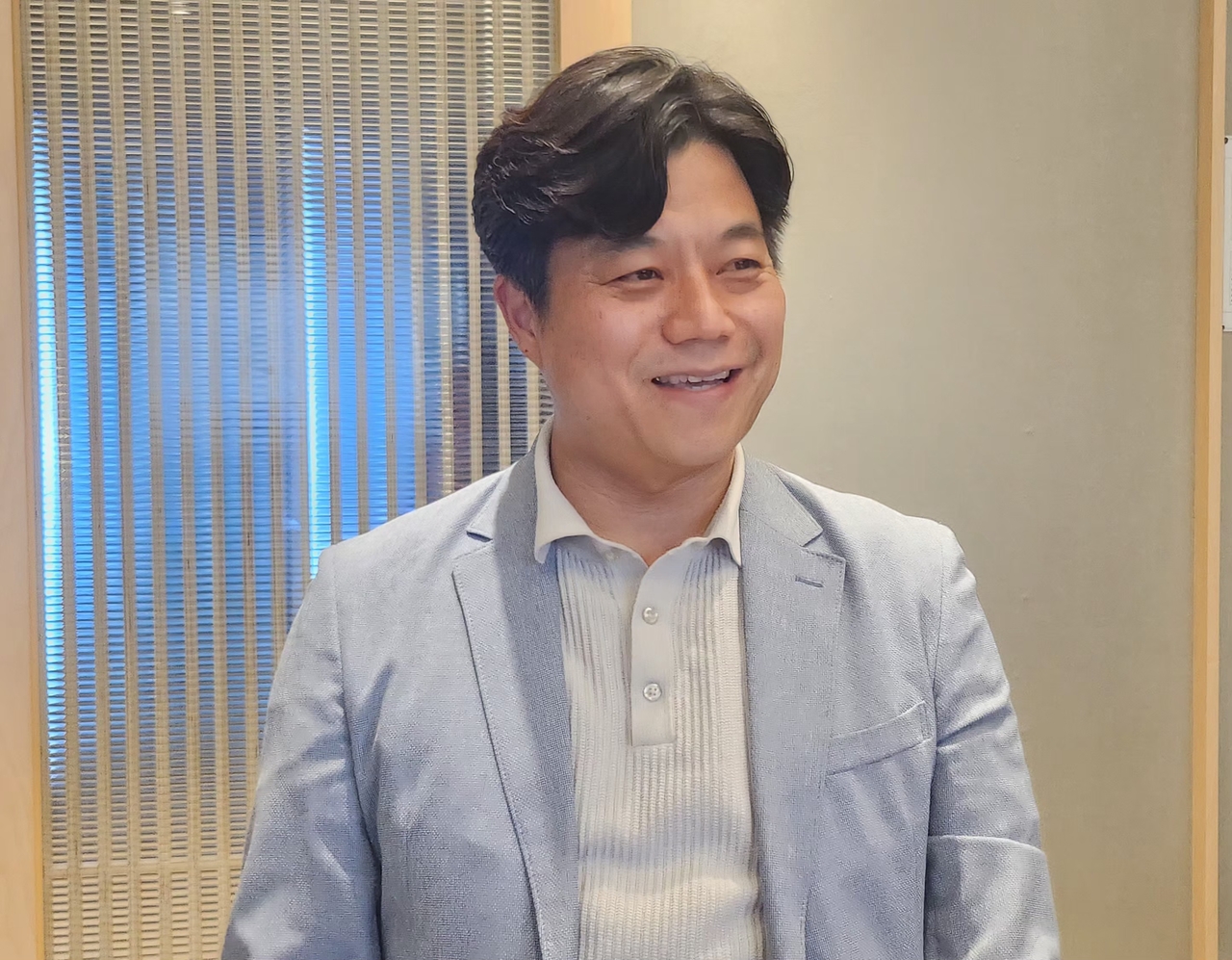
"The quality of public services must not be sustained on the sacrifice of public workers alone. Labor that keeps citizens safe and drives Busan's development deserves fair compensation."
Busan Facilities Corporation is the second-largest public institution under the Busan city government, after Busan Transportation Corporation. Jang Dae-deok joined the corporation in 2011 as part of its seventh open-recruitment cohort and was appointed in 2020 as a "labor director" — a non-standing board member — becoming the first person from a Busan public institution to hold such a post. After three years as an executive, he concluded that poor working conditions stemmed not from individual circumstances but from structural constraints, and decided to run for union chairman. In May last year, he was elected — the first open-recruitment hire to win the post. The Busan Facilities Corporation union is the sole bargaining representative union with 1,032 members, accounting for 85 percent of the corporation's total workforce of 1,214.
Jang met with a reporter Friday at a restaurant in Yeonje-gu, Busan, and directed a message to newly inaugurated Busan Mayor Jeon Jae-soo. "The city can only be seen as doing well if the facilities corporation is doing well," he said. "When autonomy and expertise are guaranteed, more creative and accountable administration becomes possible — and the benefits will ultimately go back to citizens."
Jang said he has fulfilled 63 percent of his campaign pledges in his first year in office. He cited a wage negotiation built on the principle of "intergenerational solidarity" as his biggest achievement. Within a 4.5 percent ceiling on wage increases, senior employees agreed to give up a portion of their raises so that the gains could be directed first toward improving conditions for lower-ranked staff. As a result, grade-7 employees saw an effective wage increase in the upper-6-percent range.
He identified the total labor cost regime as the most pressing issue. "Work at disaster and emergency scenes, or labor supporting public events, is compensated only with compensatory leave instead of overtime pay — and due to staff shortages, many workers cannot even take that leave," Jang said. "Some employees are accumulating 200 to 300 hours a year."
On collective bargaining, he pointed to the wage-peak system as the most intractable sticking point. Under the current arrangement, salaries are cut by 30 percent in the final year before retirement, with no corresponding reduction in working hours. "The union proposed lowering the reduction rate to 3 percent and shortening working hours — working-level discussions have wrapped up, but approval from the board chairman keeps being delayed," he said, urging a swift decision.
Jang also made a direct request to Mayor Jeon: establish a principle that at least two of the five executive positions — including the board chairman, auditor and standing directors — be filled through internal promotion. "I hope the promise he made as a candidate, to guarantee the autonomy of public enterprises under the city as partners rather than subordinates, translates into actual policy," he added.
"Corporation employees are fulfilling their responsibilities around the clock, 365 days a year," he said. "Rather than confrontation with the city government, we will be partners in building citizen-centered public administration through communication and cooperation."
kaf2002@heraldcorp.com