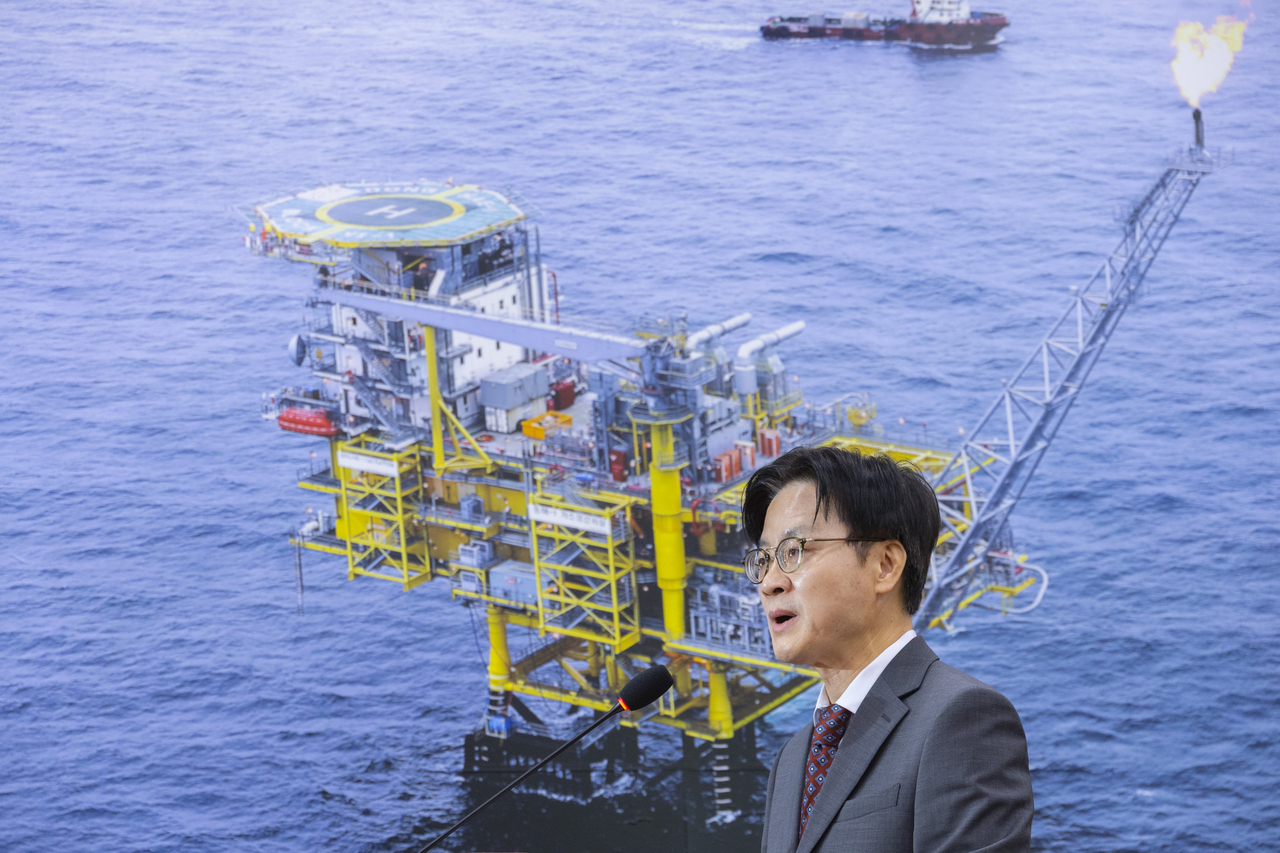
![Yoon Ji-woong, president of the Science and Technology Policy Institute, delivers an opening address at the 470th Science and Technology Policy Forum. [STEPI]](https://wimg.heraldcorp.com/news/cms/2026/07/09/news-p.v1.20260709.657a361283c44010bb88d836bb21d3c7_P1.jpg)
The Science and Technology Policy Institute, known as STEPI, held its 470th Science and Technology Policy Forum on Thursday at Le Méridien Seoul Myeongdong hotel.
The forum, themed "Engineering Education Innovation in the AI Era: Intelligence-Based Talent Development Strategy," was organized to explore new directions for engineering education amid rapidly shifting workforce demands driven by AI, automation and the spread of physical AI.
In his opening address, STEPI President Yoon Ji-woong said AI and automation are "rapidly reshaping the landscape of industry and labor," adding that the time has come for "a new paradigm of engineering education that goes beyond materials- and information-centered curricula to embrace 'intelligence' as a core competency."
Two keynote presentations followed. Eom Mi-jeong, head of STEPI's Science and Technology Human Resources Policy Center, outlined the challenges of redesigning future researcher training systems as AI-driven research automation accelerates in the AI-Scientist era. Hong Gwang-pyo, head of the Labor Supply and Demand Analysis Center at the Korea Research Institute for Vocational Education and Training, drew on labor market and hiring data to argue that "industry is paying attention not to technical knowledge but to intelligence."
Eom said the emergence of research-specialized AI tools such as AlphaFold and AI Co-Scientist has significantly expanded research productivity, while the role of human researchers is shifting from "human-in-the-loop" to "human-in-the-lead" — encompassing the roles of orchestrator, scientific agency and ethical steward.
![Participants in the 470th Science and Technology Policy Forum pose for a group photo. [STEPI]](https://wimg.heraldcorp.com/news/cms/2026/07/09/news-p.v1.20260709.d86621052eab44b0a0baec67236a5b3f_P1.jpg)
Kim Ji-young, a professor at Hanyang University, presented case studies on AI use in university settings and an intelligence-based competency framework. Kim Gyu-tae, a professor at Korea University, shared an interdisciplinary AI+X education model built around a program called "My Chip" — a service that lets undergraduate students design and fabricate their own semiconductor chips.
Kim described how the program uses a multi-project wafer platform developed in collaboration with ETRI, Seoul National University and DGIST, along with open-source electronic design automation tools, to give undergraduates hands-on experience across the entire process from chip design to physical measurement. He said participation has grown through both regular and non-regular coursework, as well as student clubs and inter-university partnerships.
Following the presentations, a general discussion moderated by Hwang Seong-su, vice president of the Korea Research Institute for Vocational Education and Training, examined key issues including redefining the essential competencies of engineering talent in the AI era, aligning labor market demand with curricula, and reforming engineering education accreditation and evaluation systems. Participants exchanged views on the need to redesign engineering education around "intelligence" rather than the transmission of technical knowledge.
nbgkoo@heraldcorp.com