"We will not tilt toward any one side — we will strike a balance in keeping with the spirit of integration."
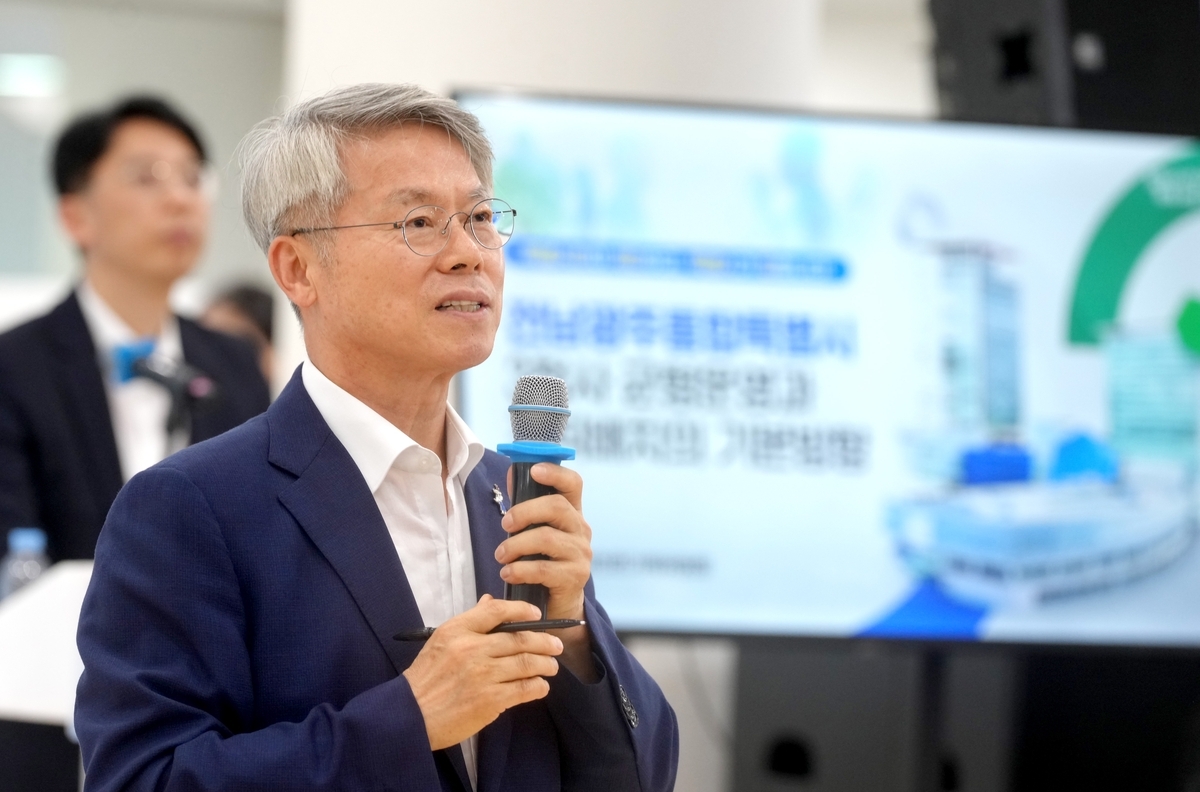
Min Hyeong-bae, mayor of the South Jeolla-Gwangju Special Integration City, held a town hall meeting at the Muan government complex Thursday, drawing about 300 residents, to hear public opinion on the selection of a primary city hall.
Min reaffirmed his policy of making balanced use of all three government complexes, but deep regional divisions remained, with eastern areas demanding greater administrative attention and western areas warning against an excessive concentration of functions in the major city.
"As you well know, the special act requires the eastern, Muan and Gwangju complexes to be operated in a balanced manner," Min said. "We will distribute and assign functions and organizations to each complex in accordance with the spirit of the law and the intent of integration."
He said the eastern complex would serve as a hub for industry, the economy and future growth, while the Muan complex would focus on civic governance, lifestyle administration and agricultural and fisheries policy. The Gwangju complex, he added, would handle institutional maintenance, information management and coordination.
Regional positions, however, remained sharply at odds.
Residents from Muan and other western areas expressed concern that concentrating institutional functions at the Gwangju complex would draw activity toward the larger city, while those from the east voiced longstanding grievances about being sidelined from administrative decision-making.
Western-area residents argued that the integration was pursued precisely to counter Greater Seoul's dominance and prevent regional decline, and that dispersing functions would undermine that goal. They stressed that, given the west's weak industrial base, key functions should be housed at the Muan complex to support balanced development and halt the area's decline.
One resident from Naju proposed building a new strategic government complex there — Naju is a designated innovation city — as a way to ease the conflict among the three existing complexes.
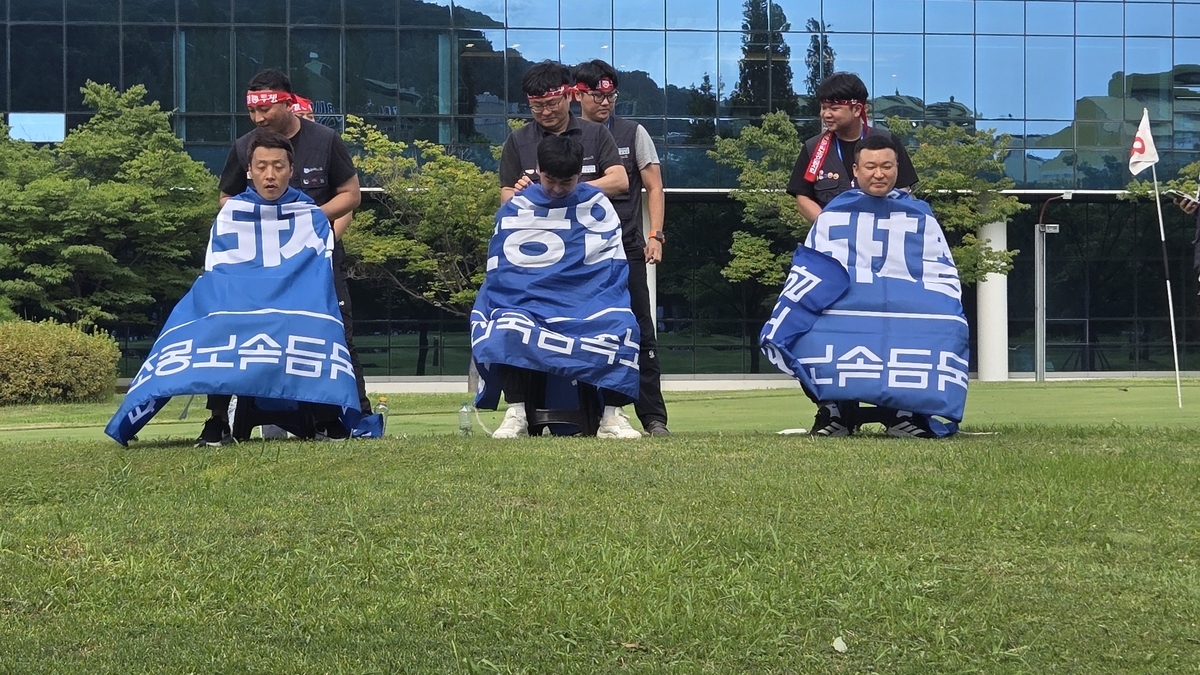
Before the event, a civil servants' union staged a silent protest outside, holding signs calling for guarantees on current work locations and balanced placement of institutional functions. Union representatives were later given the floor to press Min for a clearer stance.
Min said he had never stated that current work locations would not be guaranteed, and that he had said the matter would be handled according to law and principle but had not been believed. He said the question of distributing institutional functions must be weighed against residents' lives and the public interest, and that he would review the issue with administrative efficiency in mind.
sij@heraldcorp.com