People Power Party lawmaker Han Ki-ho on Wednesday called for scrapping the wartime operational control transfer, which the government is pursuing as a national policy priority.
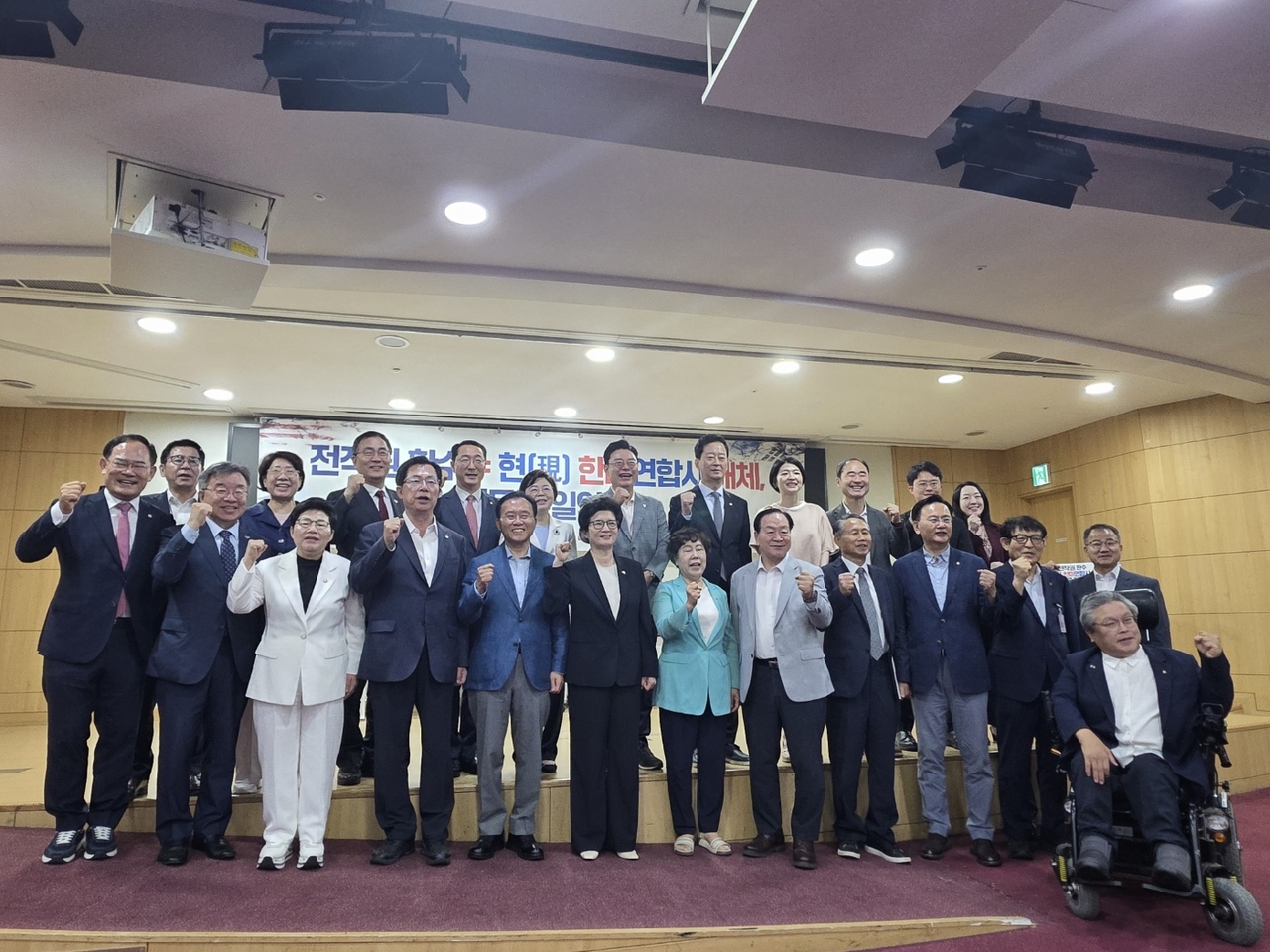
Speaking at a forum hosted by fellow lawmaker Kang Seon-yeong at the National Assembly Members' Office Building, Han said the debate over operational control "started wrong" under former President Roh Moo-hyun. "This is not a matter of adjusting the timing of the transfer by attaching conditions — it should be scrapped entirely," he said.
Han said the issue of wartime operational control originated from the Aug. 18 Plan, which divided peacetime and wartime operational authority. "The peacetime operational function was transferred to the Joint Chiefs of Staff," he said.
He argued that wartime operational control had never existed as a separate concept, but was created by carving out peacetime operational authority so the military could be moved independently — a response to events like the May 18 uprising and the Dec. 12 coup. "If you ask who first started calling for the return of operational control, it was President Roh Moo-hyun," he said.
The remarks amounted to an argument that the debate over transferring operational control began as a political declaration rather than a military necessity.
"President Roh Moo-hyun was the first to set this in motion, and that is how we got here," Han said. "Conservative administrations should have scrapped it back then, but they did not."
Han also said that if the transfer were to go ahead, it could affect the structure of the ROK-US Combined Forces Command and the role of USFK.
"The Combined Forces commander has said the command would be dissolved once operational control is returned," Han said. "Would that not ultimately mean there is no longer a need for US forces in South Korea?"
Han's account, however, differs from the historical record. It was President Roh Tae-woo who first advocated for the return of full operational control — covering both peacetime and wartime authority. Building on that, the 1991 Military Committee Meeting between South Korea and the United States discussed separating the timelines for transferring peacetime and wartime operational control.
rimsclub@heraldcorp.com