Episode 26: Neungseongwigung and the Palace House





"I want to get my daughter a house."
Watching a real estate debate recently, I was suddenly reminded
of a late-in-life father from the Joseon era.
That father was King Yeongjo.
Yeongjo was a devoted girl-dad who doted on
Princess Hwagil, the daughter he had at sixty.
When the time came for Princess Hwagil to marry,
he sent royal timber and royal carpenters
to build her a grand house in Namyangju.
That house still stands today — the Namyangju Palace House.
But even being the king's daughter
did not mean you could build as big as you liked.
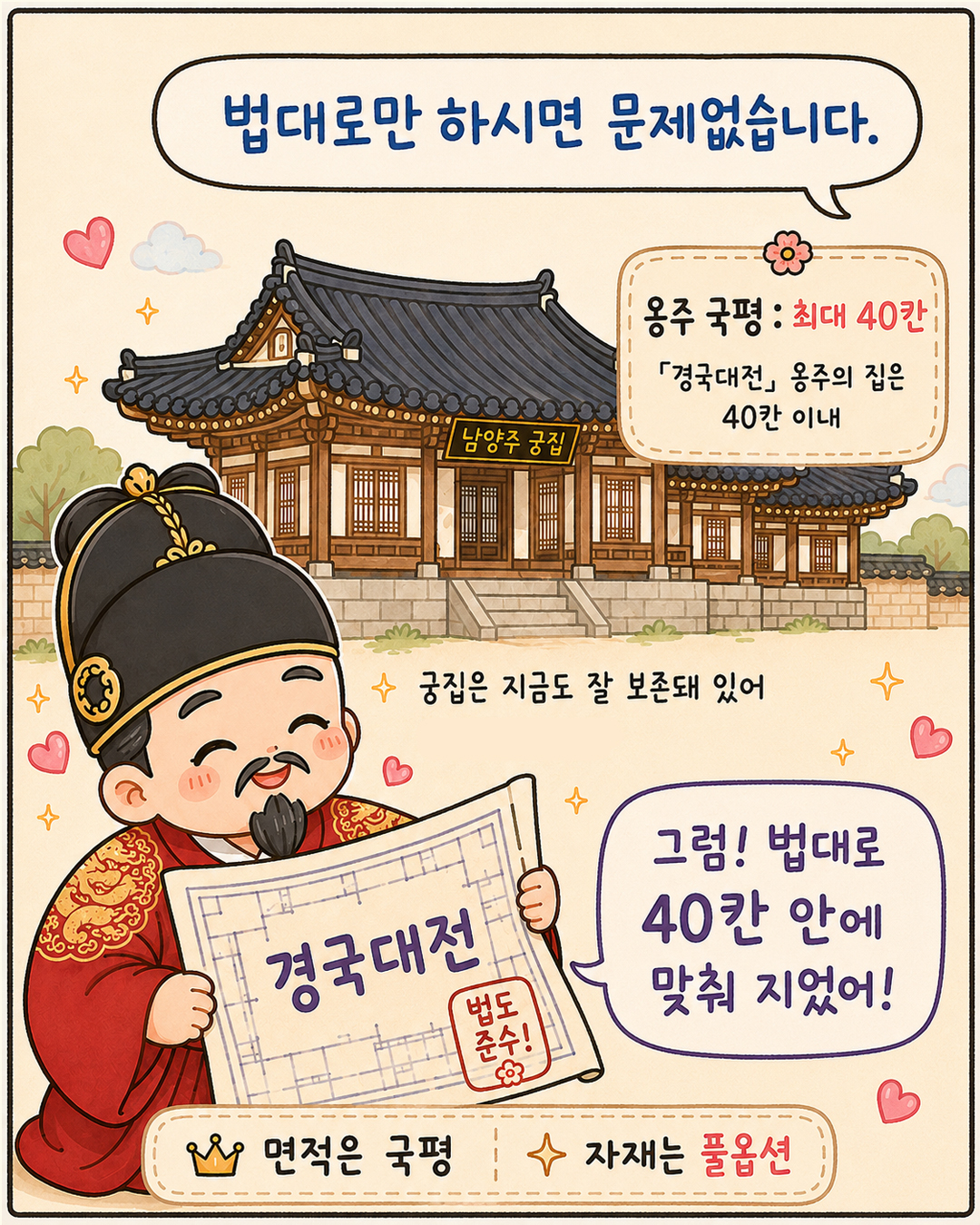
According to the Gyeongguk Daejeon (the Joseon legal code),
a princess's residence was capped at 40 kan (traditional room units).
So the Namyangju Palace House was built
within that 40-kan limit, in keeping with the law.
In a sense, it was the Joseon equivalent of
a state-regulated standard home for a princess.
The floor area alone followed the rules, however —
the finest royal timber and master craftsmen were mobilized,
making the materials nothing short of full royal-grade specifications.
But the story does not end there.
At Anguk-dong in Seoul — the site now occupied by the Constitutional Court —
the foundations of Neungseongwigung were discovered,
believed to be where Princess Hwagil and her husband once lived.
The exact number of kan is unknown,
but the scale of the excavated site and the formality of its structures were considerable.
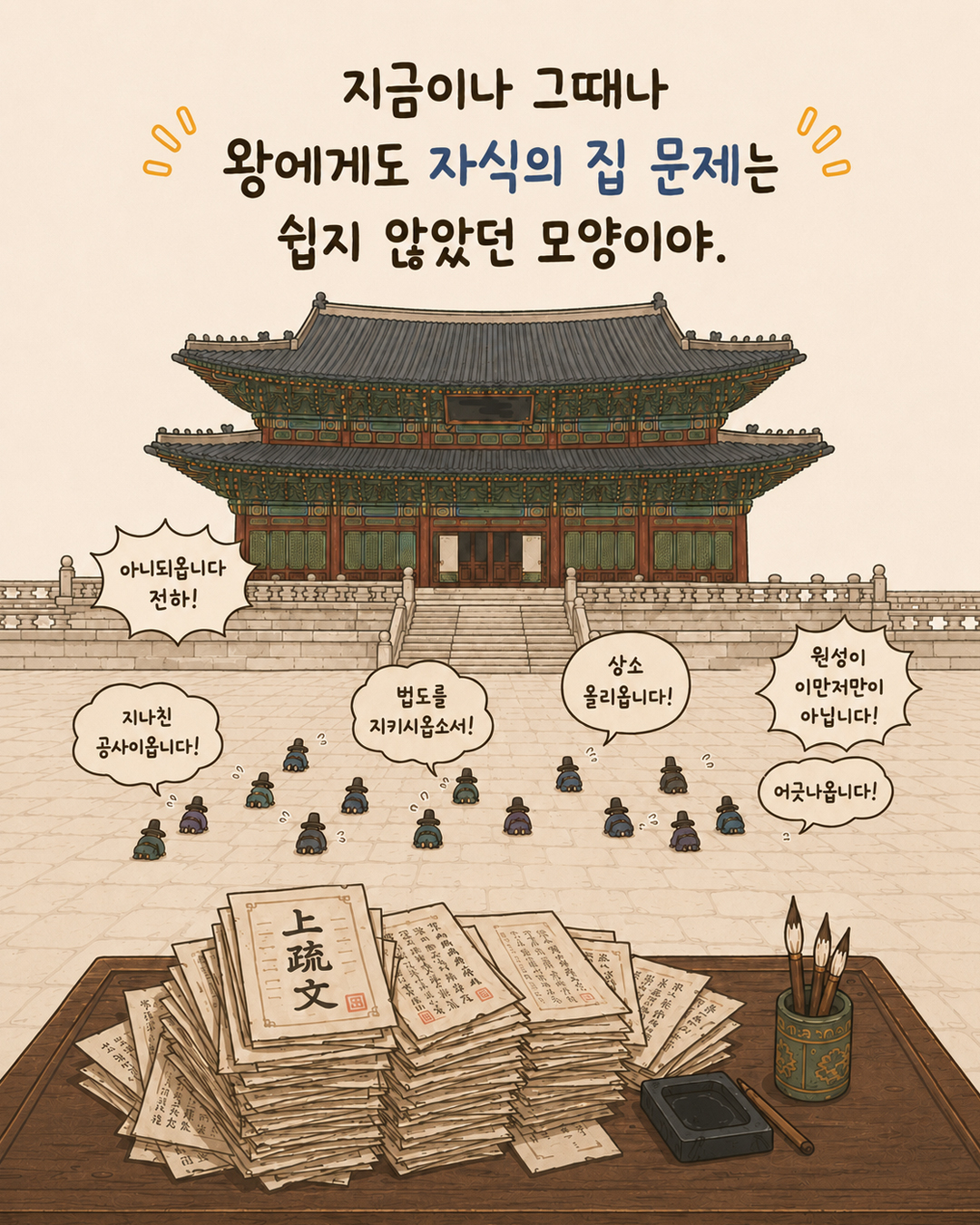
Yeongjo wanted to provide a fine home for the late-born daughter he had at sixty.
His courtiers, however, were unanimous in their response:
"We humbly object, Your Majesty!"
It seems that then, as now,
even a king found the matter of housing for his children
no easy thing.
to be continued...
Namyangju Palace House (9 Pyeongnae-ro, Pyeongnae-dong, Namyangju, Gyeonggi Province)
Neungseongwigung site (Constitutional Court / 15 Bukchon-ro, Jongno-gu, Seoul)
Written and illustrated by CP Ju Seob-a jusoeba@heraldcorp.com
[Produced with the assistance of AI]
why37@heraldcorp.com