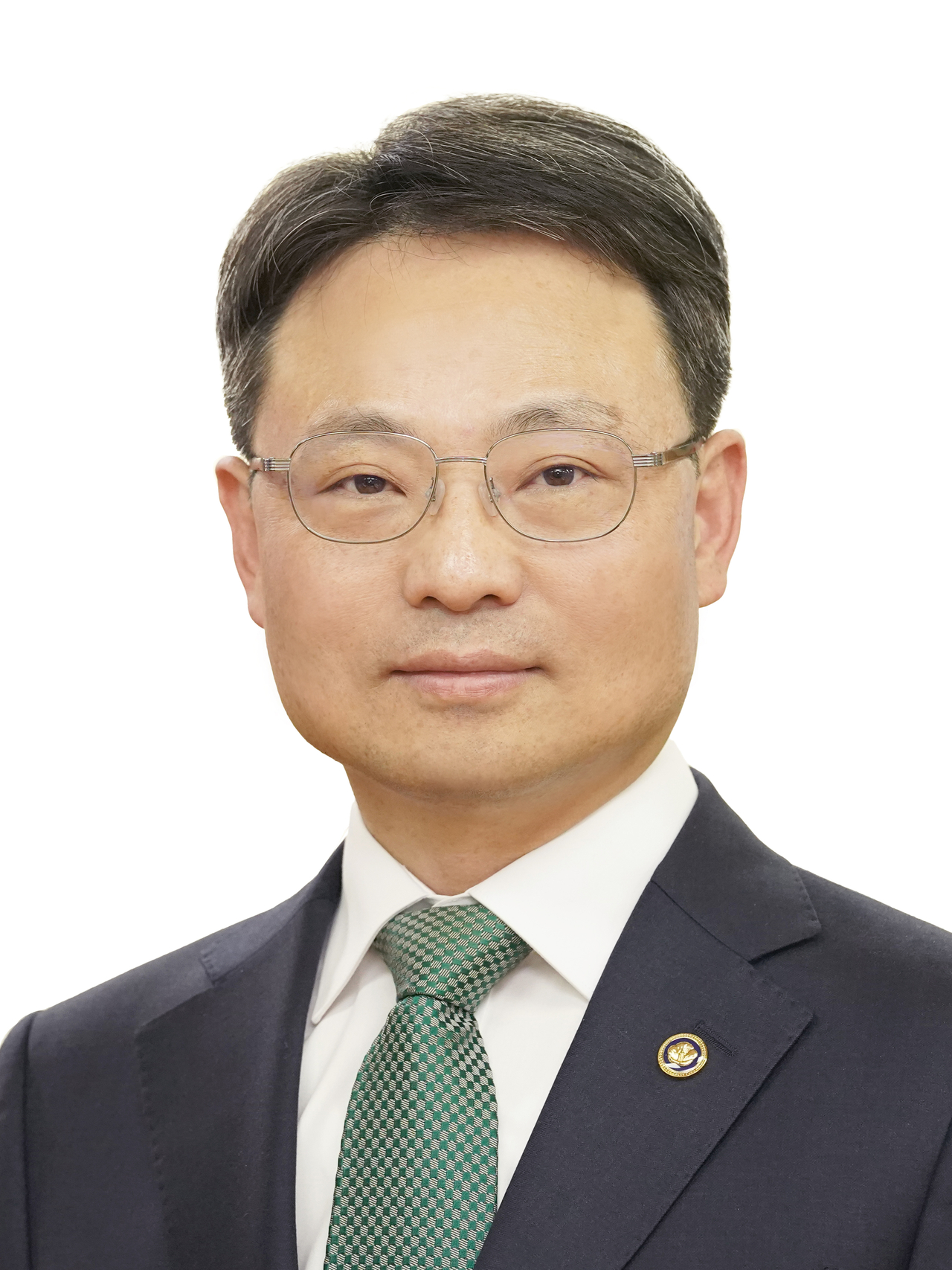
Korea Forest Service chief Park Eun-sik shares forest policy achievements at 6th APEC Forest Ministers' Meeting
Wildfires no longer respect the seasons. The climate crisis is redrawing the map of the world's forests and upending our lives along with it. Humanity now faces an unprecedented compound crisis — extreme heat waves, prolonged droughts, catastrophic wildfires and an accelerating loss of biodiversity, all unfolding at once. These are not problems that stop at any country's border. A crisis of the forests is a crisis for all of humanity, and the solutions must be found through solidarity and cooperation that transcend borders.
It was against this backdrop that the 6th APEC Forest Ministers' Meeting was held over two days beginning Monday in Shenzhen, Guangdong Province, China. The meeting served as a forum for cooperation on how to conserve and wisely manage forests in the face of shared challenges — climate change, biodiversity loss and forest disasters — and how to collectively build a sustainable future. Delegations from 21 Asia-Pacific member economies, including South Korea, gathered under the theme "Green Asia-Pacific and Realizing Ecological Welfare for All" to discuss policy directions and cooperation frameworks for achieving global forest goals. I attended as South Korea's government representative and shared the achievements and experiences of our forest policy with the international community.
Forests are nature's most effective carbon sink, as well as the foundation of life that safeguards biodiversity and preserves water resources. At the same time, they are a vital asset underpinning the livelihoods and economies of local communities. Protecting forests goes beyond environmental conservation — it is an investment in the prosperity of future generations. The joint declaration adopted at the ministers' meeting affirmed a shared commitment to strengthening science-based sustainable forest management, eradicating illegal logging, promoting trade in legally sourced forest products, and maximizing the diverse values and ecosystem services that forests provide. In line with these international trends, South Korea is advancing its Sixth Basic Forest Plan, which incorporates global forest goals and national greenhouse gas reduction targets. The country is also building a digital forest management system using satellite data and AI to improve management efficiency and strengthen its capacity to respond to cross-border forest disasters.
South Korea has repositioned itself from a recipient of international support to a partner that shares its experience and technology. Its success in restoring war-ravaged forests into a verdant landscape that draws global attention has become a widely recognized model for forest restoration. Today, building on that experience, South Korea is broadening its path of cooperative growth by supporting forest restoration and disaster response in developing countries and climate-vulnerable nations.
A particularly prominent agenda item at the meeting was the conservation and restoration of mangrove ecosystems — a cornerstone of nature-based solutions. Mangrove forests absorb up to four times more carbon than ordinary tropical rainforests and serve as natural breakwaters protecting coastlines from typhoons and storm surges. South Korea restored 330 hectares of degraded mangrove forest in Vietnam, simultaneously reviving the ecosystem and raising the incomes of local residents. The project was selected as an OECD public-sector innovation case. It stands as a prime example of how forest restoration can go beyond environmental recovery to drive sustainable development in local communities.
In the rapidly urbanizing Asia-Pacific region, urban forests and the restoration of riparian ecosystems also emerged as important agenda items. The Futian Mangrove Ecological Park and the Dashahe Ecological Corridor in Shenzhen, which I visited in person, organically connect urban ecological corridors with waterfront spaces, demonstrating that nature and people can coexist harmoniously even within a high-tech city. The sites confirmed that the future of cities responding to the climate crisis lies not in more concrete, but in more forests and green spaces.
South Korea is also consistently expanding its urban green infrastructure through climate-response urban forests, urban wind-corridor forests and child-safe green forests. The country is also pursuing the development of 40 garden cities nationwide, transforming urban spaces into sustainable ecological corridors. Through this meeting, South Korea shared these policies and experiences with member economies and presented a new development vision in which cities and forests grow together.
Forests are a shared asset of humanity that cannot be divided by the artificial boundaries of national borders — a legacy we must pass on to future generations. Just as forests quietly prepare for spring even in the frozen ground of winter, the deeper the climate crisis grows, the more firmly we must plant and nurture the seeds of green solidarity. Wildfire smoke and climate change recognize no borders, but the power of cooperation can cross those borders to bring about even greater change.
The climate crisis is not a challenge any single country can solve alone. When we tend forests together and share our experiences and technology, our collective future will grow greener. It is my hope that the forest solidarity connecting the Asia-Pacific region will become the sturdy roots from which we move beyond the climate crisis toward shared prosperity.
kwonhl@heraldcorp.com