The threats to public health are multiplying. An aging population, a surge in single-person households, climate change, infectious disease outbreaks and a growing mental health crisis are converging to push local governments toward a fundamental rethink of health policy.
As awareness grows that a treatment-focused medical system alone cannot adequately protect residents, Seoul Metropolitan Government is pushing ahead with a new health strategy built on three pillars: prevention-centered health management, stronger public healthcare and AI-driven digital health services.
The city's vision goes beyond hospital-based medical services. It aims to build a system in which residents manage their own health in their daily lives and receive seamless medical care and support within their communities.
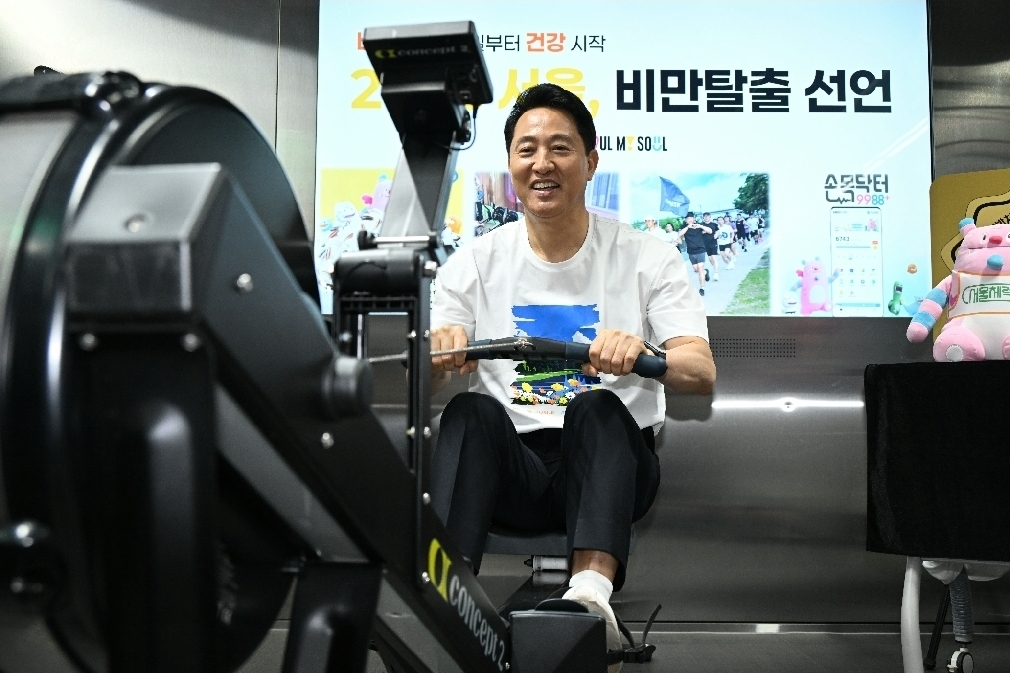
The strategy calls for strengthening public healthcare centered on city-run hospitals while connecting Sonmok Doctor 9988, the Seoul Fitness Center network, integrated care and mental health programs into a single framework — shifting the paradigm from treatment to prevention.
"The core of Seoul's health policy going forward is the transition from a medical policy that treats disease to a health policy that supports residents in managing and preventing illness themselves," said Jo Young-chang, director of the Seoul Metropolitan Government's Citizen Health Bureau. "We will organically link public healthcare, digital technology and community care to create an environment where every resident can enjoy a healthy life."
Stronger public healthcare and prevention-first policy
Seoul charts a new course as a health city
Public healthcare is the foundation of Seoul's health strategy. The city's municipal hospitals shoulder essential medical services that private institutions struggle to provide — emergency care, infectious disease response, rehabilitation and hospice, mental health treatment, and care for the elderly and people with disabilities.
The hospitals stood on the front lines of the COVID-19 pandemic, protecting residents' lives and health. In the post-COVID era, however, they face new challenges: fierce competition for medical staff, rising labor costs and the need to restore financial stability.
In response, the city has moved beyond simple fiscal support, working to recruit medical personnel, improve bed utilization, strengthen performance management and enhance patient-centered care — all with the aim of raising both the public-service quality and long-term sustainability of its hospitals. Bed occupancy rates and outpatient figures have consistently recovered in recent months, laying the groundwork for a full return to normal operations.
Prevention, not treatment, is the emphasis of the city's health policy. As lifestyles shift — more people living alone, greater reliance on convenience foods — the focus is on creating an environment where residents can make healthy choices in their everyday lives.
A flagship initiative called "Tongkwaehahn Hankki," a healthy-meal program, encourages healthier eating by making multigrain rice the default option at participating restaurants. The Seoul Fitness Center network has established itself as a prevention-centered health management platform where any resident can get a scientific assessment of their physical fitness and receive a personalized exercise prescription close to home.
The network currently operates 19 centers across 17 districts, including one at the University of Seoul, and the city plans to deepen its integration with Sonmok Doctor 9988 going forward.
Preparations for a super-aged society are also accelerating. The city has set up senior care centers at four municipal hospitals — Seoul Medical Center, Boramae Hospital, Dongbu Hospital and Seonam Hospital — offering a comprehensive assessment system that evaluates physical function, cognitive ability, nutritional status and medication use.
After discharge, patients are connected to Healthy Longevity Centers and community-based integrated care services so that medical care, health management and welfare support flow seamlessly. Home-visit medical and health management services for residents with limited mobility are also being expanded.
The integrated care program, which launches in full this year, aims to build a community-based health safety net where residents can receive both medical care and daily support without leaving their neighborhoods.
Sonmok Doctor 9988 gets an AI upgrade
Seoul's digital healthcare push shifts into high gear
The most significant change in Seoul's health policy is the move toward AI-based digital healthcare. Sonmok Doctor 9988, now used by about 2.92 million residents, is evolving from a simple step-counting service into the city's central health management platform.
The goal is to link health checkup results, medical history, walking data and Seoul Fitness Center measurements into a single platform that analyzes each individual's health status and delivers prevention-centered care.
In October, the platform will introduce an AI-powered "personal health doctor in your hand" feature. The AI will analyze health checkup results, lifestyle habits and physical activity data to predict a user's biological age and disease risk, flag the likelihood of developing major chronic conditions such as obesity, diabetes and hypertension, and suggest personalized exercise and nutrition plans.
The result is a Seoul-style digital healthcare model that goes beyond treating disease to preventing it through lifestyle improvement.
"AI is not a technology that replaces doctors — it is a tool that helps residents understand and manage their own health more easily," Jo said. "We will consolidate scattered health information around Sonmok Doctor 9988 and provide personalized health management services so that all residents can maintain a healthy life for longer."
Mental health policy is also expanding with a prevention-first focus. Under the recognition that depression, anxiety and social isolation are everyday health concerns that can affect anyone — not just specific groups — the city is building a support system that links prevention, counseling and treatment through mental health screenings, professional consultations, psychological counseling vouchers and district-level mental health counseling centers.
Rounding out the network are a 24-hour mental health hotline, a chatbot service, case management for high-risk individuals and recovery support for survivors of suicide loss — together forming a dense mental health safety net that ensures any resident in crisis can get help.

From integrated care to climate response
Health policy expands into everyday life
Seoul's health policy reaches well beyond medical services. To narrow health disparities tied to geography, income and age, the city is expanding integrated care that links health, medical and welfare services, while also strengthening home-visit health management and primary-care house calls for vulnerable residents.
The priority is building a community-based health safety net so that residents who have difficulty visiting medical facilities can continuously receive the care and health management services they need where they live.
Infectious disease and climate change response are also central pillars. The city operates a round-the-clock surveillance and response system for emerging overseas pathogens, and has developed a Seoul-style response model for mass insect outbreaks — such as lovebug swarms — covering everything from occurrence forecasting to eco-friendly pest control.
To address increasingly severe heat waves, the city runs a heat-related illness surveillance system and is stepping up proactive measures for vulnerable groups — including elderly people living alone, people with disabilities and those with chronic conditions — through expanded home-visit health management and distribution of preventive supplies.
"Health begins not with a special resolution but with small daily practices," Jo said. "We will continue to expand prevention-centered health policies so that each resident's healthy changes translate into greater health competitiveness for Seoul as a whole, and we will build a health city that residents can truly feel."
Seoul's integrated health strategy — connecting public healthcare, prevention-centered management, AI-based digital health services, mental health policy and integrated care — offers a new model of public health for an era defined by a super-aged society and climate change, as the city shifts from a system where residents seek out hospitals to one where they manage their own health every day.
7toy7@heraldcorp.com