![Property listings posted at a real estate agency in Gangnam-gu, Seoul, on July 8 [Yonhap]](https://wimg.heraldcorp.com/news/cms/2026/08/02/news-p.v1.20260611.ea5b0a9d2c5f43da8215ed8faaa04ab7_P1.jpg)
Korea's nationwide average home price growth appears stable compared with other major economies — but a closer look at Seoul's luxury housing market tells a starkly different story, with prices rising at one of the fastest rates in the world.
Analysts say the housing market within Seoul is becoming increasingly polarized, as ultra-high-end property prices in the Gangnam three districts and the Han River belt have surged sharply.
According to a report titled "Asset Inequality and Long-term Reform of Property Tax" released Sunday by the National Assembly Future Research Institute, an analysis of the Bank for International Settlements (BIS) Residential Property Price index showed that nationwide housing prices in Korea rose roughly 1.56 times between 2003 and 2023. Over the same period, Seoul prices climbed 1.74 times.
Measured by the BIS nominal housing price index, Korea's rate of increase was lower than that of other major economies. The United States rose 2.8 times, Canada 3.1 times, Norway 3.4 times, Berlin 3.9 times and Oslo 4.1 times over the same period.
Korea also showed relatively stable movement in the OECD's Real House Price Index, which adjusts for inflation. Real housing prices in Korea in 2024 were 1.2 times their 2000 level, falling below the OECD average of 1.6 times. Among the 24 countries surveyed, Korea posted the second-lowest increase, behind only Finland.
The picture changes dramatically, however, when Seoul's luxury housing segment is examined on its own.
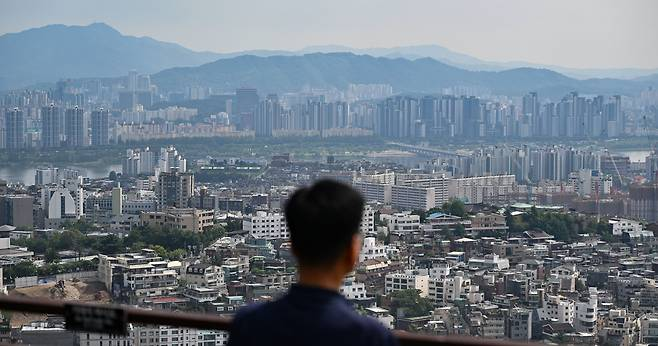
According to the Prime Global Cities Index compiled by British property consultancy Knight Frank, prices for the top 5 percent of Seoul homes rose 25.2 percent year-on-year in the third quarter of last year — the second-highest increase among 46 major cities surveyed, behind only Tokyo at 55.9 percent.
Given that the average price increase for luxury homes across the 46 cities was 2.5 percent, Seoul's gain was roughly 10 times the average. Over the past five years, Seoul's cumulative increase of 80.9 percent ranked fourth globally, trailing Dubai at 224.3 percent, Tokyo at 115.0 percent and Manila at 81.0 percent.
The report attributed the wide gap between national average statistics and Seoul's luxury housing figures to the sharp price surge centered on the Gangnam area. It said that nationwide or Seoul-wide average indicators dilute the steep price gains in select areas such as the Gangnam three districts and the Han River belt, making them insufficient to capture the true extent of market polarization.
The report also noted that the Korea Real Estate Board's nationwide housing price survey — which underpins the BIS and OECD statistics — relies on a sample-based methodology that may have limitations in immediately reflecting the sharp rise in actual transaction prices seen recently.
Lee Seon-hwa, a senior research fellow at the National Assembly Future Research Institute who authored the report, said the housing market polarization in Seoul is deepening, with the gap in price growth between luxury and ordinary homes widening significantly. "There is also a possibility that the sharp rise in Seoul home prices in 2024 and 2025 has not been fully captured in the OECD and BIS statistics," she added.
fact0514@heraldcorp.com