
Meeting chaired by Kwon Dae-young; Kospi falls from 7,004 to 5,554 — but officials say economic fundamentals remain solid
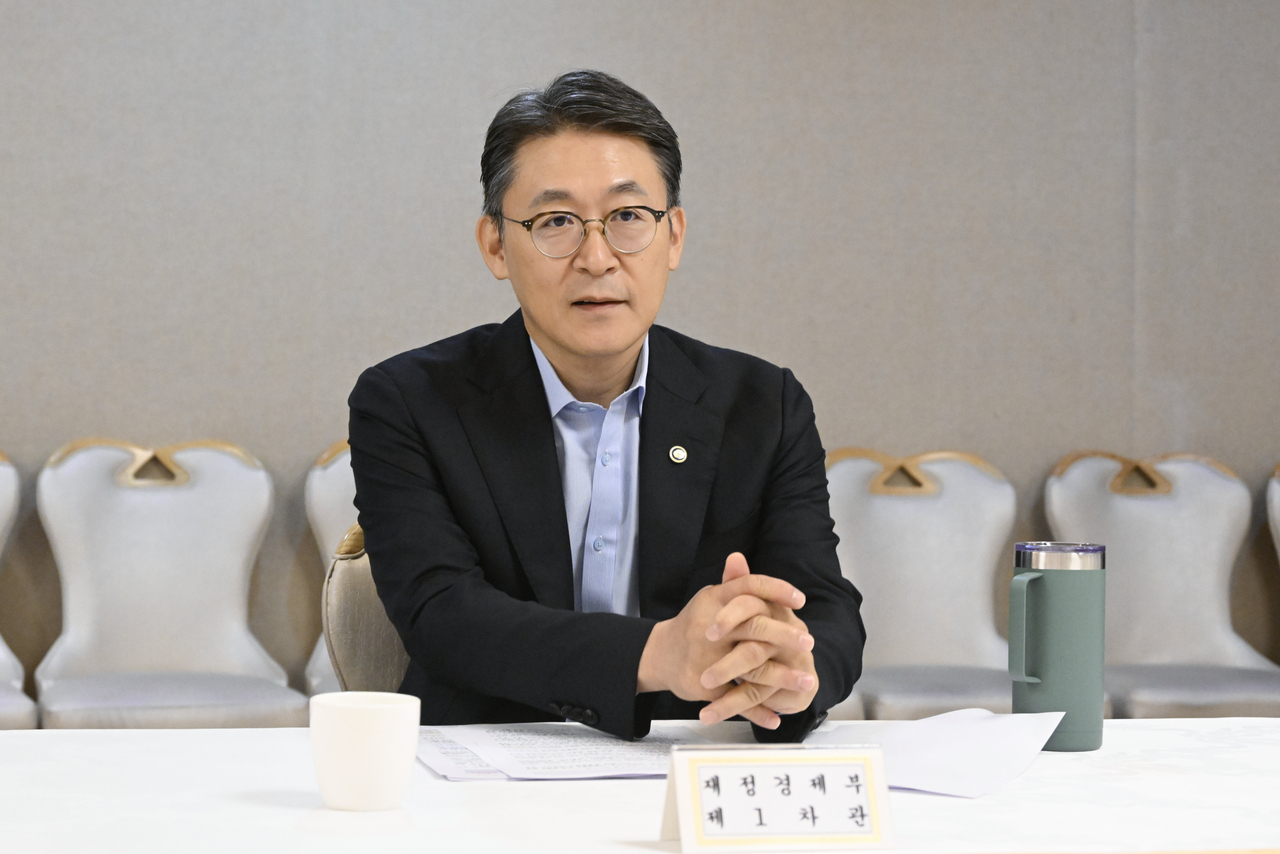
The government said it will closely monitor whether recent stock market volatility is spreading to the bond, foreign exchange and short-term money markets, as rising uncertainty driven by US Treasury yields, the AI and semiconductor sector outlook, and Middle East tensions weighs on financial markets. Authorities plan to strengthen real-time monitoring in coordination with relevant agencies and take strict action against any market manipulation.
First Vice Minister of the Ministry of Economy and Finance Kwon Dae-young chaired a joint interagency market conditions review meeting at Government Complex Seoul at 9 a.m. Friday to discuss trends in domestic and international financial markets and the government's response. Officials from the ministry, the Bank of Korea, the Financial Supervisory Service and the Financial Services Commission attended.
Participants assessed that volatility and uncertainty in financial markets have risen due to external factors including US Treasury yields, conditions in the AI and semiconductor industries, and geopolitical tensions in the Middle East. They agreed on the importance of closely analyzing financial market conditions and risk factors while taking an integrated approach to monitoring and management that accounts for cross-market linkages and spillover effects.
Domestic and overseas stock markets have recently come under pressure from expectations of higher global interest rates, uncertainty over investment and earnings prospects in the AI and semiconductor sectors, and risk-averse sentiment fueled by rising international oil prices. Participants noted that the domestic stock market has shown relatively greater volatility than other markets, partly due to differences in sector composition.
The Kospi fell from 7,004 on Oct. 2 to 5,554 on Thursday — a drop of 1,450 points, or 20.7 percent, in roughly two weeks. The VKOSPI volatility index also rose from 36.8 on Oct. 8 to 55.4 on Thursday.
Nonetheless, participants said the fundamental conditions of the Korean economy and stock market remain solid, citing a growth outlook in the 3 percent range this year, a large current account surplus and favorable corporate earnings prospects.
The IMF raised its growth forecast for South Korea this year to 3.3 percent in its October outlook, up from 2.6 percent in July, and lifted its projection for next year to 2.8 percent from 2.5 percent. The combined operating profit forecast for Kospi-listed companies stood at 969 trillion won ($719 billion) as of Wednesday, surpassing last year's actual figure of 312 trillion won.
The government and relevant agencies agreed to heighten vigilance and strengthen real-time joint monitoring. They will closely watch whether the impact of stock market volatility spreads to the bond, foreign exchange and short-term money markets, and financial regulators will take firm action against any market manipulation.
Authorities also pledged to consistently pursue structural reforms aimed at reducing volatility and improving the growth potential of domestic capital markets, with the goal of enhancing the credibility and competitiveness of the Korean stock market.
fact0514@heraldcorp.com





