Hwagok-dong, once ground zero for jeonse fraud, now faces acute shortage
Jeonse supply index surpasses levels seen when lease reform laws were introduced
Shift to hybrid leases adds to tenants' housing costs
Three customers came in today looking for jeonse and left without seeing a single unit. They said they'd already tried other agencies — but the shortage around here is nothing new.
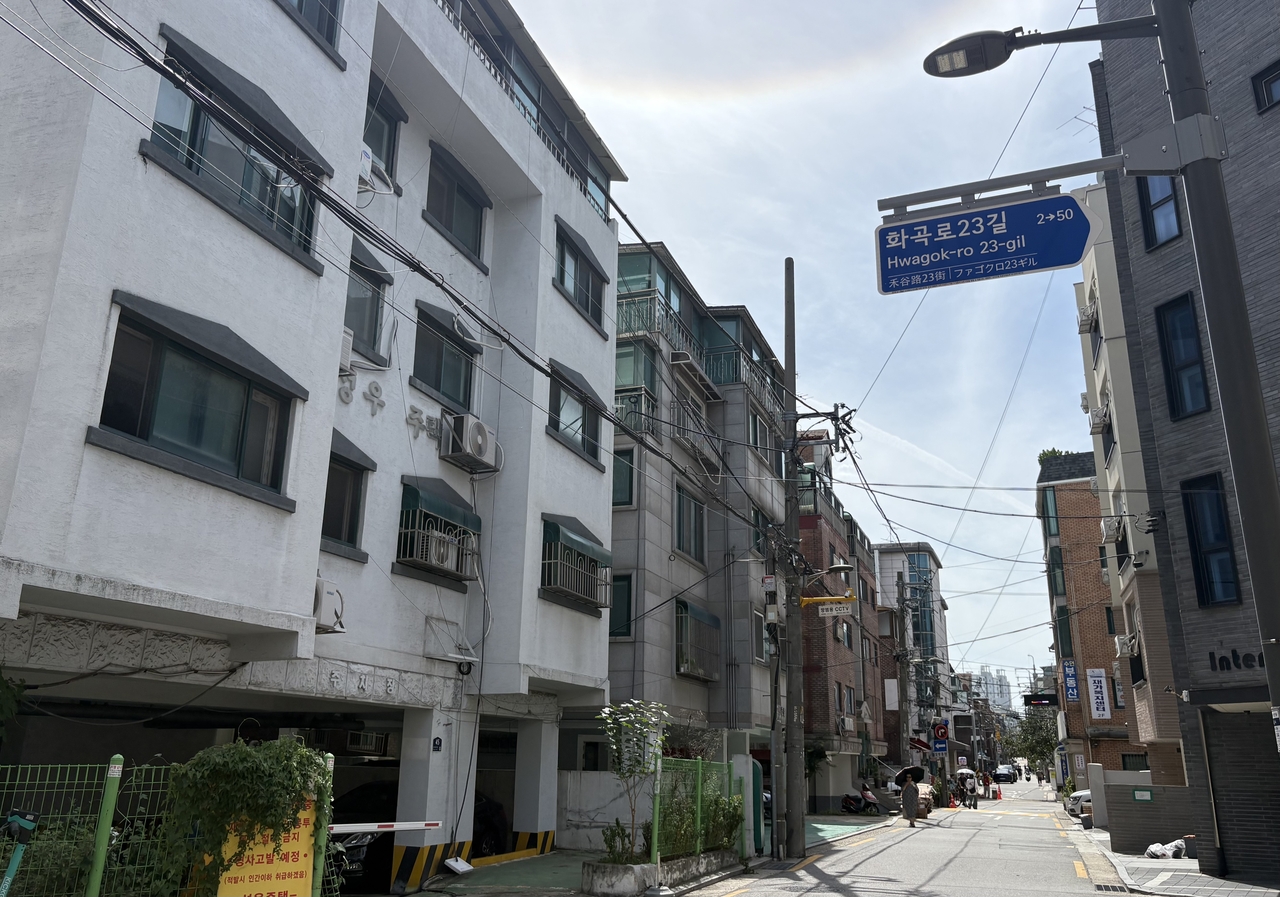
As a persistent shortage of rental listings continues to squeeze the market, tenant demand is now flooding into Hwagok-dong in Seoul's Gangseo-gu — a villa district that had been depressed by one of the country's most notorious jeonse fraud cases. On the ground, even hybrid listings that combine a jeonse deposit with a monthly rent payment are snapped up the moment they appear.
Real estate agencies visited across Hwagok-dong on Monday afternoon all said the same thing: jeonse listings have nearly vanished. Dozens of offices showed no property flyers on display. "The jeonse supply dried up completely starting last month," said a representative at one agency in the area. "I have two or three people who asked me to call when something comes in, but right now I have nothing to show the customers who walk through the door."
The ripple effects of the jeonse shortage and tighter lending regulations have reached even Hwagok-dong's villa neighborhoods. According to the Korea Real Estate Board, the jeonse supply-demand index for row houses and multi-family homes in southwestern Seoul stood at 111.4 in June. The index runs from 0 to 200, with readings closer to 0 indicating a supply surplus and readings closer to 200 indicating excess demand. The same index was only 106.9 in November 2020, when the introduction of three lease reform laws triggered a severe jeonse crunch. One has to go back to 2015–2016 — when low interest rates and large-scale redevelopment relocations roiled the market — to find readings in the 110s.
With demand far outstripping supply, waiting lists have formed. "Tenants are in such a desperate situation that we have more than 20 people on the waiting list for jeonse," said a representative at another agency in Hwagok-dong. "New villas are moving so fast that all units from the seventh to the 13th floor are gone within a month or two. Some people have even ended up buying instead because they simply couldn't find a jeonse unit," the representative added.
Meanwhile, landlords in Hwagok-dong have made the shift to hybrid jeonse-plus-monthly-rent arrangements — known as "banjeonse," or half-jeonse — a new normal. After the Korea Housing and Urban Guarantee Corporation tightened jeonse deposit insurance eligibility to 126 percent of the government-assessed value in 2023 to curb jeonse fraud, landlords began making up the difference through monthly rent. Depending on room size and condition, the monthly rent component ranges from 200,000 to 300,000 won ($145 to $217) up to 500,000 won.
In practice, a 29-square-meter unit in the Deoraon villa building in Hwagok-dong traded as a straight jeonse at 160 million won ($116,000) in August last year, but went out in July this year as a banjeonse — a 160 million won deposit plus 240,000 won in monthly rent. "Tenants won't move in unless the insurance is in place, so landlords have no choice but to convert to banjeonse," said the head of another local agency. "About 90 percent of what used to be straight jeonse listings have already made the switch."
Banjeonse listings are moving just as quickly. "A decent banjeonse unit is gone in three to four days, and even the slowest ones are gone within two to three weeks," one agency representative said. "There's so little inventory that tenants jump at anything that even roughly meets their conditions," added the head of the first agency quoted in this article.
Prices are rising as a result. The average jeonse price for row houses and multi-family homes in southwestern Seoul reached about 192.68 million won as of June, according to the Korea Real Estate Board, up roughly 3.3 percent from 186.48 million won a year earlier. Over the same period, the average monthly rent rose about 5.7 percent, from 540,000 won to 571,000 won.
Experts say a clear supply-side policy is the only real answer. "This is a situation where the second-best option has become the best option," said Seo Jeong-yeol, a real estate professor at Youngsan University. "The jeonse shortage is so serious that young people are willing to accept the risks of jeonse fraud and the stigma of non-apartment housing just to secure a villa unit." He added that if the government's upcoming supply measures fail to produce a concrete roadmap, the market will move in the wrong direction.

shy@heraldcorp.com
hope@heraldcorp.com