County uses energy revenues to support residents' 50% self-contribution, expand resident-led renewable energy
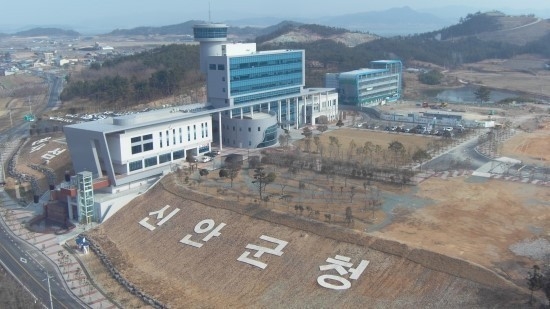
Sinan-gun in South Jeolla Province announced Friday that Sangseo 1-ri village in Sinui-myeon had been selected in the first round of the 2026 "Sunshine Income Village" competition organized by the Ministry of Interior and Safety. A total of 129 villages from across the country applied, and 86 were ultimately chosen.
The Sunshine Income Village program is a resident-led renewable energy initiative in which community members form cooperatives to participate directly in power generation projects and share the resulting revenue among themselves and their village communities.
The income generated is expected to be reinvested in community revitalization projects, injecting new vitality into local economies.
To ease the initial financial burden on residents, Sinan-gun will use its regional decline response fund to cover half — 50 percent — of the resident self-contribution, which amounts to 15 percent of total project costs. Starting with 250 million won ($179,700) this year, the county plans to continue channeling fund money into the program to improve conditions for resident participation and ensure stable project implementation.
By also reducing the financing costs residents face when raising funds or taking out loans through local mutual finance institutions, the net power generation income returned to residents is expected to grow further. With the 50 percent self-contribution subsidy in place, a simple estimate for a 1-megawatt project suggests an additional annual income effect of around 6 million won ($4,310) per village.
As the South Jeolla and Gwangju region is a grid-saturated area where ESS installation is essential, the county also plans to support residents in installing ESS units at no additional cost to them. The installation costs will be split among national government funding at 40 percent, local government at 30 percent, and virtual power plant operators at 30 percent, with final details to be confirmed in line with the Ministry of Climate, Energy and Environment's support guidelines.
Meanwhile, following this first-round selection, four more villages in Sinan-gun — including those in Jido-eup and Palgeum-myeon — have already submitted applications for the second round of the competition. The county said it plans to provide full administrative support covering permits, financing and grid connection.
"The Sunshine Income Village is a model in which residents become the owners of renewable energy projects and the community shares in the rewards together," Sinan-gun Mayor Kim Tae-seong said. "We will do everything in our power to significantly reduce residents' initial burden through the regional decline response fund and ensure that energy revenues translate into real income for residents and a locally circulating economy."
kkm9971@heraldcorp.com