Troop and weapons shortfalls shake US readiness
US intelligence: Russia sees an opening
CIA chief visits Moscow, warns against escalation
Asia allies also worry about China deterrence
![Russian President Vladimir Putin delivers a speech at the Kremlin in Moscow on Thursday (local time). [AP]](https://wimg.heraldcorp.com/news/cms/2026/08/28/rcv.YNA.20260827.PAP20260827177501009_P1.jpg)
US intelligence agencies have concluded that Russian President Vladimir Putin believes the prolonged American military campaign against Iran has weakened US combat power, and that he views the situation as an opportunity to intensify pressure on Ukraine and European allies.
The Washington Post reported Thursday (local time) that it had obtained a classified intelligence assessment laying out that conclusion. According to the Post, the extended military operations against Iran have degraded US troop readiness and deepened ammunition shortages.
Stockpiles of key American weapons have fallen sharply — not only air-defense systems such as Patriot missiles, but also precision-strike munitions including Tomahawk cruise missiles and the Army Tactical Missile System, known as ATACMS. ATACMS is also in high demand in Ukraine. The US has lost roughly a quarter of its Reaper drone inventory, which are used for surveillance and target identification; each Reaper costs between $30 million and $50 million.
Russia is also exploiting the fact that US stockpiles of air-defense interceptor missiles supplied to Ukraine are running low. While European nations have pledged to send interceptors to Ukraine, much of that supply is not expected to arrive until next year.
As a result, NATO members in Eastern Europe — particularly the three Baltic states — are increasingly worried that Putin may ratchet up pressure further or carry out more provocative attacks.
![CIA Director John Ratcliffe. [Reuters]](https://wimg.heraldcorp.com/news/cms/2026/08/28/rcv.YNA.20260826.PRU20260826240801009_P1.jpg)
CIA Director John Ratcliffe's visit to Russia this week appears to reflect an internal assessment that Moscow's moves are far from routine.
According to sources familiar with the matter, Ratcliffe traveled to Moscow on Wednesday and warned Russian officials against significantly escalating the war in Ukraine, also conveying that any such escalation would ultimately backfire on Russia.
One source said Ratcliffe made the trip not because Putin is cornered by a battlefield stalemate in Ukraine, but because Russia has concluded that US military power is so depleted that Washington cannot intervene. According to the source, Ratcliffe warned Russian officials that if Putin dramatically escalates the war in Ukraine, President Donald Trump would move closer to Ukrainian President Volodymyr Zelensky rather than further away.
The CIA director's visit to Moscow was the first since late 2021. William Burns, who served as CIA director under the Joe Biden administration, had previously traveled to Moscow to try to persuade Putin not to invade Ukraine.
Sergei Naryshkin, director of Russia's Foreign Intelligence Service, acknowledged meeting with Ratcliffe but said there was "nothing special" about the talks. The Kremlin said Ratcliffe did not meet with Putin during the visit.
![US President Donald Trump gestures upon arriving at Ellington Airport in Houston on Thursday (local time). [AP]](https://wimg.heraldcorp.com/news/cms/2026/08/28/rcv.YNA.20260828.PAP20260828105901009_P1.jpg)
Publicly, the United States has maintained that Ratcliffe's Moscow visit was a routine engagement with no special significance, and has denied that NATO allies' concerns about Russian provocation have any basis.
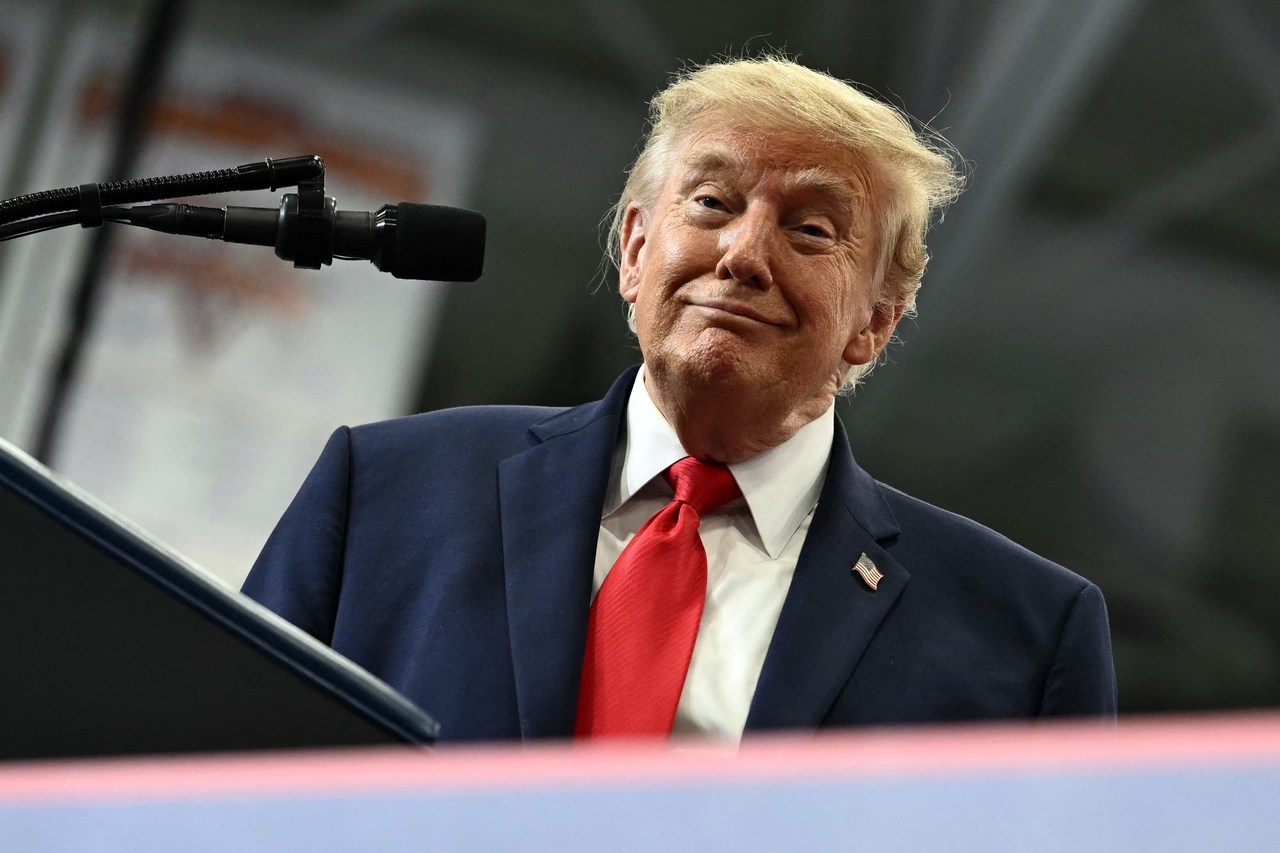
Trump dismissed fears that Putin might attack US allies in Europe, saying Thursday, "He's not going to attack NATO territory." Some observers have interpreted the remark as a verbal warning directed at Russia.
The Post also reported that the US weapons shortfall is fueling anxiety among Asian allies, particularly over whether the United States retains sufficient capability to deter a potential military conflict with China.
mokiya@heraldcorp.com