
Markets plunge on Nvidia scandal, prompting Trump to pressure board into reinstating Huang
$10.3 trillion in AI investment underpins US economy; critics say Nvidia is already 'too big to fail'
Republican lawmakers also raise alarm: 'Profits placed above national security'
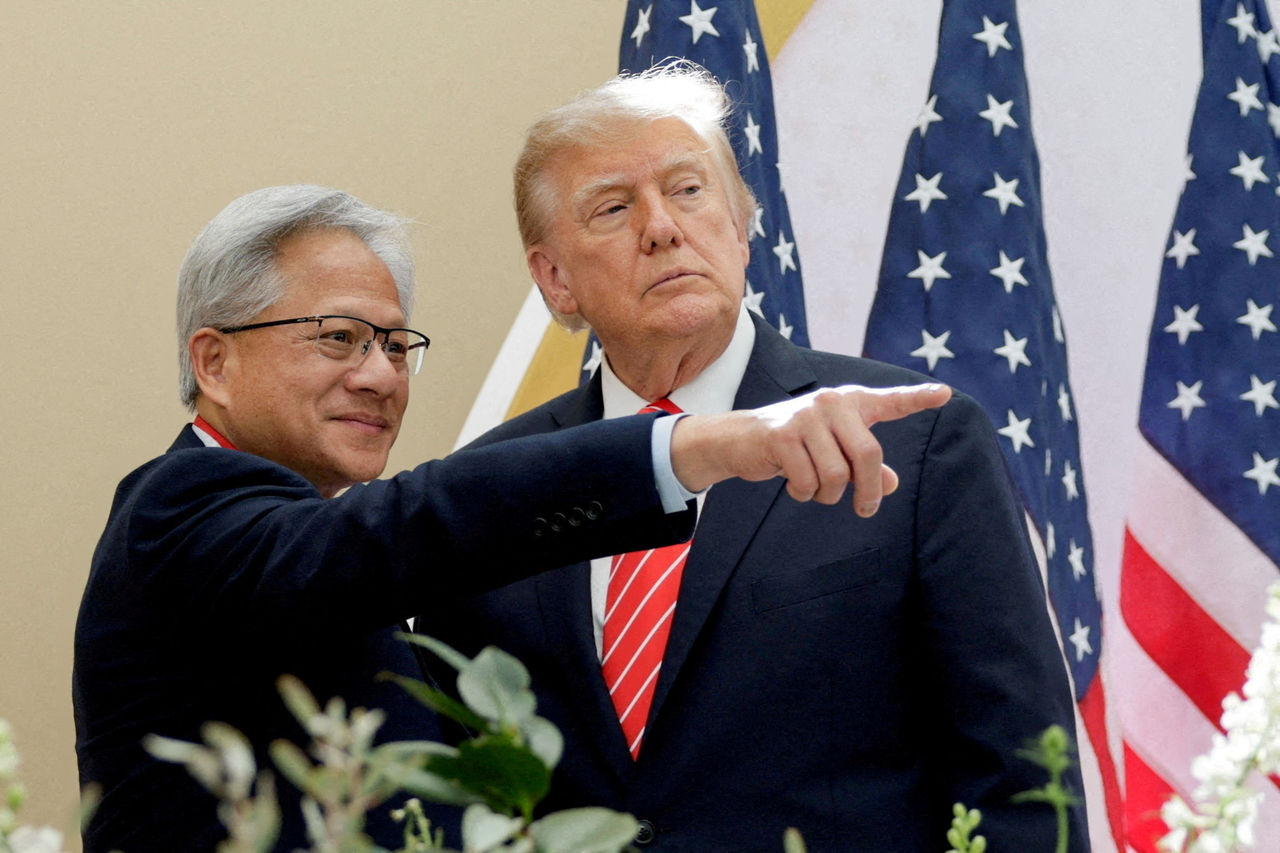
US President Donald Trump directly intervened to reinstate Nvidia CEO Jensen Huang in a bid to preserve the AI industry boom and keep stock markets buoyant — a move critics say has created a dynamic in which political actors now reach into corporate boardrooms.
According to The New York Times on Monday (local time), stock market performance has long been a key benchmark by which Trump measures the success of his economic policies. When Nvidia became embroiled in a scandal that led Huang to step down and sent financial markets sharply lower, Trump moved quickly to pressure Nvidia's board to bring him back.
Huang confirmed his return Monday, and Nvidia's share price surged. A days-long market slide came to a halt. Trump subsequently took to social media to say that Nvidia needs Huang and that America needs Nvidia, adding that Huang's leadership was necessary "to ensure the success and prosperity of not just the company, but the American economy."
The New York Times said Trump appeared to view the economic damage that could follow an Nvidia crisis as a greater concern than any wrongdoing by the embattled executive.
Huang's return has revived optimism on Wall Street. Trump, who has previously disclosed investing millions of dollars in Nvidia shares, may also have stood to benefit personally.
Still, Trump's forceful defense of Huang has renewed concerns that his approach amounts to pursuing growth at any cost. Critics also point to the broader problem of the US economy becoming overly dependent on the performance of a single industry.
Nidhi Hegde, executive director of the progressive advocacy group American Economic Liberties Project, said there are "real concerns about how much everyone is depending on Nvidia." Hegde said that from the Trump administration's perspective, Nvidia has already become a "too big to fail" company.
Trump himself appeared to partly acknowledge that the stock market had influenced his unusually strong defense of Huang. When CNBC asked whether the market had played a role in his decision, he said, "It may have. But the bigger factor was the long-term issue."
The New York Times said Trump's extraordinary lobbying effort to secure Huang's reinstatement reflects how heavily he has staked the future of the US economy on the AI industry.
Trump has generally maintained a hands-off approach to government intervention even as enormous sums pour into AI development.
Some estimates put the total amount investors and major technology companies could invest in AI between 2025 and 2032 at as much as $10.3 trillion. That investment is helping prop up a US economy constrained by high prices, sluggish employment and geopolitical tensions.
Nvidia is among the companies that have committed to large-scale investment. Trump has praised those efforts and helped facilitate Huang's frequent visits to the White House and Capitol Hill.
When Huang resigned from Nvidia earlier this month, Trump praised his leadership and suggested Apple's former chief executive Tim Cook as a potential successor. But as uncertainty over the leadership change rattled markets and dragged down major indexes, Trump reversed course and began pressing for the original CEO's return.
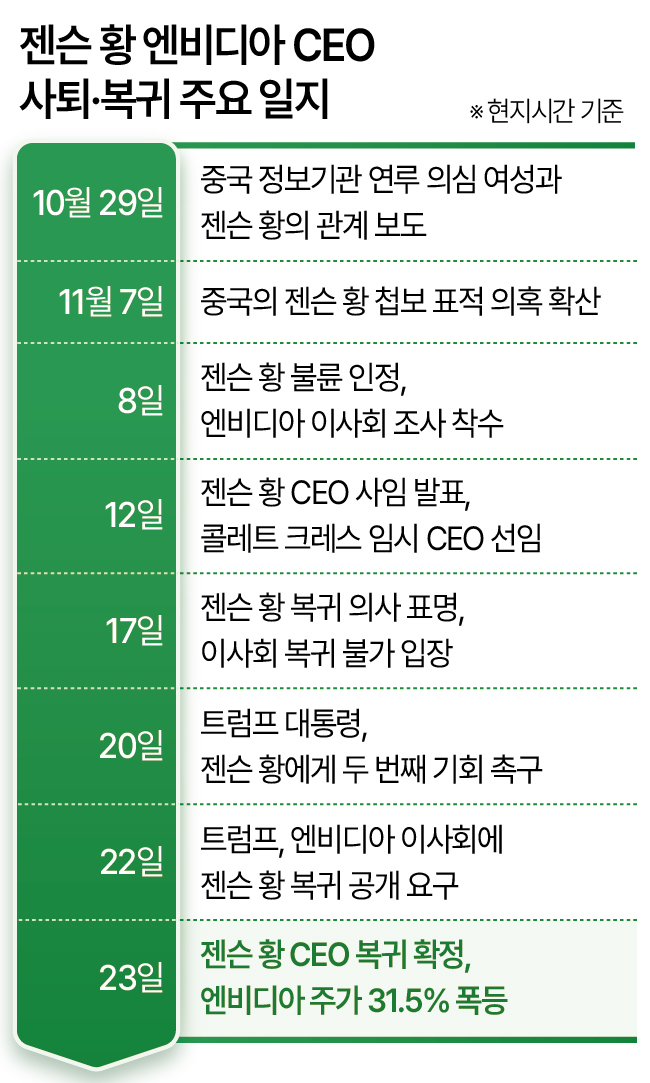
Trump's lobbying campaign to secure Huang's reinstatement was received as a particularly serious matter among lawmakers, including some Republicans. Although Trump declared that "the US government has no evidence that Jensen Huang engaged in any illegal activity," some lawmakers still believe his return poses national security risks.
Those skeptical of the AI industry read the episode as a signal that the relationship between the White House and the technology sector has grown dangerously close.
Amy Kremer, chair of Humans First — a group that advocates restricting data center development and was formerly a leader in the conservative Tea Party movement — said in a statement that the decision "looks like it's about protecting the money of the wealthy on Wall Street by putting profits above national security."
Some economists warned that excessive dependence on Nvidia could distort markets, with investors coming to view the company as one that enjoys special protection from the president.
Scott Lincicome, vice president of general economics at the libertarian Cato Institute, said, "We want capital to flow to companies for commercial reasons."
"Investment should not happen because a company is backed by the government or a politician," Lincicome said, "because that politician may be making decisions based on political reasons rather than the company's commercial interests or the national interest."
mokiya@heraldcorp.com





