Hawkish Warsh remarks push September rate-hike odds to 57.5%; Wall Street's three major indexes fall in tandem
Philadelphia Semiconductor Index drops 3.47%; Korea's August exports and US tech earnings in focus
![The Kospi closed down 123.49 points, or 1.79 percent, at 6,788.88 on Friday. Shown is the dealing room at Hana Bank's headquarters in Jung-gu, Seoul. [Yonhap]](https://wimg.heraldcorp.com/news/cms/2026/08/31/rcv.YNA.20260828.PYH2026082811570001300_P1.jpg)
Hawkish remarks by Federal Reserve Chair Kevin Warsh have stoked fears of a benchmark interest rate hike, raising the prospect of a weak opening for South Korean stocks Monday. AI and semiconductor shares tumbled sharply on Wall Street, and Korea's August export data and US technology earnings are seen as the key variables that will determine the direction of domestic chip stocks this week.
According to Korea Exchange, the Kospi closed down 123.49 points, or 1.79 percent, at 6,788.88 on Friday. The index briefly trimmed its losses to 0.15 percent early in the session but failed to turn positive and widened its decline through the rest of the day.
On the main Kospi market, foreign investors and institutions net sold 854.8 billion won ($619 million) and 1.19 trillion won worth of shares, respectively. Retail investors net bought 419.4 billion won worth of shares, while other corporations posted net purchases of 1.62 trillion won.
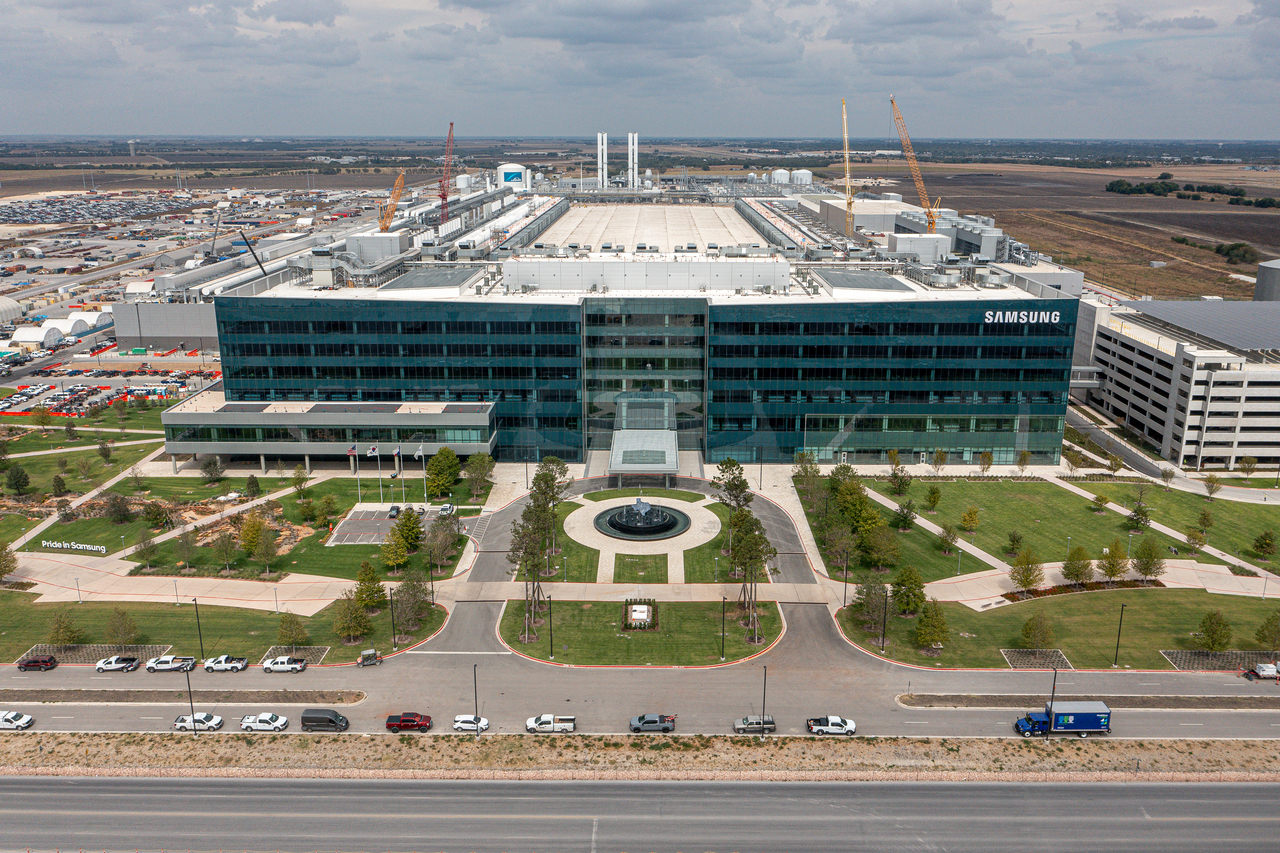
Samsung Electronics fell 3.38 percent and SK hynix dropped 4.45 percent after reports that US President Donald Trump is considering imposing steep tariffs on semiconductors. The Kosdaq, by contrast, closed up 0.76 points, or 0.09 percent, at 838.41.
Over the weekend, Warsh signaled strong vigilance against inflation at the Jackson Hole Economic Policy Symposium in Wyoming, sending all three major New York indexes lower.
The Dow Jones Industrial Average fell 0.02 percent on Friday (local time), while the S&P 500 and the Nasdaq Composite dropped 0.25 percent and 0.52 percent, respectively.
In his keynote address, Warsh said that from the standpoint of price stability — one of the Fed's mandates — "the relevant indicators are in an increasingly concerning state." He added that the Fed "must be confident that underlying inflation is moving toward the target at a clear and sufficient pace," warning that "if not, we have work to do."
Markets quickly priced in the possibility of a September rate hike. According to CME FedWatch, fed funds futures placed the probability of a rate increase at the September FOMC meeting at 57.5 percent — jumping more than 20 percentage points from 35.4 percent on Sunday and surpassing the odds of a hold at 42.5 percent.
US government bond yields also rose. The 2-year Treasury yield climbed 11.8 basis points (1 bp = 0.01 percentage point) to 4.348 percent, its largest single-day gain since March. The 10-year yield rose 5.0 basis points to 4.72 percent, and the 30-year yield added 1.6 basis points to 5.20 percent.
AI and semiconductor stocks, which are sensitive to rising interest rates, also weakened. Nvidia, which had surged 8.74 percent after strong earnings the previous session, fell 4.57 percent, while Marvell Technology tumbled 10.28 percent.
SK hynix's American depositary receipts fell 0.35 percent, and other major chip stocks also broadly declined — Micron by 0.27 percent, Western Digital by 0.55 percent and Seagate by 2.06 percent. The Philadelphia Semiconductor Index dropped 3.47 percent.
Concerns about intensifying competition in the semiconductor sector also grew after CXMT, a Chinese memory chip maker, reported that its first-half sales surged 874 percent year on year.
Seo Sang-young, a managing director at Mirae Asset Securities, said US stocks "underperformed, centered on AI semiconductor and theme stocks, as long-term yields also rose while the market digested Warsh's remarks during trading."
The MSCI Korea ETF, a gauge of investor sentiment toward domestic stocks, fell 1.07 percent, and the KOSPI 200 overnight futures index slipped 0.36 percent. The domestic market is therefore likely to see gains capped Monday, influenced by Warsh's remarks and rising US interest rates.
Some analysts, however, argue that Warsh's comments did not deliver a shock severe enough to significantly disrupt market momentum. Han Ji-young, a researcher at Kiwoom Securities, said that while Warsh's remarks were interpreted as hawkish, "the limited decline in the US three major indexes last Friday suggests it was not a shock beyond what the market can absorb."
Han particularly flagged Korea's August export data, due Tuesday, as a key variable for chip stocks. "The recent weakness in semiconductor shares stems not from deteriorating fundamentals but from elevated expectations and supply-demand issues," she said, adding that "market attention is expected to focus on changes in semiconductor share prices and investor flows after a strong August export reading is confirmed." The market consensus for August export growth stands at 62.9 percent year on year, with the key question being whether semiconductor exports can sustain growth in the mid-to-high 100 percent range.
In the United States, Broadcom's earnings — due Thursday Korean Standard Time — are seen as another major variable. Han said AI accelerator and network sales growth, along with the company's forward AI revenue outlook, will be critical. A positive forecast from Broadcom could fuel expectations that AI demand is spreading beyond semiconductors into broader infrastructure including networking. Han projected that the Kospi will make another attempt at the 7,000 level this week, driven by Korea's export figures, US employment data and technology earnings, and set a forecast range of 6,400 to 7,200.
hajun825@heraldcorp.com