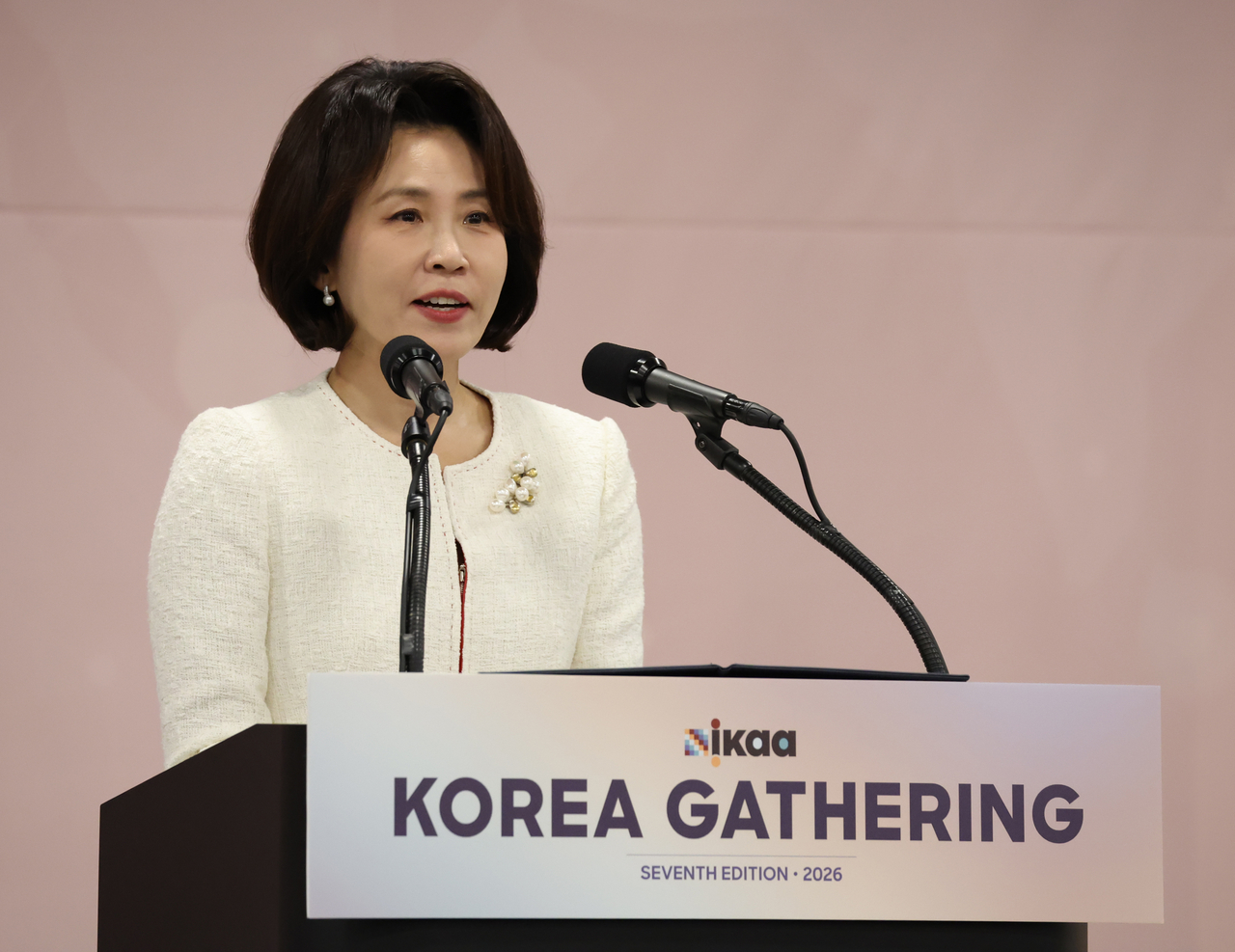
Veteran rocker takes the stage at Sejong Center for the Performing Arts' SyncNext26
Proves music's power to transcend generations
Plans 50th-anniversary performances next year
'No memory, however sweet, can match the present'
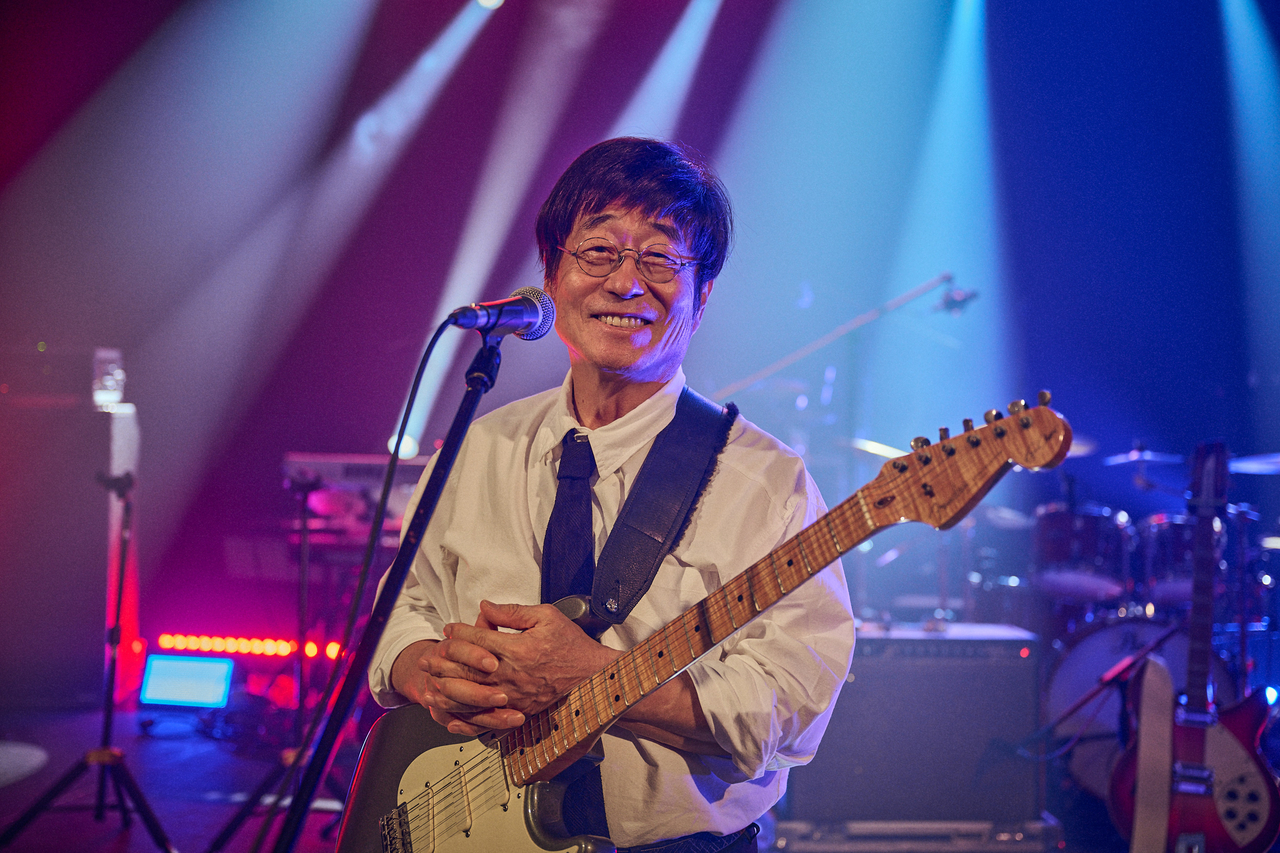
"Someday this verdant youth will pass, like petals that fall and bloom again … "
The confession embedded in "Cheongchun" — "Youth" — was laced with paradox. Kim Chang-wan (72) wrote the song during what should have been the most brilliant season of his own life.
"'Cheongchun' — everyone knows it, but I wrote it on my son's first birthday. I sent my friends off to drink and slipped into the next room to write it. Looking back now, I find it laughable that I had the presence of mind to make something like that at that age," he said.
Kim made those remarks before performing the song at SyncNext26, a contemporary performing arts festival at the Sejong Center for the Performing Arts. A quiet ripple of laughter moved through the audience.
Songs of belated farewells and frozen hearts filled the hall. Fleeting youth washed over the room like a wave, and the word "time" seemed etched into every moment of longing.
His songs have been sung and re-sung for nearly half a century. The audience that night skewed noticeably older than the usual SyncNext crowd — boys and girls who had grown up listening to Sanulrim and Kim Chang-wan, now well past middle age, returning to hear him once more. Facing them, Kim reflected on the years gone by and recited what he called a dedication to his own songs. He titled it "My Song."
"A shabby song sung for fifty years — its sleeves frayed, its buttons fallen off, worn thin and faded … sung by a mother, carried along by fashion and sung by an uncle, sung like a lament by a father, drifting from somewhere that was not my memory — the song that put food on the table, raised children, supported parents. My song, which sounds like someone else's story."
With his 50th debut anniversary arriving next year, Kim is the oldest artist to appear at SyncNext this year. The festival reached out to him in search of the musical roots and legacy from which K-pop's industrial system grew — roots the organizers trace back to Sanulrim.
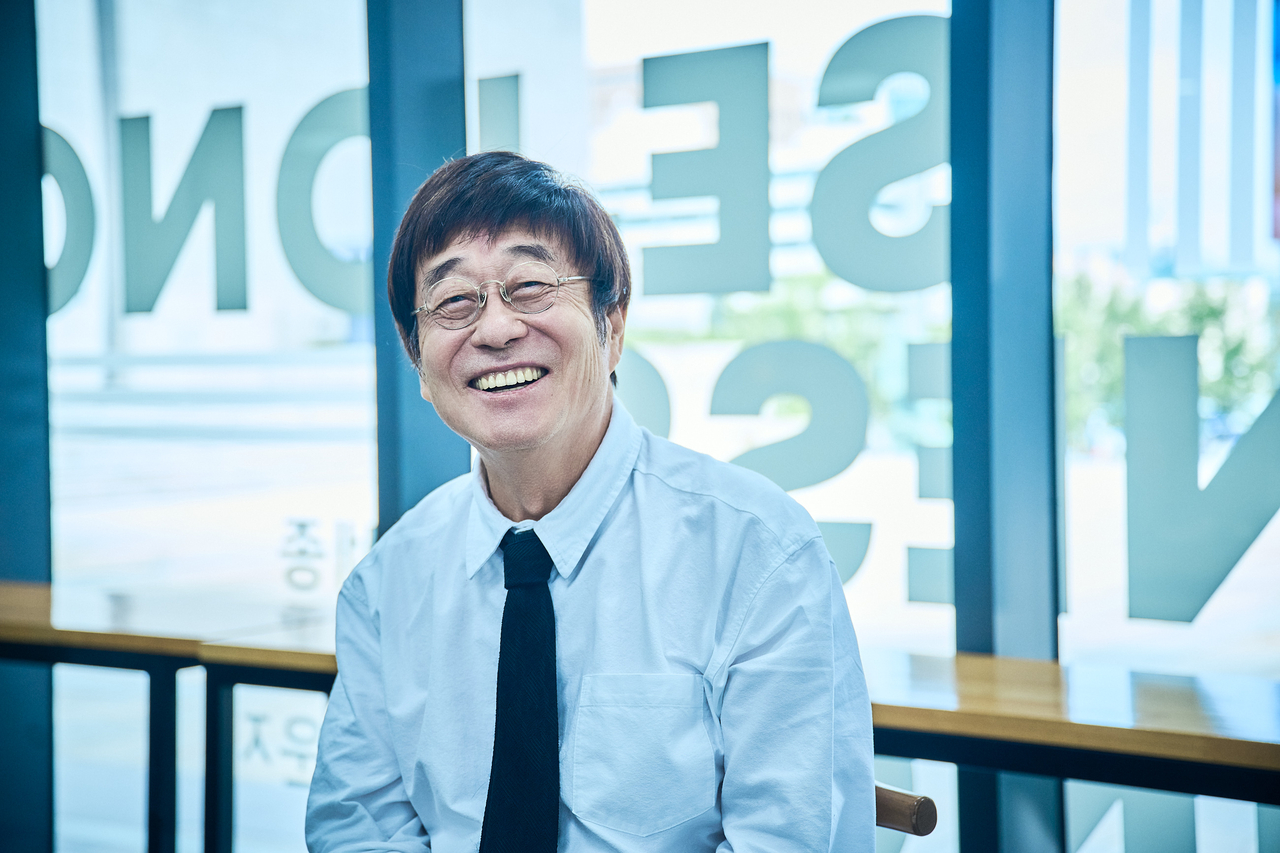
Speaking after his first performance at SyncNext — a festival dedicated to contemporary performing arts — Kim said he saw the experience as a chance to find his footing in the present. "How do I align the me of today with the current moment? I think of this as an opportunity to adapt," he said. "Who watches this performance and how they receive it — that itself is what 'contemporary' means."
As AI reshapes the era, 'the essence of music does not change'
The concept Kim kept at the center of his preparations for the show was "synchronization" — a full syncing with the times and with different generations. Even for a towering figure in Korean popular music history, that was a challenge he welcomed. But after the first performance, he admitted, an unexpected shock awaited him.
"I have been hosting a radio program for quite a while. Since this is Seoul, I assumed a good number of listeners would show up — but when I actually asked, many of them had no idea I even had a radio show," he said with a broad laugh. "Monday really hit me hard."
Wherever he travels across the country, listeners who call themselves "Baram" — a nickname meaning "wind" — approach him for autographs and photos. Yet here in Seoul, at the heart of Gwanghwamun, Kim witnessed firsthand how much the times had changed. The way people consume music is nothing like it was when he started out 50 years ago. "It takes time for new music to reach people, take root in them, and bloom into something that moves them," he said. "Radio just doesn't have that kind of power anymore."
"The old-timers at the record companies used to say a song had to be heard at least a hundred times before it became known. It has to catch in someone's ear a hundred times before they can decide whether it's theirs or not."
In an age of personalized playlists where countless songs stream inside a single smartphone, the chance discovery of an unfamiliar track has grown rare — a consequence of the fragmented listening environment driven by social media and algorithms. "The idea that my song gets heard a hundred times is a fantasy now," Kim said. "Still, I try not to use social media. I've gone without it for so long that starting now would feel strange." He laughed.

As someone who moves across generations and rides the currents of a changing era, Kim is sharply wary of what he calls the threat of technology — the fear that advancing tools will encroach on art and on human experience. "What frightens me about social media is the reward it gives me just for being on it," he said. "It's like telling yourself you won't order delivery food and then ordering it anyway — you get pulled in before you even realize it."
He views AI's reach into the realm of creation with the same unease. "AI is a demon," he said, laughing. "I've been filming a drama series playing the role of a cardinal lately, so that kind of language comes naturally." He said advertisements urging viewers to make music and art with AI appear every day on YouTube. "They dazzle you with promises that even a whistle is enough to generate a song."
The wave of AI has already washed over the music world. Across popular music and the broader performing arts, AI has lowered the threshold for creation, and in many areas the role of the human creator is now shared with machines. Yet Kim pushed back. "People who want to use AI can use it," he said. "However it is used, the essence of music does not change. AI's blind spot is making people believe that an enormous transformation has taken place when beautiful music, human character and emotion have not changed at all — and leading them to mistake that for a change in the very essence of music." What he trusts is the power of music to move the heart.
"Even now, a single acoustic guitar and a voice can make people weep openly. Go ahead and ask AI to make people cry like that." He laughed.
At the core of what Kim wants to offer through music is what he calls a recovery of the senses. No matter how refined technology becomes, he is convinced it cannot substitute for the emotional experience of seeing, hearing and feeling as a human being. "I recently listened to pianist Lim Yun-chan play and was overwhelmed — how can anyone play like that?" he said. "What worries me is that people will come to believe AI-generated content is all that culture has to offer, and push aside the kind of cultural experience you receive through artists like John Cage, Nam June Paik and Lim Yun-chan."
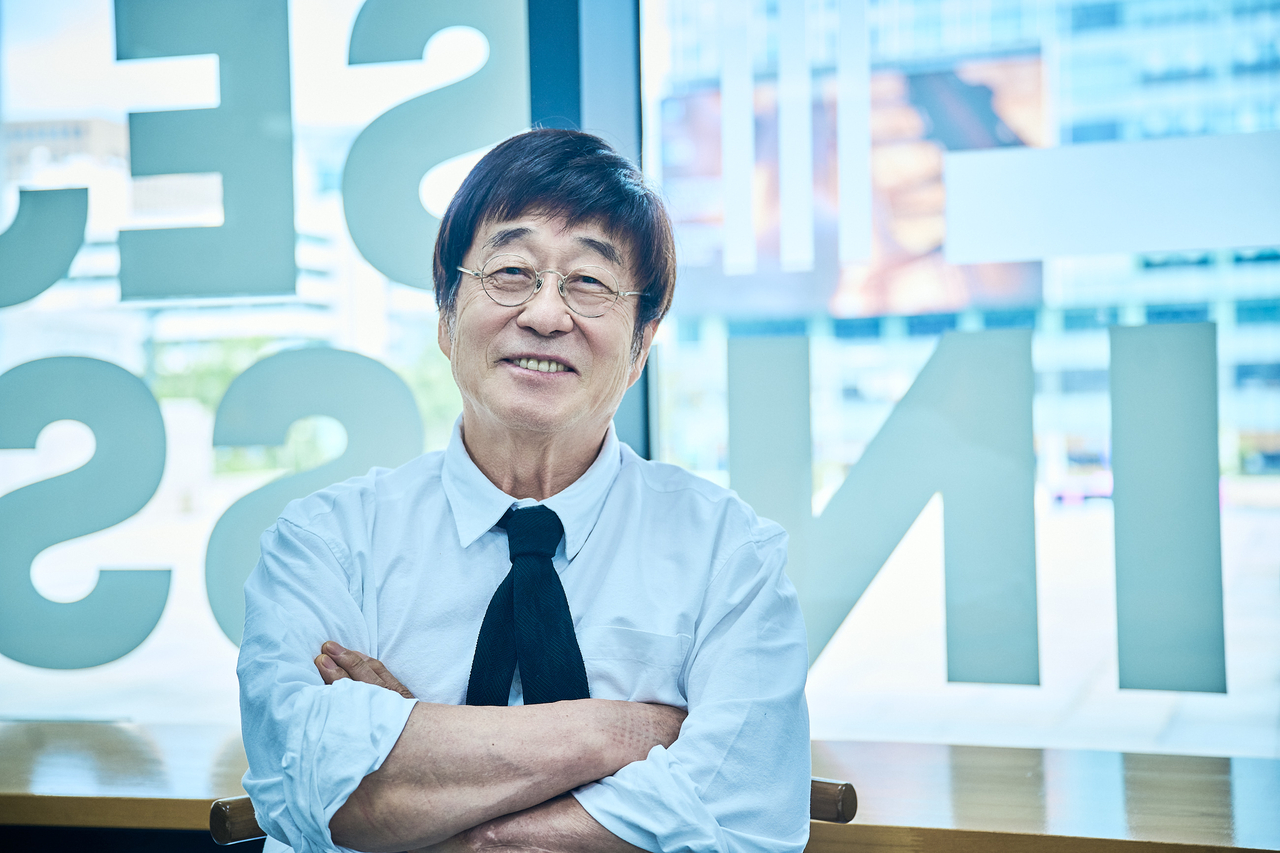
Syncing with now, not the past: 'No memory, however sweet, can match today'
The contemporary music scene fills Kim with a sense of wonder. He questions whether K-pop deserves to be treated as a fixed genre, yet he watches with fascination as it has become a full-blown cultural phenomenon. "I pay close attention to the fact that K-pop and Korean culture are becoming part of the daily lives of foreigners and strangers we have never met," he said. "How remarkable is that?"
Kim and Sanulrim, who mark their 50th debut anniversary next year, are among the foundational acts of Korean popular music. Their signature blend of lyrical songwriting and warm melodies layered over unstable rhythms and psychedelic textures defined the band's experimental spirit. But Kim approaches the milestone differently from most. He does not cling to the past or dwell in nostalgia. "I don't want to feed off memories," he said. "No matter how good a memory is, can it really be better than right now?" His 50 years, in that sense, remain in the present tense.
For the anniversary year, he plans to hold what he calls "Seongam Concerts" — Seongam being his pen name — at nursing homes, senior centers and daycare facilities. "The people who made Sanulrim an icon of youth in the late 1970s are the very ones who laid the foundation for K-pop," he said, giving credit where he felt it was due.
"I will prepare these concerts with care, as a way of repaying the love I have received over half a century," he said. "On a personal level, they are also a song of summoning — calling out to my youngest brother, Kim Chang-ik, who left us too soon." The quality he most wants these birthday-party-like performances to carry is happiness — not a leaning on beautiful memories, but a full acceptance of oneself as one is.
"You have to complete your life right where you are. Don't worry about a future that may never come — just accept your own existence fully in this moment. That, I think, is what true 'sync' really means. Constantly raising the synchronization rate with yourself."
shee@heraldcorp.com