
Traditional market outlook BSI hits 105.0, topping 100 for first time in 3 years
Vendors report dwindling foot traffic and mounting unsold inventory
Yeongdeungpo fruit market sees sales at half of peak levels from 20 years ago
'Four hours and not a single customer — just stock piling up'
"The Chuseok rush is a thing of the past. Only the government still expects it."
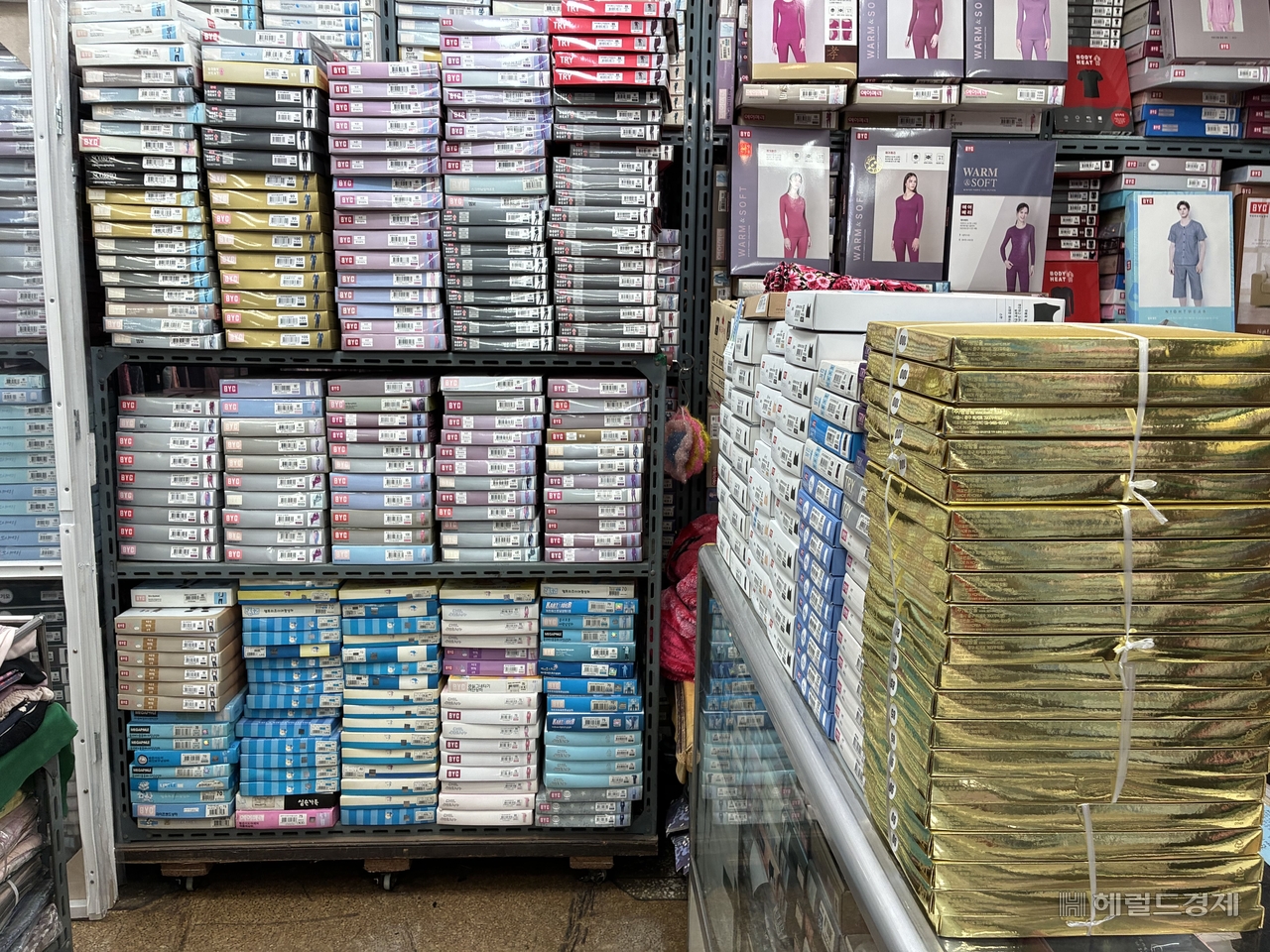
At a clothing and accessories store in Yeongdeungpo Jungang Market in Seoul, the owner opened early Tuesday but went more than four hours without a single customer. The owner, identified only by her surname Lee, said the mood among vendors had turned bleak. "People here say it's harder than the IMF crisis," she said. "The days when people came to traditional markets to buy Chuseok gifts are over."
Official data released Tuesday by the Korea Federation of Small and Medium Business painted a rosier picture. According to the organization's August 2026 business conditions survey, the September business sentiment index (BSI) for small business owners stood at 95.1, up 24.1 points from the previous month's outlook figure. The traditional market outlook BSI surged 38.5 points to 105.0 — the highest reading for both indexes so far this year. The traditional market figure also crossed the baseline of 100 for the first time since September 2023, a move analysts attributed to expectations of a Chuseok-driven boost.
On the ground, however, vendors' expectations told a different story. At Lee's store, unsold goods covered every wall in double layers, with more than 100 additional items stacked on display racks. "We're the weaker party in our supplier relationships, so stock keeps coming in every month whether it sells or not — and it's not selling," she said. "I'm not counting on Chuseok to clear any of it." A nearby stationery shop owner, surnamed Yoon, said the prolonged spending slump driven by the low birth rate had made inventory a growing burden. "Chuseok doesn't help much anymore," she said.
Vendors across the market agreed that the holiday sales surge had all but disappeared. One shop owner put out bottles of liquor for Chuseok gift-giving on Tuesday but said not a single bottle had sold. "The Chuseok boom — that's a department store and hypermarket gift-set story, isn't it?" he said. A nearby butcher shop has kept its outdoor refrigerated display case empty for two years, focusing instead on regulars and existing wholesale clients. "Even during Chuseok, there's no foot traffic, so I don't expect anything special," the owner said.
Fruit market quiet too, as online competition, weak domestic demand and aging take structural toll
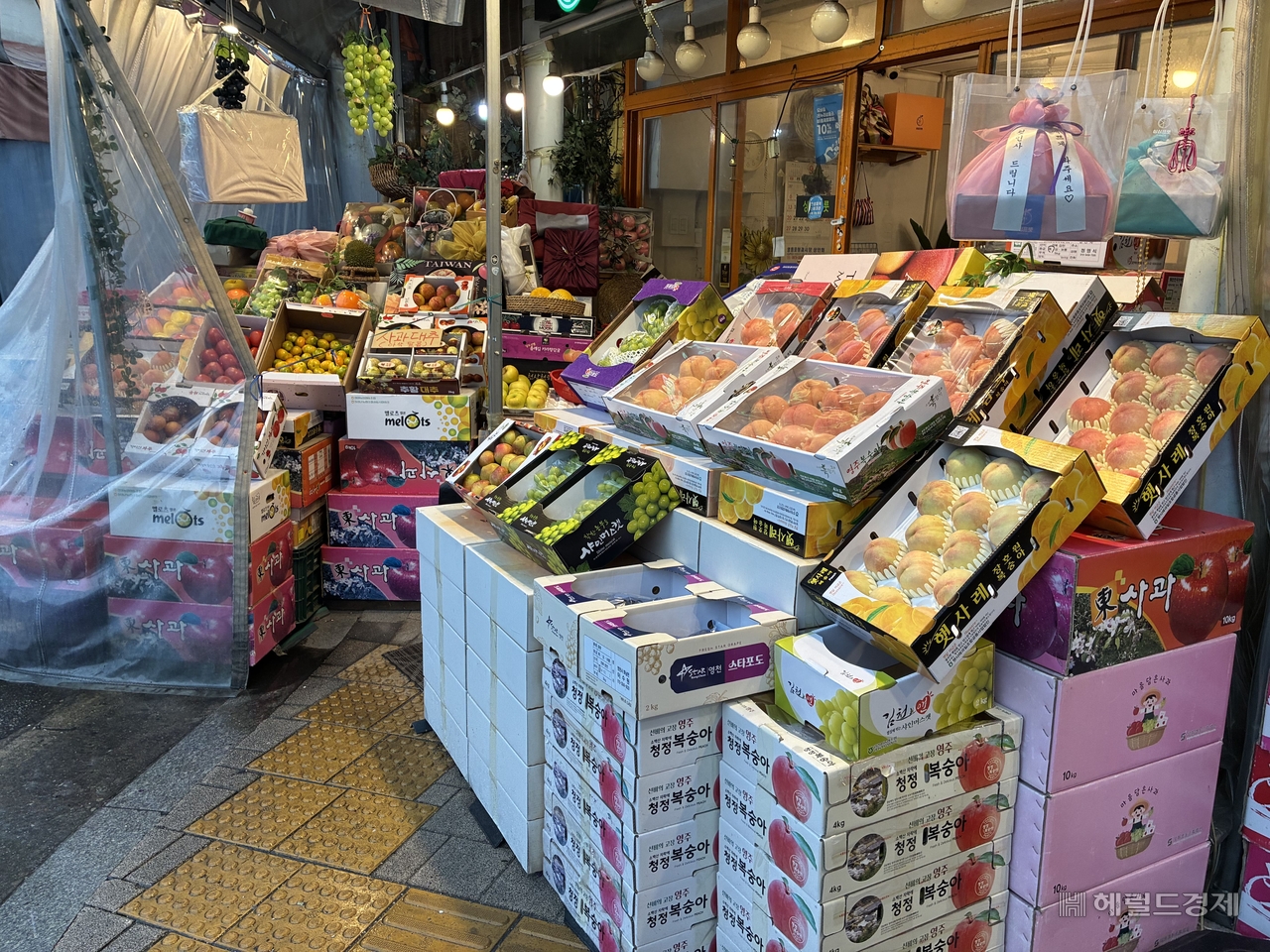
Even Yeongdeungpo's fruit market — long a symbol of holiday-season commerce — offered little sign of a Chuseok revival. As September arrived, vendors at the roughly 100-stall market began setting out fruit gift sets for ancestral rites and holiday giving. But while merchants were busy moving boxes, customers who stopped to buy were nearly impossible to find.
"If you order from Coupang Inc in the evening, it arrives before dawn — why would anyone make the trip to a fruit market?" said one vendor, surnamed Park, 68. "When the real Chuseok rush kicks in around mid-September, we'll get a brief shot in the arm, but the kind of boom we used to see is just not realistic anymore."
A vendor who has worked the market for 32 years said he expects sales of around 5 million won ($3,255) over the two-week Chuseok peak — roughly half what the market generated at its height 20 years ago. "There used to be twice as many stalls, and people would walk by and casually spend 50,000 won at a time," he recalled. He had hoped to hand the stall to his daughter, but she declined, citing the dim outlook for the fruit trade. He now plans to close within one to two years.
Vendors said a prolonged slump in domestic consumption had left shoppers with less to spend even during the holidays. "You need to eat to live, but you can live without fruit," one vendor said. "Day laborers nearby can't find work because construction is so slow — how are they supposed to buy fruit for Chuseok?" Another vendor said conversations at the merchants' association kept returning to the same theme: tight lending conditions and real estate regulations were choking off spending even during peak season.
A weakening of the market's own competitiveness has compounded the problem. "More than 90 percent of vendors are now in their 70s and 80s, so it's hard to run an active business," one fruit market vendor said. "The regulars who used to come have aged along with us, and they're visiting less too." Jungang Market has recently drawn younger visitors to some of its outdoor food stalls, riding a wave of retro nostalgia, but non-restaurant vendors still cater mainly to older customers with merchandise and sales methods that have not kept pace — leaving them unable to convert the new foot traffic into sales. "Young people will come during Chuseok too, but they won't buy anything outside the restaurants," one vendor said.
Government stimulus measures draw muted response: 'Markets need to change too'
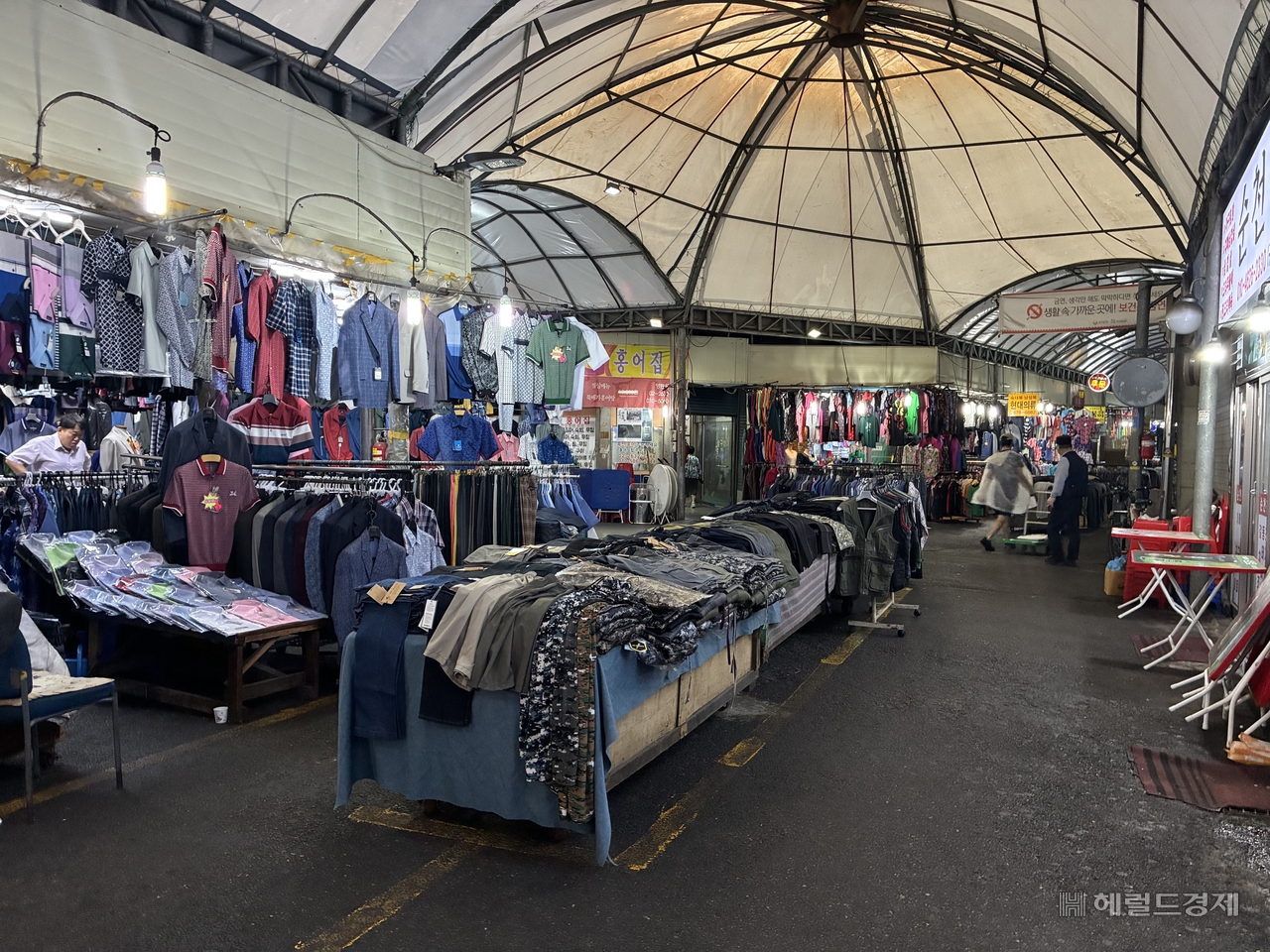
The government moved Tuesday to roll out measures aimed at boosting spending at traditional markets ahead of Chuseok. The package includes a roughly 30 percent rebate in Onuri gift vouchers on purchases of agricultural, livestock and fishery products from Sept. 16 to 20, and an increase in the discount rate on additional digital Onuri voucher purchases from 7 percent to 10 percent.
Vendors at the market welcomed the temporary relief but said it fell short. "The Onuri voucher discount was originally 10 percent — it was cut to 7 percent in March, so raising it back doesn't feel like much," one vendor said. Another said direct cash-style support, similar to local currency programs, could lift sales by around 20 percent. "Without that kind of support, people barely bother coming to traditional markets at all," the vendor said.
Some vendors also expressed frustration over the delayed appointment of a new minister at the Ministry of SMEs and Startups. Lee So-young was nominated as minister candidate on Sunday and still faces a National Assembly confirmation hearing. "To revive Chuseok spending, you need to push policy hard a month in advance — and we're only now at the stage of naming a candidate," one vendor said. "I have no idea how much will actually change for this Chuseok."
Ban Jae-seon, honorary chairman of the Seoul Federation of Shopping Districts and Traditional Markets, said the conditions for a Chuseok surge simply no longer exist. The COVID-19 pandemic entrenched online and delivery-based shopping habits, he said, and a vicious cycle has taken hold: as customers dwindled, vendors began closing earlier, which drove more shoppers to supermarkets and online platforms, further reducing foot traffic. "With consumer and business patterns this entrenched, it's hard for markets to suddenly bounce back just because it's Chuseok," Ban said.
Ban said reviving the holiday sales season would require more than short-term subsidies — the markets themselves need to change. "The government is shifting voucher policy toward digital platforms, but the main customer base — older shoppers — struggles with mobile apps," he said. "Vendors need to adapt what they sell and how they sell it to match the way people shop now." He added that training programs to help vendors make that transition were also disappearing. "There need to be programs to help merchants adapt, but those are being cut," he said.
Meanwhile, consumer prices rose 3.1 percent in August from a year earlier, according to data released Wednesday by the Ministry of Statistics, with the consumer price index reaching 120.05 (base year 2020 = 100) — up 0.2 percent from the previous month. Prices for agricultural, livestock and fishery products fell 2.6 percent from a year ago, a moderation attributed to higher supply volumes and government discount programs. Processed food prices rose 1.5 percent, widening the month-on-month gain by 0.5 percentage point as factory-gate price increases fed through. Petroleum product prices climbed 14.2 percent year on year, a slightly smaller increase than the 15.5 percent recorded the previous month.
hong@heraldcorp.com
snsd@heraldcorp.com





