Interviews for next IPA president held Thursday morning, hours before government unveils plan to merge four port authorities into one
Questions mount over whether the incoming CEO will be a full three-year chief executive or merely a transitional caretaker ahead of consolidation
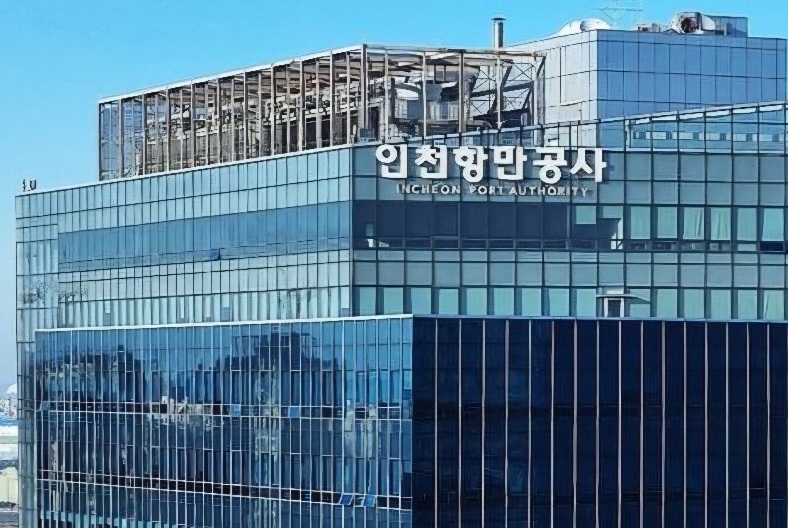
On Thursday, the same day the government announced plans to merge the country's four port authorities — including Incheon Port Authority (IPA) — into a single entity, the IPA was holding final interviews to select its next president, creating a striking mismatch between government policy and the agency's own appointment process.
Three candidates who applied for the IPA presidency sat for interviews at 11 a.m. Thursday. The next president would normally be appointed as the IPA's CEO for a standard three-year term.
But on the very day those interviews took place, the government announced it would consolidate the IPA with the port authorities of Busan, Ulsan, and Yeosu-Gwangyang into a single organization.
In effect, on the day the IPA was choosing its next leader, the government declared it would restructure the very institution that leader would head.
The timing raised immediate questions about whether Thursday's interviews constituted a normal selection process for an IPA president at all.
If the government's merger plan moves forward, the next IPA president would be unlikely to serve as a conventional chief executive of an independent public agency for a full three years.
Depending on the consolidation timeline, the IPA's organizational structure and authority could be substantially reorganized, fundamentally altering its status as an independent legal entity.
Ultimately, whoever is appointed will carry the title of IPA president when they take office, but their actual role may be closer to that of a transitional caretaker — managing the organization through the merger and overseeing the shift to a new integrated port authority structure.
The most critical question now is how long the government had been preparing the merger plan before Thursday's announcement.
Consolidating four port authorities is not a decision that can be made overnight.
It would require legislative amendments, organizational restructuring, adjustments to assets and liabilities, workforce integration, and the redistribution of functions between a central headquarters and regional offices — all of which demand extensive administrative groundwork.
That raises the question of how far along the merger plan was within the government at the time Thursday's interviews were conducted, and whether the IPA or the candidates themselves had any knowledge of it.
If the government's consolidation plan was substantially settled before the recruitment process even began, the situation becomes more troubling.
It would mean the government was simultaneously running a selection process for the CEO of an independent public agency while actively pursuing a policy to merge and restructure that very agency.
That in turn raises the question of what, exactly, the candidates were competing for.
Some observers are asking whether the position on offer was the chief executive of an independent agency with a three-year mandate, the final president of the IPA before it ceases to exist in its current form, or a transitional figure who may end up managing Incheon's regional operations within a future integrated port authority.
What questions were asked during Thursday's interviews is also drawing attention. Whether candidates were assessed only on growth strategies and management capabilities for the IPA, or also on their ability to navigate changes to Incheon Port's standing and organizational structure following a merger, would significantly shape how the process is ultimately judged.
If the government pressed ahead with the appointment process while already pursuing consolidation, the incoming president would begin work immediately facing uncertainty about both the length of their tenure and the future of the institution they lead.
The broader concern is Incheon Port's standing within any merged entity. If the four port authorities are combined, it remains unclear where the headquarters would be located and what role and authority Incheon Port would hold within the new organization.
How Incheon Port's functions and authority would be recalibrated relative to those of Busan, Ulsan, and Yeosu-Gwangyang is also an open question.
In that context, selecting an IPA president now may amount to more than a routine executive appointment — it could effectively be a choice of who will defend Incheon Port's position and authority through the consolidation process.
The IPA presidential selection has thus evolved from a straightforward public-agency personnel matter into one bound up with the government's port consolidation policy and the future standing of Incheon Port itself.
An IPA official said the agency had not anticipated that the government's announcement and the interviews would fall on the same day. "The IPA carried out the process according to normal procedures up through the interview date," the official said.
gilbert@heraldcorp.com