Forum on registered rental housing system for tenant housing stability
Ministry of Land survey: 90.1% of tenants say system is necessary
'Even imperfect retroactive legislation must respect the principle of trust protection'
Concerns are mounting that a tax reform plan to phase out special tax treatment for registered rental business operators — submitted to the National Assembly without revision — could cause serious side effects in the lease market if pushed through without a grace period or exit strategy.
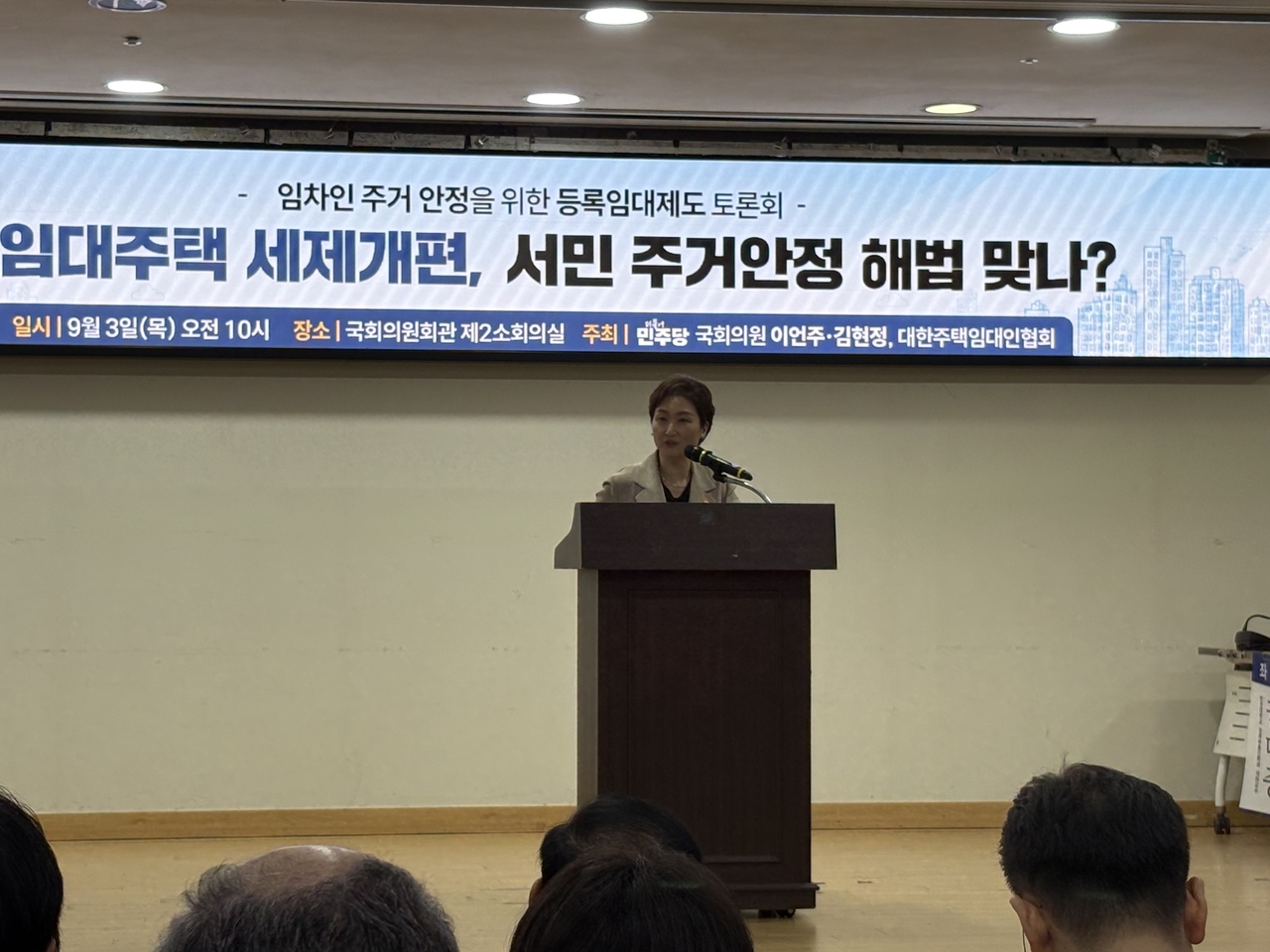
Democratic Party of Korea lawmaker Lee Eon-ju and the Korea Housing Landlords Association held a forum Thursday morning titled "A Forum on the Registered Rental Housing System for Tenant Housing Stability," identifying blind spots in the proposed tax overhaul targeting registered rental operators and presenting directions for improvement.
The tax reform package includes amendments to the enforcement decree of the Income Tax Act that would phase out exemptions from the capital gains tax surcharge and the long-term holding special deduction for purchase-type rental apartments in adjustment target zones. The provisions were left unchanged at Tuesday's Cabinet meeting.
In her opening remarks, Lee said policies skewed toward tax justice could, contrary to their intent, end up undermining housing stability in the market. "It seems the issue of registered rental housing has not been communicated as thoroughly as that of non-resident single homeowners, which is why we held this forum," she said. She added that "rather than stubbornly pushing ahead with policy, we need the courage to step back in order to prevent harm to the public."
Seong Chang-yeop, chairman of the Korea Housing Landlords Association and the forum's first presenter, argued that policies aimed at increasing housing supply could in fact harm housing stability for ordinary citizens. "The registered rental housing system is a policy that has been maintained for more than 30 years to ensure housing stability," he said. "Rental business operators received special tax treatment in exchange for fulfilling 21 public obligations, including the mandatory reporting of lease contracts."
He cited findings from a study published by the Ministry of Land, Infrastructure and Transport in April 2022 on improving housing stability for tenant households. In that study, 90.1% of tenants living in registered rental housing said private registered rental housing was necessary, while only 39.3% expressed an intention to purchase apartment construction-type rental units. "The tenants who actually use the system are the ones most clearly expressing its necessity," Seong said. "Given that tenants' willingness to buy is not high, the side effects will outweigh any effect of bringing more units to market."
Kim In-man, director of Kim In-man Real Estate Research Institute, also argued in his presentation that rental business operators should not be viewed as speculators. "The benefits may have been excessively designed when the special act was enacted, but the system must be maintained until supply is sufficient — otherwise, housing insecurity for ordinary citizens cannot be prevented," he said.
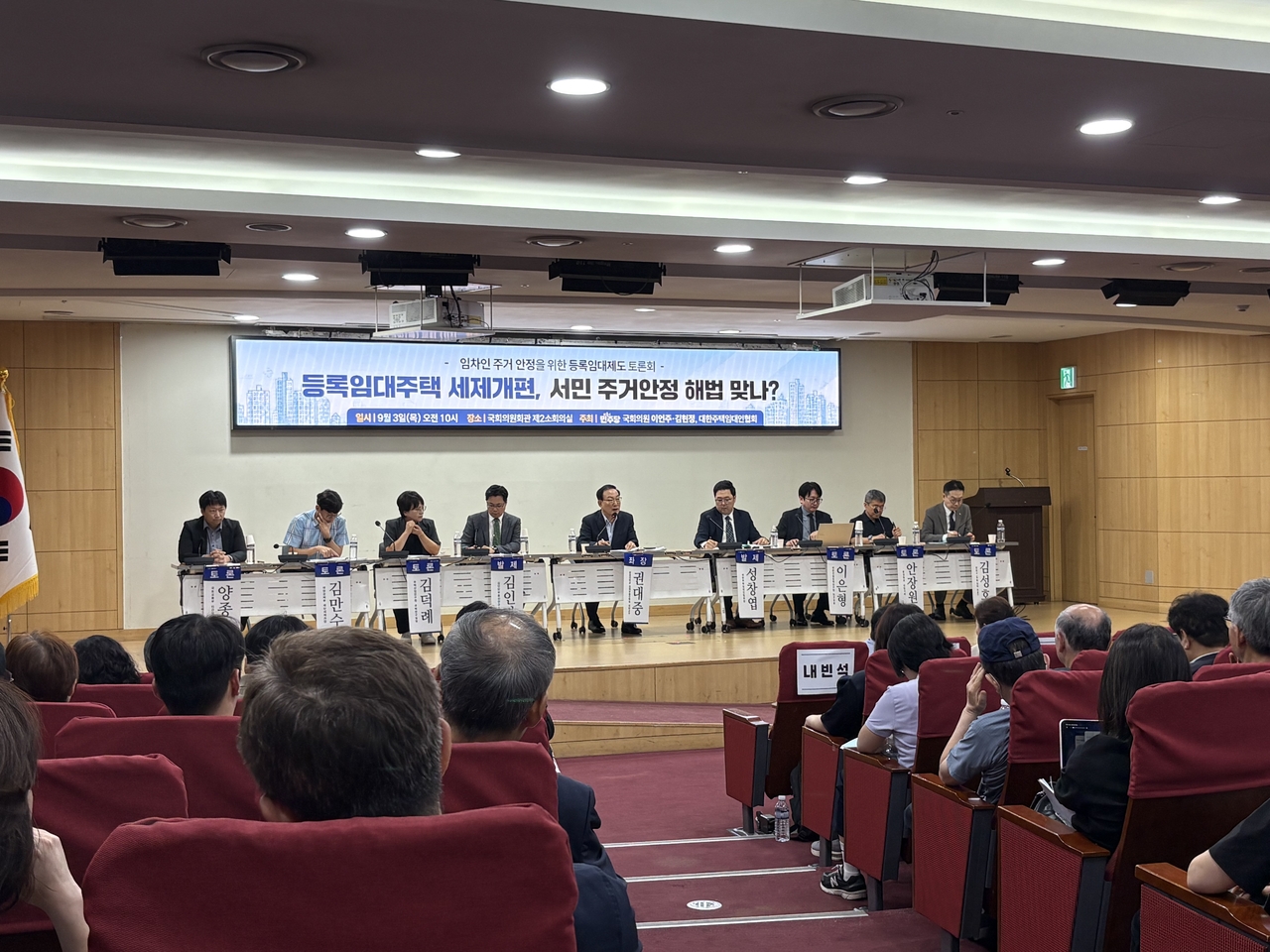
Industry experts who participated as discussants also agreed that the proposed tax overhaul for rental business operators had little to do with housing stability. Kim Seong-ho, a lawyer specializing in residential leasing, argued that exemptions from the capital gains tax surcharge for registered rental operators "should be seen not as a tax benefit but as a special tax treatment received in exchange for complying with the law." He added that while the government's legislative discretion is recognized, "even in cases of imperfect retroactive legislation, the principle of trust protection must be upheld."
Kim Deok-rye, head of the housing research division at the Korea Housing Industry Research Institute, said the system's basic condition of stability was being undermined as the rules had changed multiple times while operators were still fulfilling mandatory rental periods of four to six years for short-term and eight to ten years for long-term contracts. She proposed transitional provisions for operators who had already completed their obligations, as well as the deletion and revision of automatic deregistration rules.
Officials from the Ministry of Land, Infrastructure and Transport and the Ministry of Economy and Finance also attended the forum. Jang Mun-seok, an official attending on behalf of Yang Jong-ho, head of the ministry's private rental policy division, said the ministry was "fully aware that registered rental business operators are contributing to the lease market" and pledged to consider measures for improvement and support. He also asked participants to take into account the easing of loan regulations and deregulation of 20-year long-term rentals included in the Aug. 13 policy package.
Kim Man-su, head of the property tax division at the Ministry of Economy and Finance, said the government was in the process of public deliberation ahead of a pre-announcement of the enforcement decree legislation scheduled for late September, and asked participants to submit as many opinions as possible during that period. On concerns about the constitutionality of retroactive legislation, he said legal advice had been sought multiple times during the preparation process and that, as a case of imperfect retroactive legislation, it was a matter to be weighed against the public interest. He added that the specific duration of any transitional measures — on which opinions differ — would need to be discussed before the National Assembly's final decision.
Registered landlords at the forum also voiced strong opposition. When incentives for long-term rental operators were mentioned, voices from the audience called out, "We don't trust it anymore." Some attendees held picket signs reading, "We trusted the government and fulfilled eight years of responsibility — save registered rental business operators" and "Jeonse and monthly rent have dried up — restore the housing rental business."
The backlash grew louder during the government's explanation of the tax reform plan. When Kim Man-su explained that the reduction in capital gains tax exemptions would apply to purchase-type rental apartments in Seoul, attendees protested, saying, "Apartments are no different." Multiple petitions calling for the withdrawal of the tax overhaul targeting housing rental business operators have been posted on the National Assembly's electronic petition website.
shy@heraldcorp.com
quq@heraldcorp.com