Land minister announces five relocation principles
Announcement pushed back amid national audit concerns
Joint statement set for Sept. 14, mass rally planned for October
![An aerial view of Jinju Innovation City in South Gyeongsang Province [South Gyeongsang Province]](https://wimg.heraldcorp.com/news/cms/2026/09/03/news-p.v1.20260903.c9f70c2a718e4b23957fdcc31720be4c_P1.jpg)
South Gyeongsang Province has launched a full-scale campaign to keep Korea South-East Power (KOEN) and Korea Land and Housing Corporation (LH) anchored in Jinju's innovation city, after the government delayed its roadmap for relocating public institutions out of the greater Seoul area to October or November.
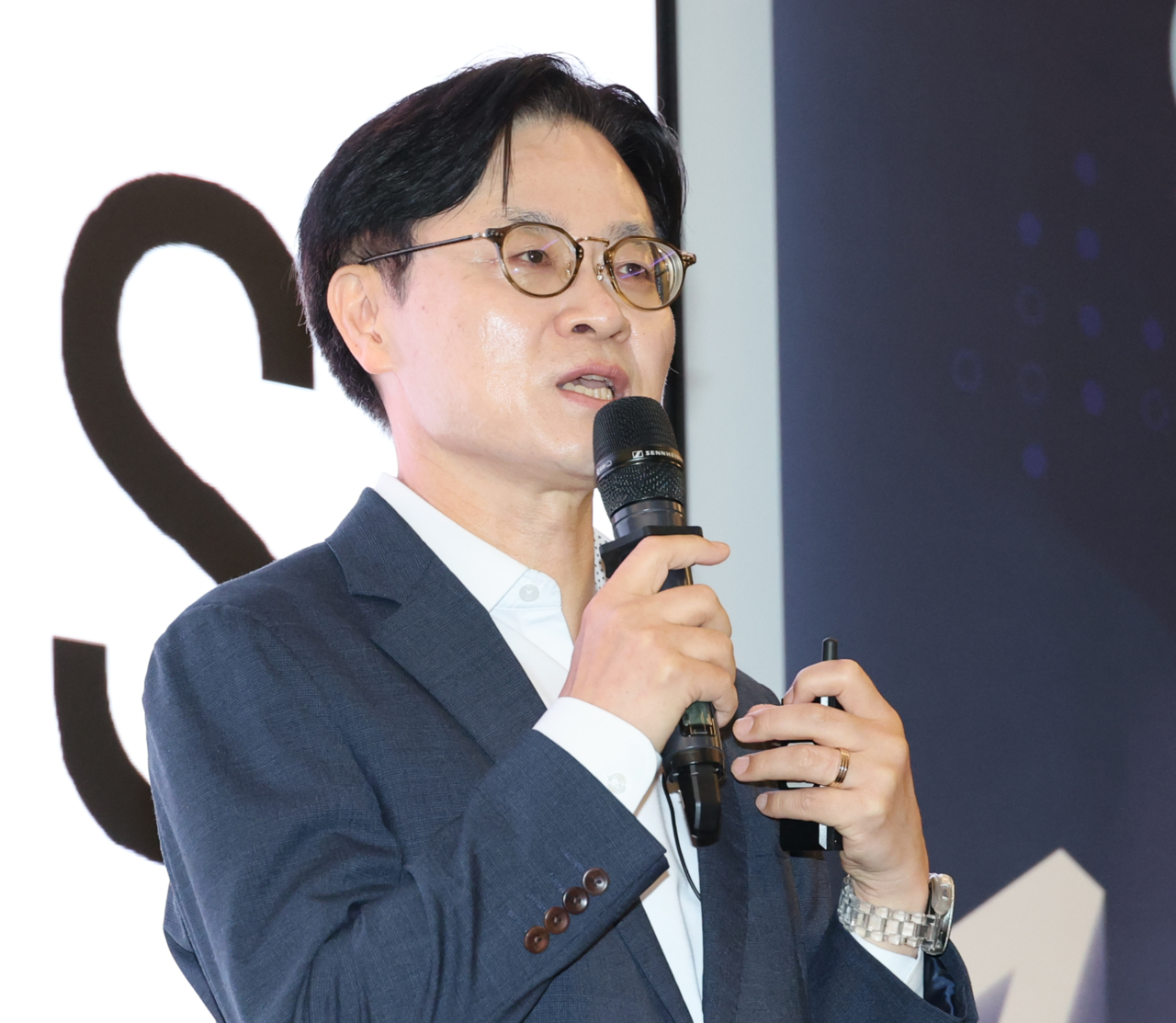
Minister of Land, Infrastructure and Transport Kim Yun-deok held a joint ministerial briefing Thursday morning at Government Complex Seoul, announcing a plan to reform and relocate administrative and public institutions.
The ministry outlined five principles for the second round of relocations: minimizing the number of institutions remaining in the greater Seoul area; clustering related agencies together; linking relocations to regional industries and universities; building self-sufficient residential communities; and accelerating moves by leasing private buildings rather than waiting for new government offices to be constructed. Under the plan, the ministry will review all criteria used to exempt institutions from the first relocation round, cut exemptions to a minimum, and begin moving pioneer institutions as early as 2027 through private-building leases.
However, the announcement of specific relocation targets and location guidelines — originally set for August — has been pushed back to October or November. The ministry concluded that building public consensus during the October national audit period would be difficult, given the risk of intensified competition among local governments and a breakdown in dialogue with labor groups. It plans to announce the target institutions and their designated regions together in a single package immediately after the audit session ends.
A complicating factor is that the reform plan includes sweeping structural changes: the merger of the five power generation subsidiaries under Korea Electric Power Corp., a reorganization and financial restructuring of LH, and the consolidation of four major port authorities as well as oil and gas corporations.
With KOEN and LH — the twin pillars of Jinju Innovation City — squarely in the crosshairs, South Gyeongsang Province is moving urgently to assess the risks and build a defensive strategy.
The province said it supports the government's broader push for an energy transition and functional efficiency, but drew a firm line against allowing headquarters functions to migrate out of the existing innovation city, calling such a move wholly unacceptable.
In KOEN's case, the province argues that because the company already operates a modern headquarters building with strong residential amenities in Jinju, any merged entity formed from the five power generation subsidiaries must keep its integrated headquarters there. On LH, the province maintains that even if the corporation is restructured under a revised housing welfare framework, its central command functions must remain in Jinju.
The province views the two months before the government's final decision as a critical window that will determine whether it succeeds or fails in retaining the institutions, and plans to mount an all-out effort.
Having already submitted relocation proposals for 40 target institutions to the ministry in February and completed a survey of vacant public spaces across its cities and counties, the province will issue a joint statement at the National Assembly on Sept. 14 on the consolidation and relocation of public-sector bodies. A large-scale provincial rally bringing together political, business and civic leaders is then planned for Oct. 12 to press the central government on the case for placing institutions in South Gyeongsang Province.
"The government's intent to reform institutional functions should be honored, but there must be no reduction in the role of existing innovation cities and no reverse discrimination against them," said Kim Sun-hee, head of the province's public institution relocation task force. "We will concentrate our administrative resources on persuading the central government and the National Assembly to make Jinju Innovation City — with its fully built-out infrastructure — the headquarters hub for consolidated public enterprises, and to swiftly attract the 40 target institutions linked to our strategic industries."
ook967@heraldcorp.com