South Jeolla-Gwangju Special City and Gwangju Institute of Architects announce winners
Which buildings best represent Gwangju's architectural beauty this year?
South Jeolla-Gwangju Special City and the Gwangju Institute of Architects under the Korea Institute of Registered Architects have selected six winners of the 30th Gwangju Architecture Award.
The Gwangju Architecture Award has long recognized architects and contractors behind outstanding buildings, helping drive the development of the region's architectural culture.
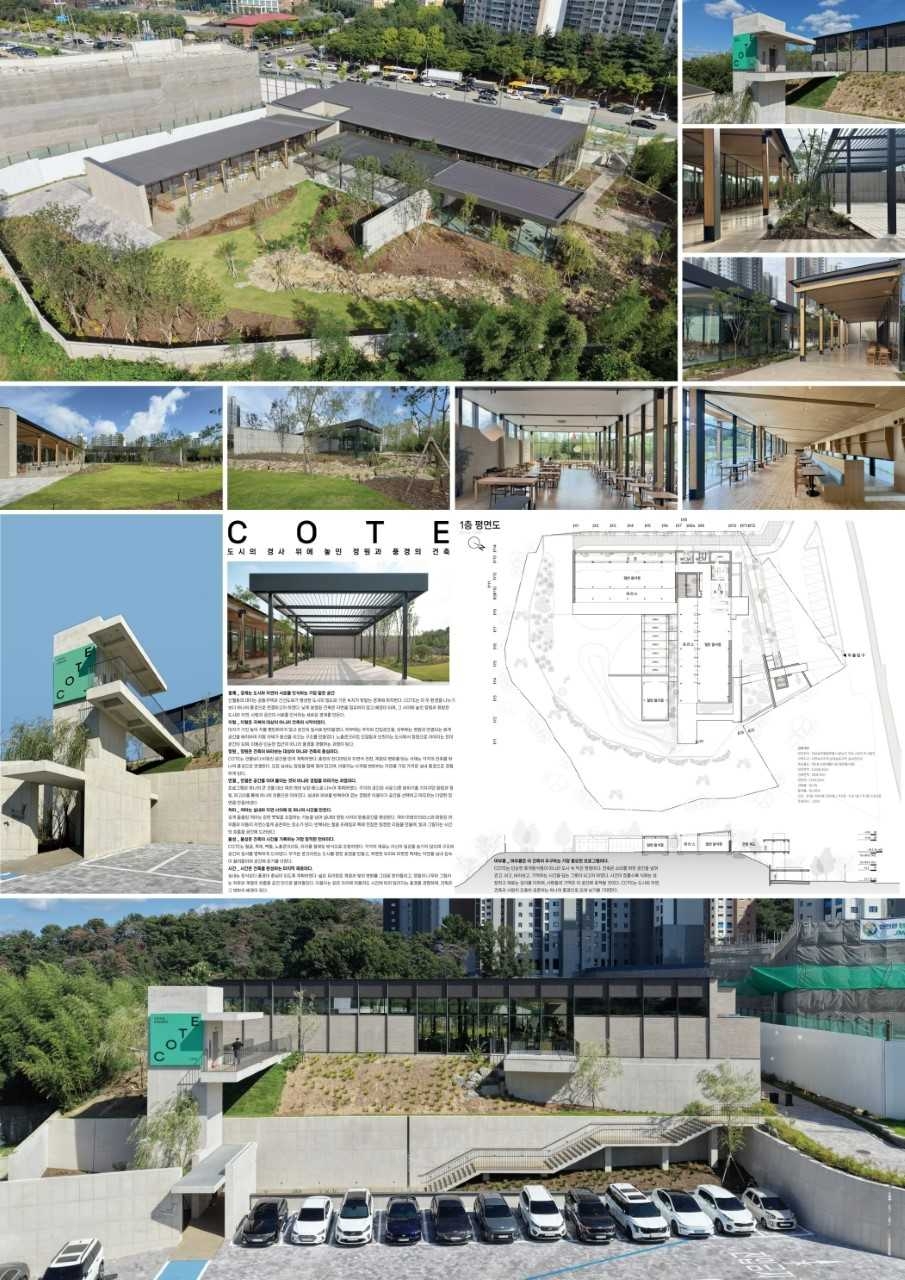
This year's top honors went to the Ceramic Culture Hall at the Gwangju National Museum in the social and public category, COTE in Gwangsan-gu in the non-residential category, and Eumjae in the residential category.
Three excellence awards were also presented: the Agri-Food Processing Business Incubation Center in the social and public category, the Cardington Rafa Memorial Hall at Gwangju Christian Hospital in the non-residential category, and Corner Brick House in the residential category.
Twelve works that had received occupancy approval within the past 10 years were submitted for consideration. A panel of eight judges — including architects and university professors — evaluated the entries through a three-stage review process before selecting the winners.
The Ceramic Culture Hall at the Gwangju National Museum, the top prize winner in the social and public category, was recognized for harmonizing with the existing museum complex while realizing new cultural value through differentiated spatial planning.
COTE in Gwangsan-gu, the top winner in the non-residential category, stood out for its landscaping and exterior spatial design, which carefully reflected the site's varying elevations and topographical characteristics.
Eumjae, the top winner in the residential category, was praised for its spatial layout that accounts for residents' movement patterns and its use of exterior spaces to create a sense of openness within a limited interior footprint.
South Jeolla-Gwangju Special City plans to attach commemorative bronze plaques to the winning buildings, present the architects with a mayoral citation and prize money, and award certificates to the contractors.
Kang Pil-seo, chairman of the Gwangju Institute of Architects, said he was grateful to the architects who submitted their work "despite the difficult downturn in the construction industry," adding that the institute would continue working with South Jeolla-Gwangju Special City to contribute to the development of the region's architectural culture.
Jeong Seung-cheol, head of the architecture and landscape division, said the winning works would serve as an opportunity to create an architectural culture unique to Gwangju and enhance the city's urban landscape. "In line with the integration of South Jeolla and Gwangju, we will create an advanced architectural landscape that encompasses both regions and build a cultural city that breathes within the daily lives of its citizens," he said.
sij@heraldcorp.com