Interview with CEO Lee Jong-min
Taiwan's GUC opened the door; TSMC VCA status achieved in 2019
Next-generation memory controllers developed with SK hynix, Fadu
AxHub: an AI chip design and verification platform backed by 20 billion won
US customer push now underway
The business world is full of companies — each with its own story of splits, mergers, rebranding, new ventures and shuttered operations. This series brings those dynamic industry stories to life through on-the-ground reporting and data analysis.
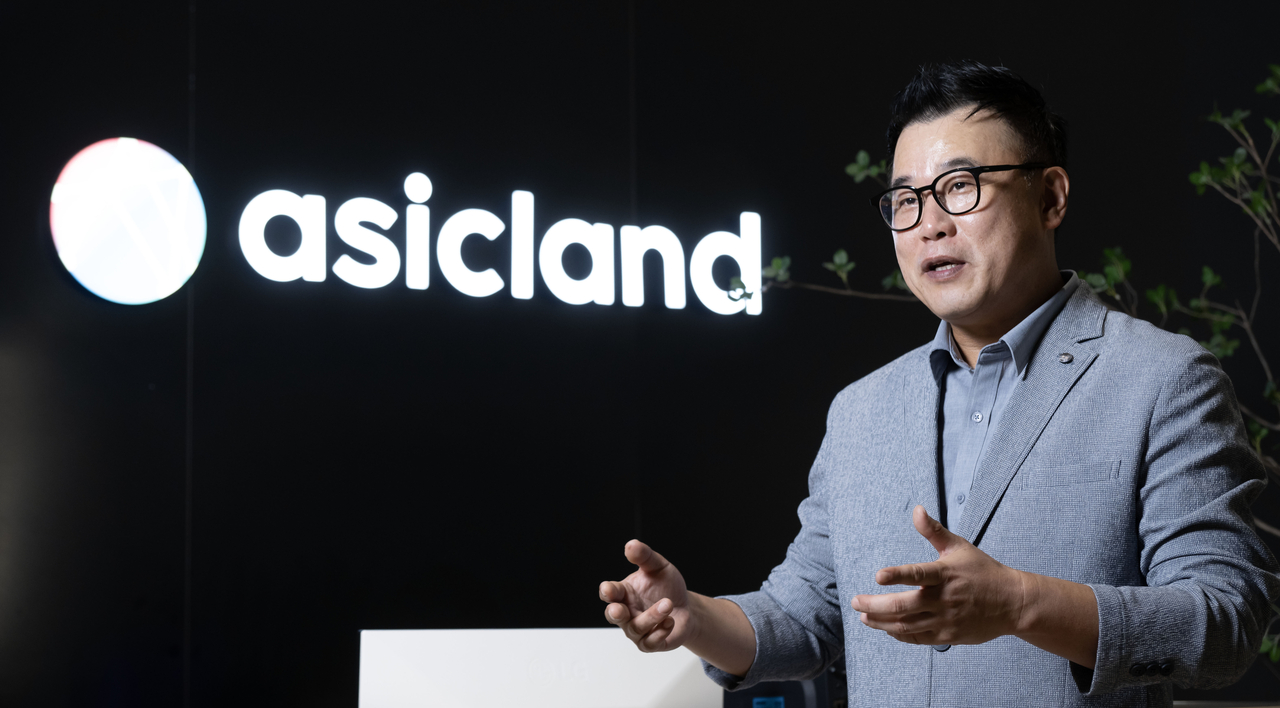
"After founding an ASIC company, I wanted to partner with the best foundry in the world if I was going to partner with one at all. By continuing to work with TSMC, we earned the status of its sole local partner in Korea in 2019."
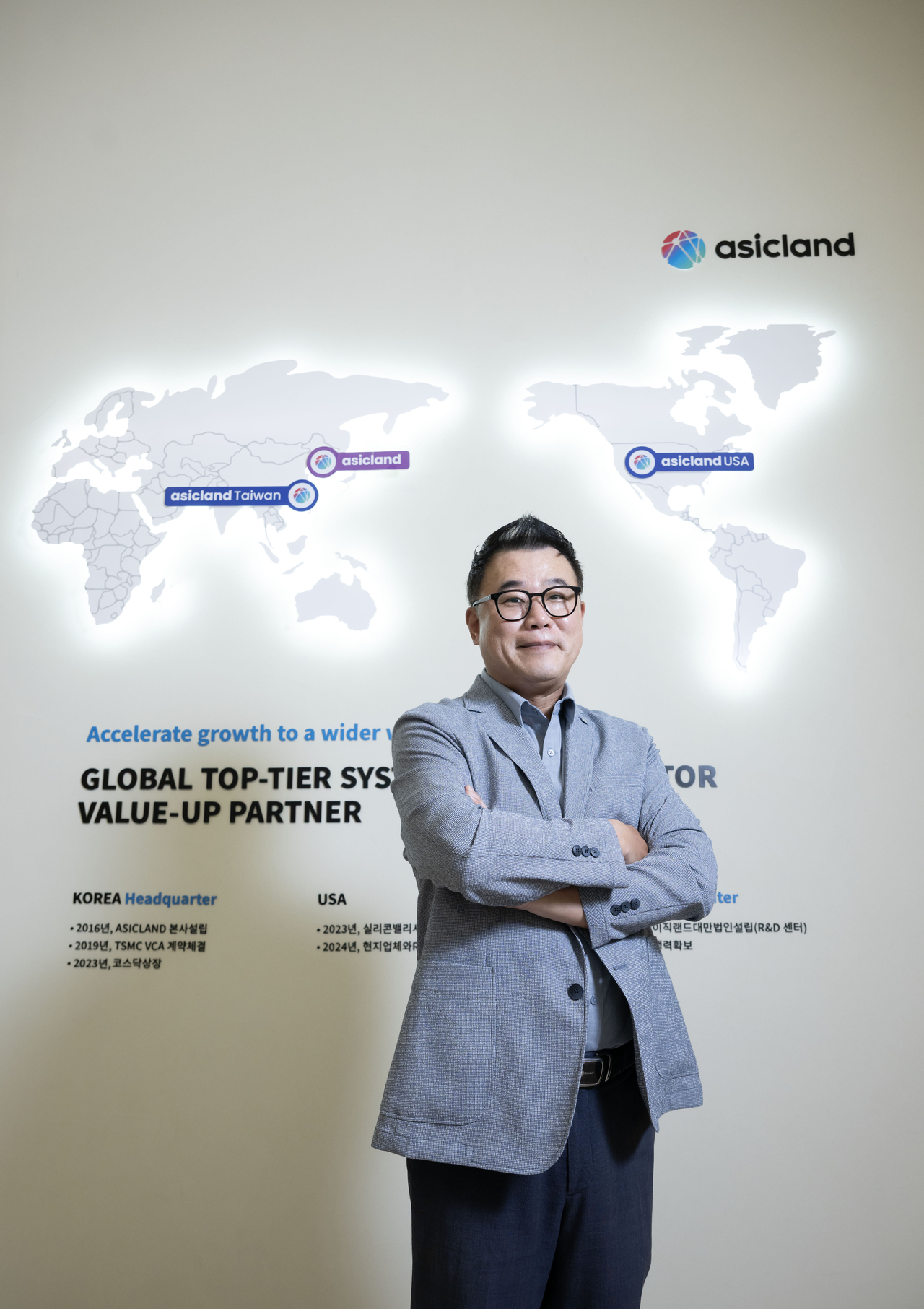
Asicland CEO Lee Jong-min made those remarks in an interview at the company's headquarters in Suwon, Gyeonggi Province, on Sept. 14, explaining how the firm came to partner with TSMC, the world's largest contract chipmaker. Founded in 2016, Asicland became a TSMC Value Chain Alliance partner in 2019.
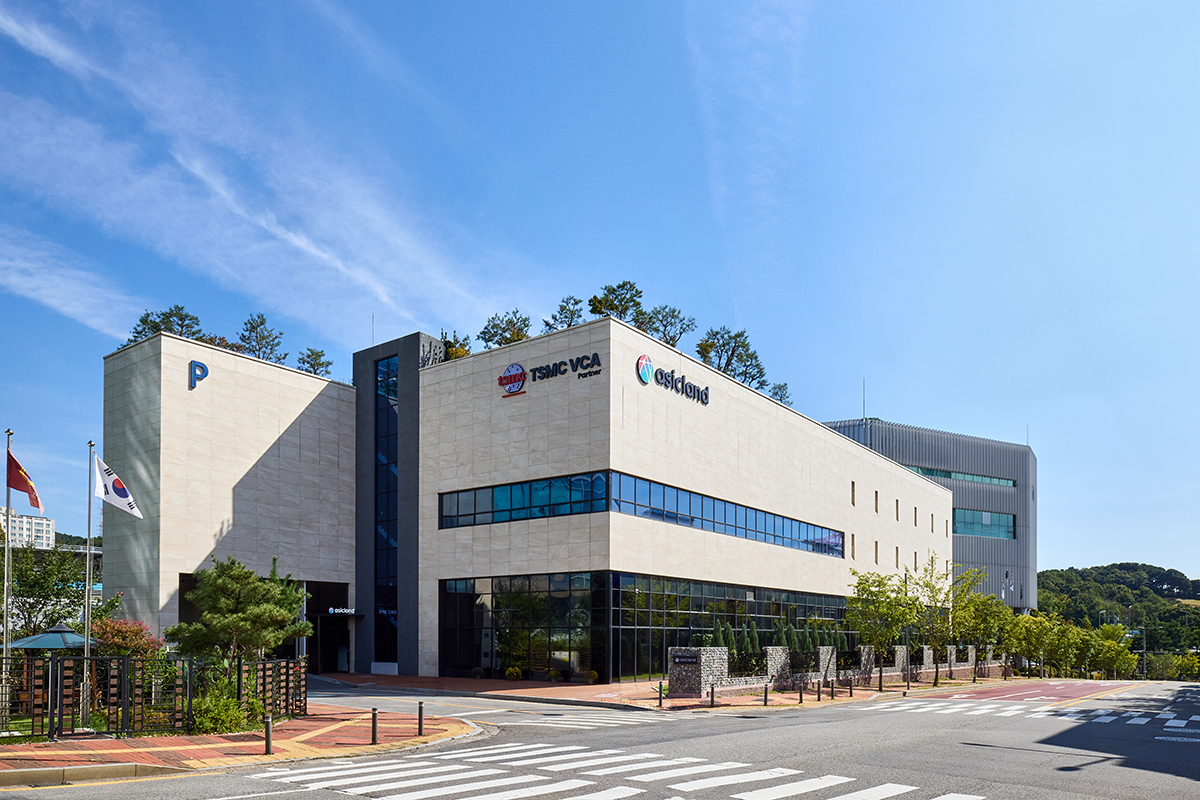
'Partner with the best' — TSMC VCA status reached just 3 years after founding
Lee, a former semiconductor researcher at SK hynix, began his career in the company's ASIC development division. In the early 2000s he left SK hynix and built his career in the emerging fabless and ASIC sector.
"My first job was at SK hynix, and as the company went through a restructuring of its semiconductor business, I decided I needed to move into the venture world," Lee said. "From there, I founded Asicland with the idea of creating a place where engineers could come together and enjoy their work."
Asicland helps customers develop custom chips tailored to their exact specifications. Unlike fabless companies that sell chips under their own brand, Asicland designs chips that will be sold under the customer's name. It connects that design work to the foundry ecosystem, offering turnkey services spanning the entire process — from spec definition through design, packaging, testing and mass production.
TSMC sits at the heart of that advanced process ecosystem. Only eight companies worldwide hold TSMC VCA status, and among those, just four are ASIC firms: Asicland, Taiwan's Alchip, Global Unichip Corp. (GUC), and US-based GS Microelectronics. Asicland has used the partnership to build up an extensive track record with TSMC's process nodes.
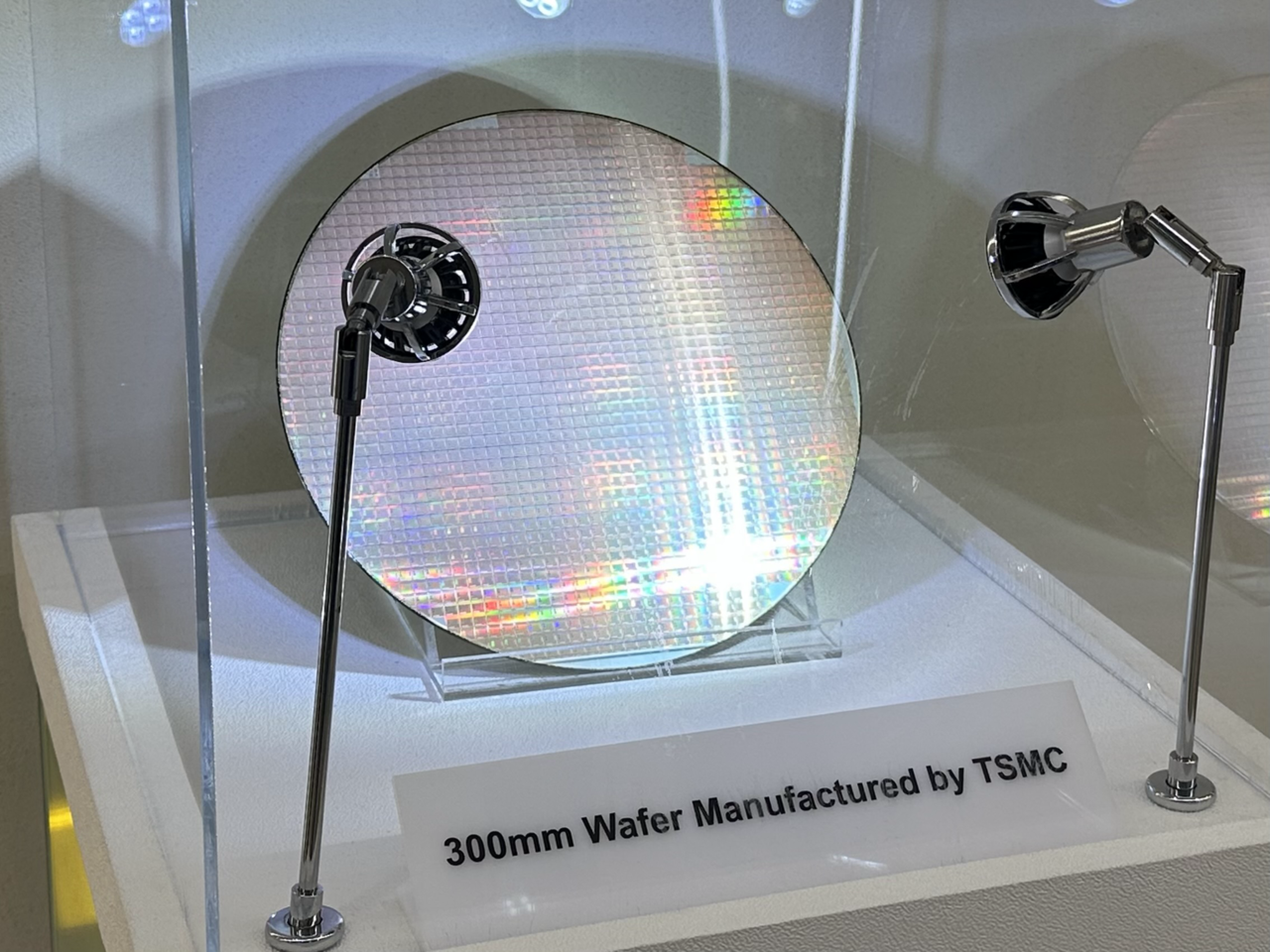
The relationship with TSMC began through GUC, a Taiwanese ASIC firm. "In the early days, we handled semiconductor design work for projects that GUC had won in Korea," Lee recalled. "We collaborated with GUC to learn TSMC's processes while setting our sights on becoming a partner ourselves." He added that the company had targeted VCA entry within five years but achieved it in two. At the time, around 30 of Asicland's roughly 40 employees were based full-time in Taiwan.
Asicland has since internalized capabilities spanning TSMC's leading-edge process nodes and advanced packaging technologies, including CoWoS (Chip on Wafer on Substrate). The company has already built out support for 3-nanometer processes and plans to secure the technical foundation needed to handle 2-nanometer nodes going forward.
"We have a dedicated team that receives libraries from TSMC whenever a new process is developed and sets them up internally," Lee said. "We also have systems in place so that our engineers can gain direct hands-on experience with CoWoS packaging." Such investment must come first, he said, if the company is to offer customers the full competitive advantage of the TSMC ecosystem.
Beyond TSMC, Asicland was designated an Arm Approved Design Partner in 2018. As the company accumulated successful design cases using CPUs, Arm came to recognize Asicland's design capabilities as well.
Partnerships with SK hynix and Fadu point to broader eSSD controller production
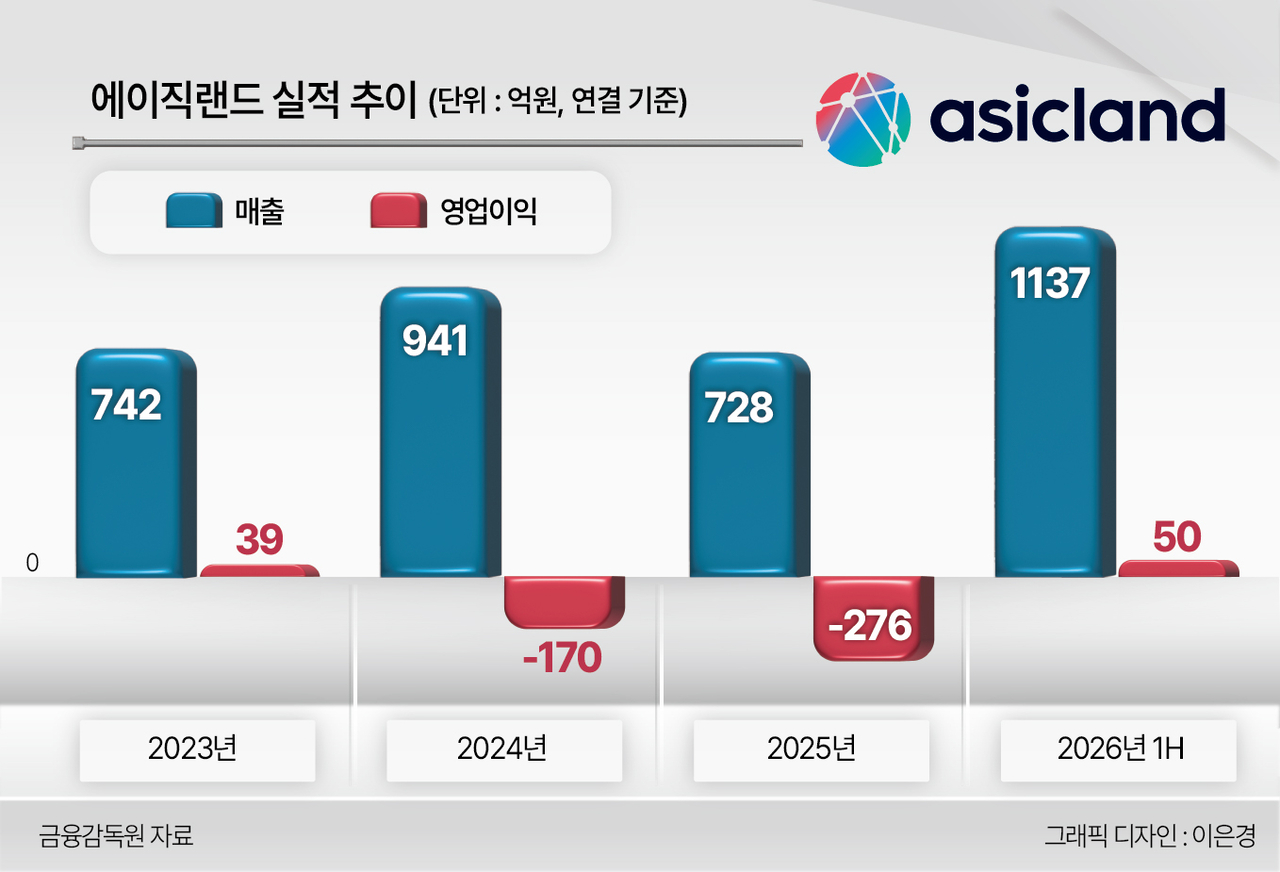
Asicland listed on Kosdaq in November 2023 and returned to profitability in the first half of this year. First-half sales reached 113.7 billion won ($83.6 million) with an operating profit of 5 billion won — already surpassing the company's full-year sales of 72.8 billion won last year. After listing, the company focused heavily on growth investment, and mass-production revenue has recently begun to ramp up in earnest, driving a sharp expansion in its top line.
Asicland has particularly demonstrated its technical credentials in the memory controller segment, securing SK hynix and Fadu as customers. Starting with a 30 billion won contract with Fadu in 2024 for enterprise solid-state drive controller solutions, the company went on to sign a 40 billion won contract with SK hynix in June for next-generation eSSD controller design and tape-out support.
Memory controllers are system semiconductors that manage data storage and processing. As AI moves beyond training into the inference era, demand for high-performance storage is rising — and Asicland is counting on that trend to expand the controller market. The company has been broadening its memory portfolio around NAND-based storage products and NAND controllers.
"We will move into full-scale mass production of memory controller products starting next year," Lee said. "Because we handle it as a turnkey operation — placing orders directly with the foundry, testing the finished products and delivering them — eSSD controller products are expected to contribute significantly more to our earnings going forward."
Lee also sees strong growth potential in Asicland's identity as an ASIC company. "Chips made by fabless companies appeal only to specific customer segments, but an ASIC company can address a wide range of demand — AI, displays, autonomous driving, IoT," he said. "Low-capacity NAND goes into consumer electronics like smart glasses and smartwatches, so the applications for memory controllers are virtually limitless."
'AI chip development cut from 2 years to 8–9 months' — Taiwan and US expansion underway
Asicland's next major bet is AxHub, a chip design and verification platform targeting edge AI semiconductors. With key functions and intellectual property pre-implemented, the platform enables rapid integration and verification tailored to customer requirements, allowing customers to produce early-stage verification chips quickly and at low cost without designing an entire semiconductor from scratch.
"When developing chips with customers, the specifications they ask for keep changing in response to market shifts — a competitor launching a new product, for instance," Lee said. "The longer hardware development takes, the higher the costs, so we built a new platform around the goal of launching new chips more frequently instead." Because the design platform is already in place, he explained, the company can combine the performance elements a customer needs and shorten the product development cycle.
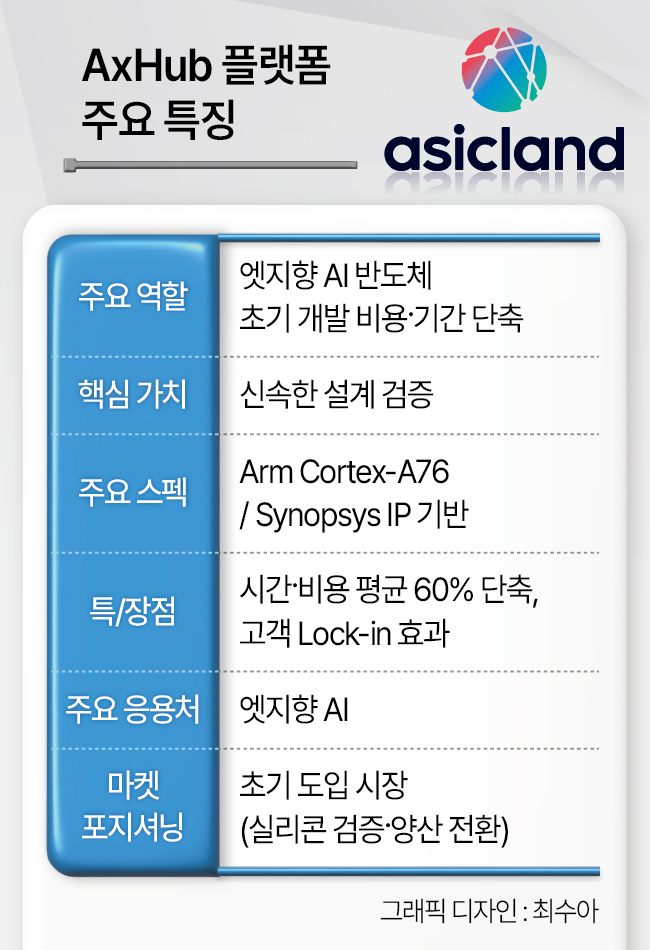
"Development that used to take around two years can be cut to eight or nine months with AxHub," Lee said. "Forty SoC developers and 20 back-end developers spent a full year focused exclusively on building this platform, with no outside projects." The development effort was a major undertaking, with 20 billion won invested.
The design platform is now the springboard for a more aggressive push into overseas markets. Lee said the scale of investment would not have been possible if the company had been looking only at the domestic market.
Asicland plans to expand its business footprint to Taiwan and the United States. It established an R&D center in Taiwan in 2024 to support TSMC's CoWoS advanced packaging technology, and sales generated through that office have been growing of late. Taiwan revenue exceeded 20 billion won in the first half of this year.
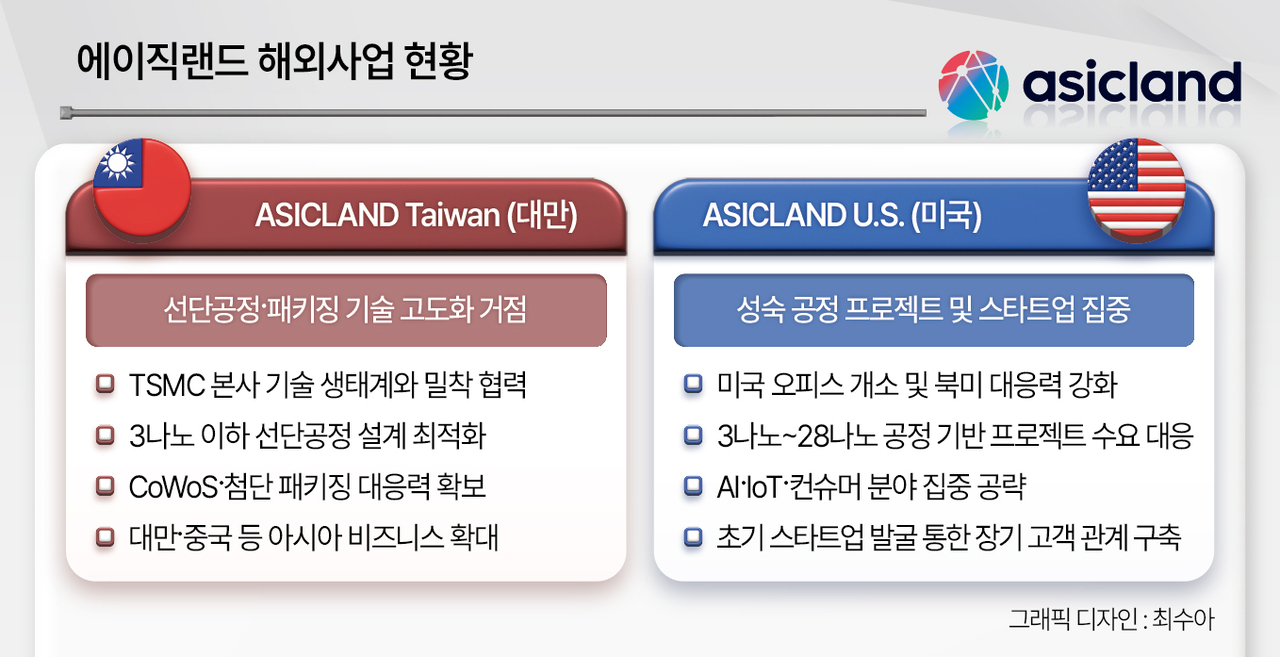
In the United States, Asicland plans to strengthen its market presence by opening a local office. While large Taiwanese ASIC firms, given their revenue scale, tend to target American hyperscalers and big tech companies, Asicland is taking a different approach.
"Rather than chasing projects that require massive headcount, we're targeting markets where we can respond with agility," Lee said. "We plan to go after the on-device AI and physical AI markets first."
Lee's ultimate ambition is to make Asicland the Nvidia of the ASIC world. "Nvidia keeps locking in customers through its own software," he said. "I want Asicland to become a company that customers keep coming back to, built on the foundation of our own design platform."

jeongwan@heraldcorp.com