Lee Wang-jun, incoming IHF president and chairman of Myongji Healthcare Foundation, says AI is the key to breaking through Korea's deepening healthcare crisis — from workforce shortages to a national health insurance fiscal crunch.
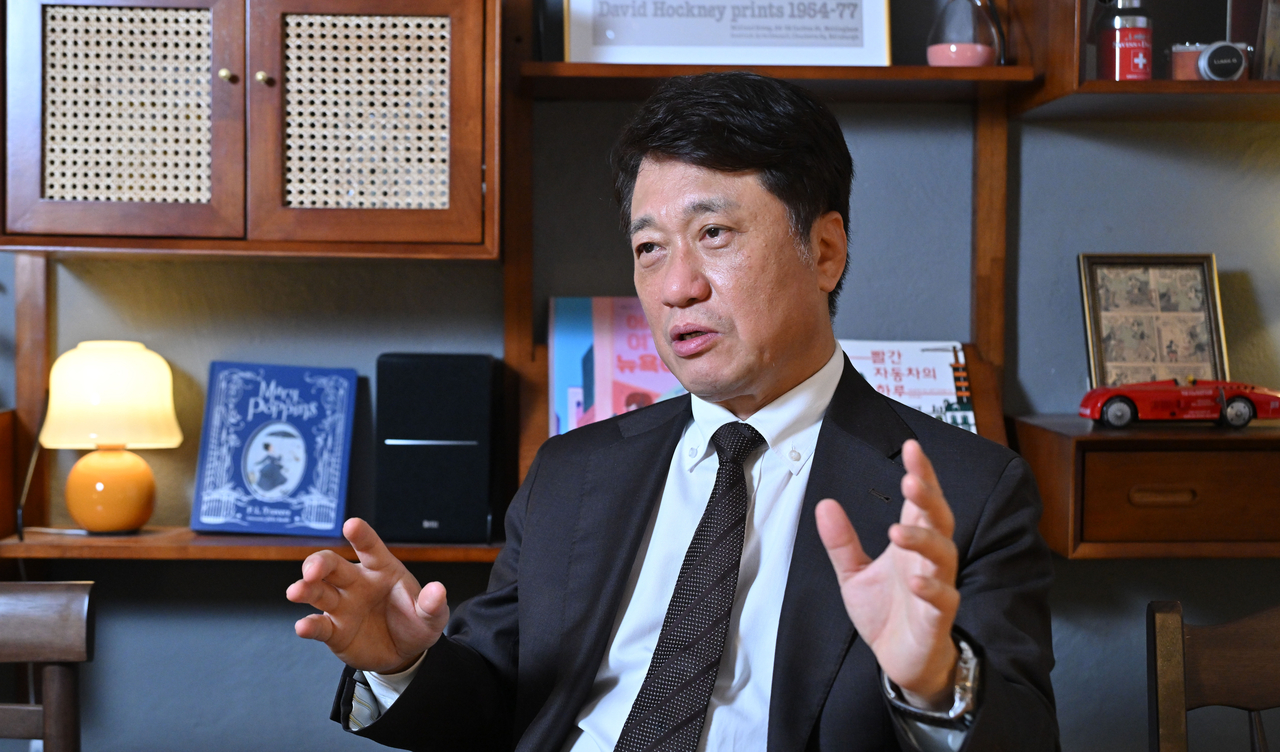
"Korean healthcare is entering its second great transformation. This is the moment to pursue a productivity revolution through AI."
Lee Wang-jun, incoming president of the International Hospital Federation and chairman of Myongji Healthcare Foundation, offered that diagnosis of Korea's healthcare system during an interview at a cafe in Mapo-gu, Seoul, on Wednesday.
His argument: if the past half-century was defined by building universal access through national health insurance, the next half-century must be defined by raising healthcare productivity through AI and digital innovation.
Lee's assessment is grounded in a sobering reality. Korean healthcare has made a remarkable journey — from a recipient of international medical aid to a donor — yet the system today faces a convergence of serious challenges: a chronic shortage of medical personnel, the resulting collapse of essential care services, a sharp surge in demand driven by rapid aging, and a looming national health insurance fiscal crisis.
Lee sees AI as the answer. He is set to become only the second Korean to lead the IHF, an organization with nearly a century of history representing roughly 35,000 hospitals across 77 countries.
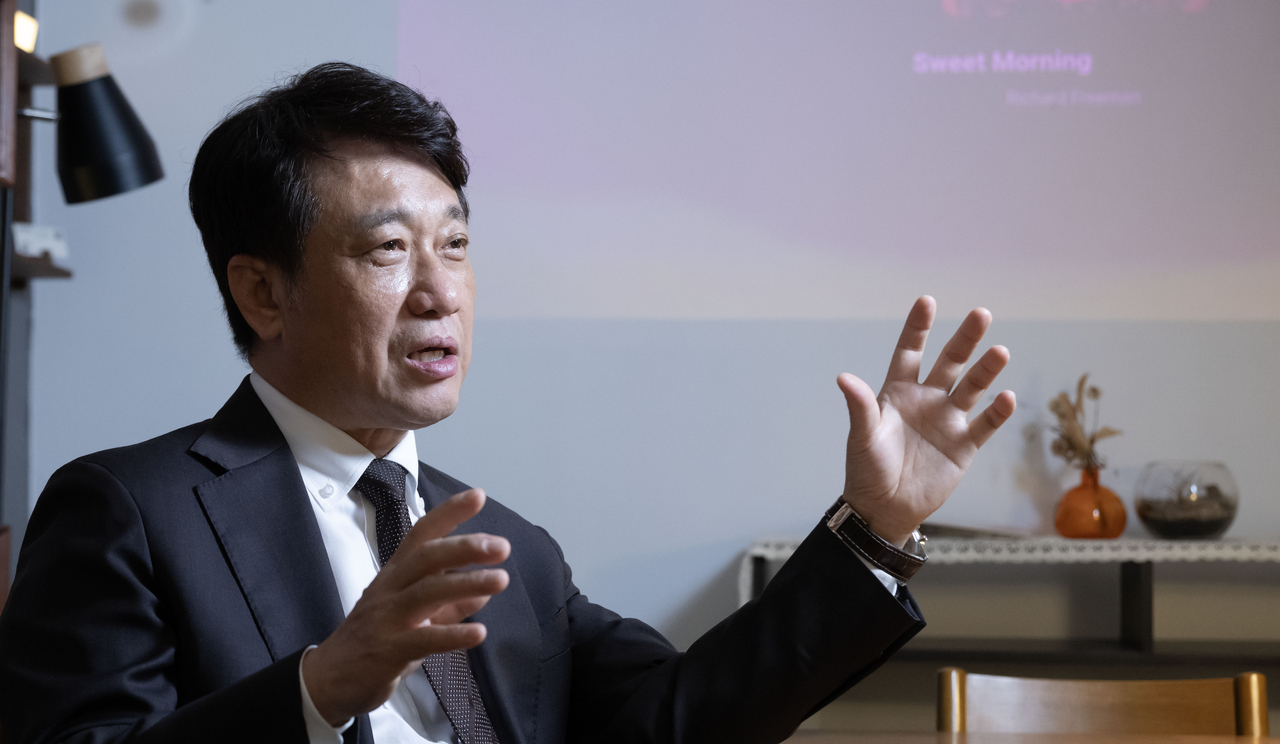
Korea's healthcare system, much like its economy, has grown at a compressed, remarkable pace. Since the national medical insurance system launched in 1977 and expanded in earnest in 1989, public access, coverage and equity in healthcare all strengthened considerably.
But warning signs have since emerged across essential and public healthcare. Emergency room diversions — patients turned away from one hospital after another — have become so routine they barely register as news. Obstetrics wards have closed, leaving some communities without delivery services. Rapid demographic shifts have driven a surge in medical demand, and workforce shortages have become a persistent, nationwide complaint.
"When medical insurance was consolidated into the national health insurance system in 2000, coverage expanded beyond simple treatment to include prevention and rehabilitation," Lee said. "After that, integrated financing for free cancer screenings and prevention programs was established, and the healthcare supply system itself grew rapidly, centered on the top five hospitals."
Lee finds the solution in using AI to improve healthcare efficiency. He argues that AI can serve as a breakthrough from the grim cycle of workforce shortages, the collapse of essential care, rising demand from an aging population and a national health insurance fiscal crisis.
"Unlike AI developed for military purposes, AI for healthcare can be used for good," he said. "If you introduce AI into a healthcare system that has relied solely on human staff, you could serve the same number of patients that once required 100 medical workers with just 50."
To get there, he said, trillion-won-scale investment is needed to integrate the electronic medical record systems that hospitals currently operate in isolation. Unifying those fragmented EMR systems would allow patient data to be shared across institutions, enabling AI to assist physicians effectively.
"AI must be developed that can support the entire process a physician needs — from diagnosis through to prescription," Lee said. "Next-generation EMR and operating systems need to be upgraded, and hospitals need a strategy for building their operational infrastructure, much like constructing a sovereign large language model."
Lee identified the absence of viable business models and a rigid reimbursement structure as the core obstacles holding back Korea's medical AI sector. To address them, he proposed introducing an innovation-premium reimbursement system, streamlining evaluation and licensing procedures, and building a hospital-industry collaboration ecosystem for real-world validation.
Domestic medical AI companies possess globally competitive technology, he said, but hospitals cannot adopt their solutions because the cost question remains unresolved. That difficulty creates a vicious cycle: AI adoption stalls, specialist shortages worsen, and AI companies lose the revenue needed to sustain themselves.
One concrete example: because hospitals cannot afford AI solutions that raise cancer detection accuracy above 90 percent, emergency room physicians still depend on radiologists being on call. Yet cost constraints mean the only staff keeping watch in emergency settings are the attending physicians and residents.
To make matters worse, companies that develop AI solutions but cannot sell them domestically — worn down by cost barriers and licensing hurdles — increasingly look abroad instead.
"The algorithmic accuracy of Korea's domestic medical AI companies is world-class," Lee said. "But the market mechanism has stalled at the question of who pays when a hospital adopts AI."
"Even when AI improves diagnostic accuracy and reduces complications, there is no reimbursement," he added. "Hospitals have no incentive to buy expensive AI solutions, and companies cannot generate sales — it is a vicious cycle."
Lee also called for streamlining the sequential approval process — Ministry of Food and Drug Safety clearance, new medical technology assessment, and national health insurance listing — that AI products must navigate before reaching hospitals.
On hospital-industry collaboration, he urged hospitals to move beyond the role of simple buyer. "Hospitals should function as open-innovation bases — verifying data in clinical settings and co-designing commercialization models together with companies," he said.
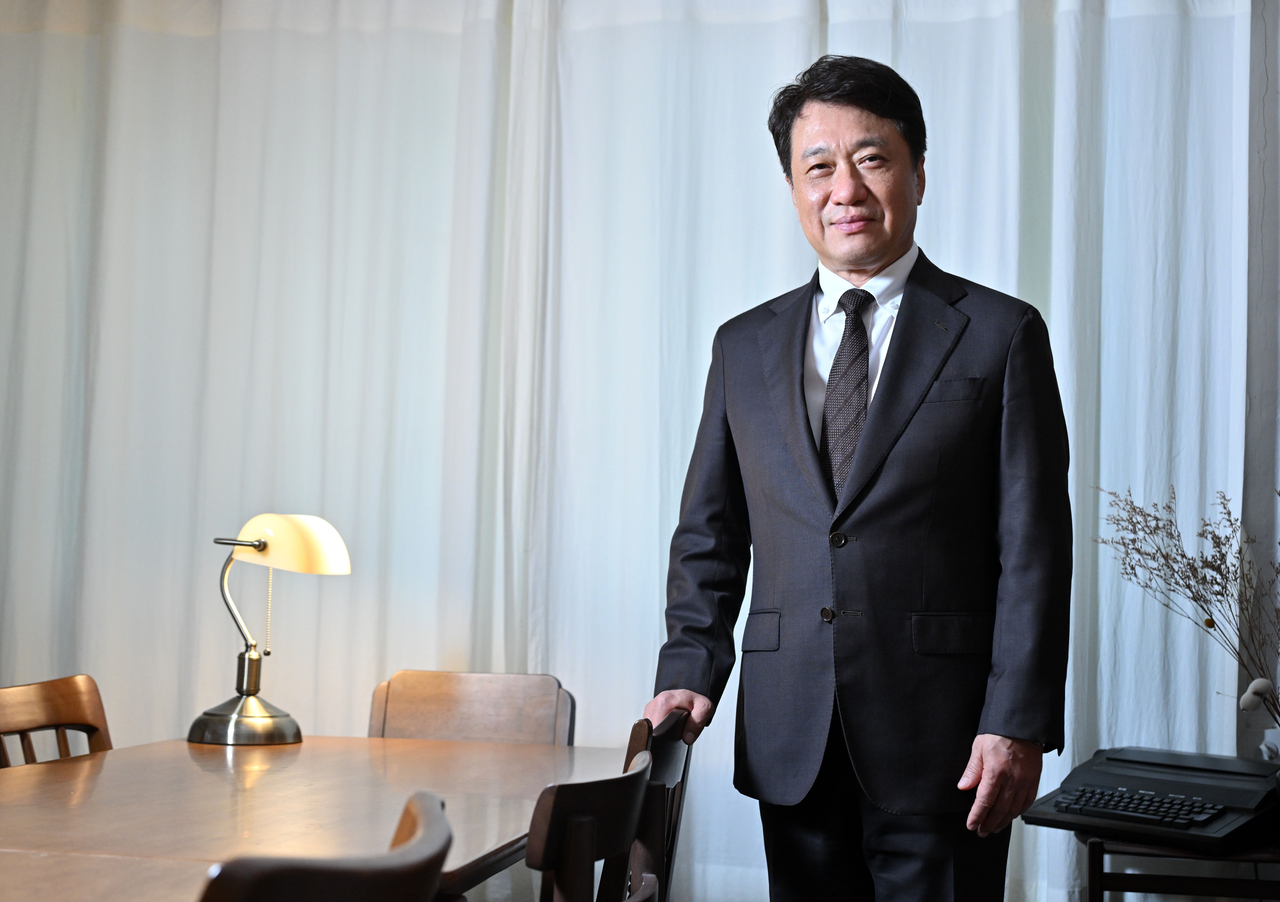
Lee also outlined his agenda for the IHF World Hospital Congress, centering on the concept of a "wall-less hospital" and continuous patient-centered care.
The IHF World Hospital Congress runs from Monday through Wednesday next week at COEX Magok Convention Center in Seoul. The event brings together hospitals from around the world to share accumulated experience and innovation in healthcare delivery, with the aim of raising the standard of care in communities everywhere.
Topics on the agenda include patient-centered care, hospital leadership, low-carbon and sustainable healthcare, digital health and AI, and healthcare quality and patient safety.
The practical outcomes and responsible use of medical AI are expected to feature as major themes. Sessions will cover AI-driven results in real clinical settings — moving beyond expectations to actual change on the ground — as well as AI's role in hospital operations, patient safety and data utilization.
"The hospital of the past was an isolated fortress of treatment — patients arrived sick, received care and were discharged, and the relationship ended there," Lee said. "The hospital of the future will be reborn as a health management hub, organically connected to the community through digital healthcare infrastructure."
"Patients will receive hospital monitoring and feedback in their daily lives through mobile devices and wearables, experiencing continuous management that spans not just disease treatment but also prevention and health promotion," he said. "Hospitals will also evolve into value-based platforms that manage patients across their entire life cycle, linked with primary care providers, long-term care and rehabilitation facilities, and community care networks."
This year's World Hospital Congress will be held alongside the 2026 World Bio Summit. The summit runs Oct. 21 through Oct. 22 at the same venue, co-hosted by the South Korean government and the World Health Organization. About 800 participants are expected, including health ministers from major countries and representatives from international organizations and industry.
The World Bio Summit will focus on "Spreading Biohealth Innovation Driven by AI," with discussions covering new science, new markets in biohealth and sustainable financing that AI is expected to bring.
"Korea must leap from a country that learned advanced medicine to one that creates new healthcare models and shares them with the world," Lee said. "I hope the World Hospital Congress in Seoul becomes the starting point for building a framework of global healthcare cooperation in the age of AI."
ko@heraldcorp.com