Over 5,000 residents and tourists attend the 4th UNESCO Seonjeongneung Cultural Street Festival; more than 100 themed booths line 600-meter cultural street featuring traditional, artistic and global experiences
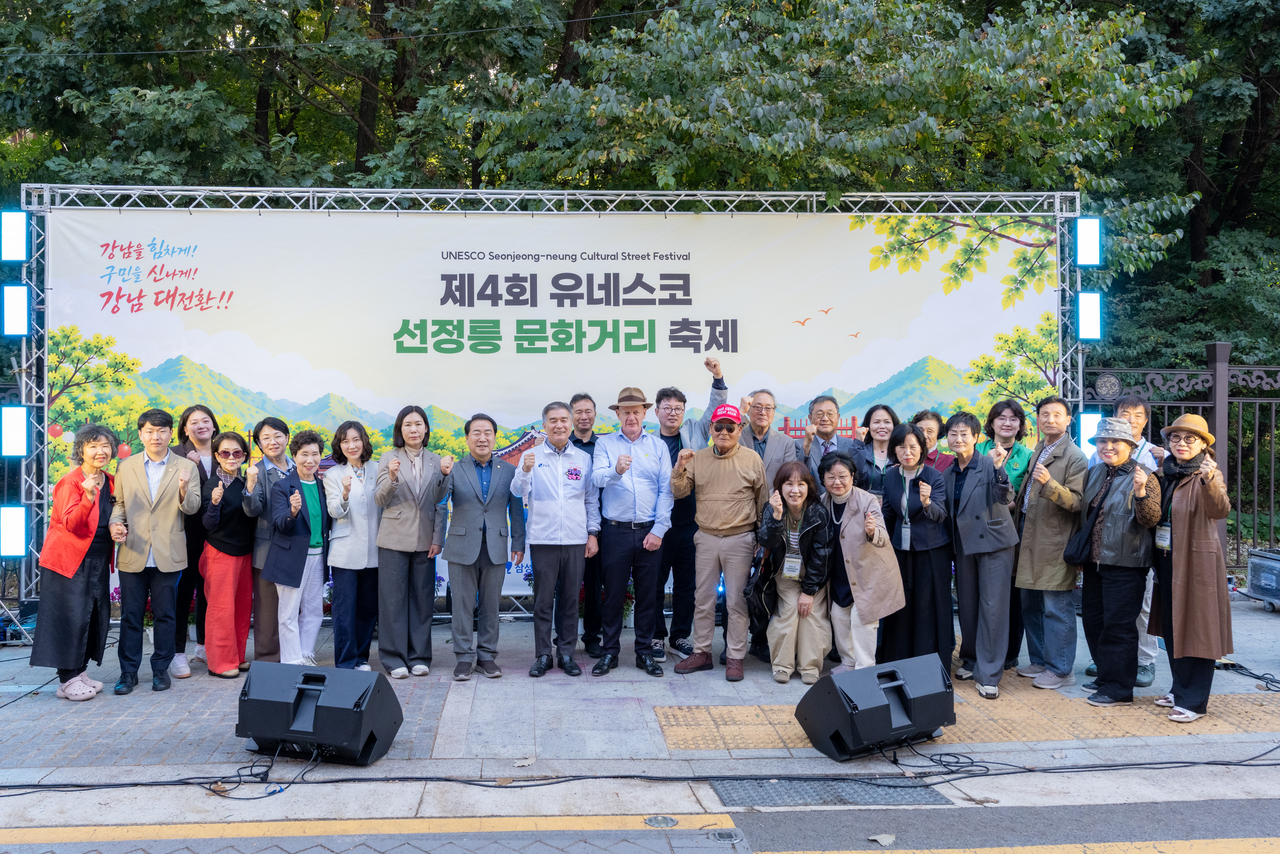
The Gangnam-gu Council participated in a cultural street festival held at Seonjeongneung, a UNESCO World Heritage Site, to promote the district's historical and cultural heritage and engage with local residents.
Council members visited the 4th UNESCO Seonjeongneung Cultural Street Festival on Saturday afternoon, taking in celebratory performances and touring a range of cultural experience programs at the Seonjeongneung grounds.
Jointly organized by Samseong 2-dong and the Seonjeongneung Cultural Street Promotion Committee, the festival was designed to raise awareness of Seonjeongneung's historical and cultural significance while blending traditional culture with contemporary content, letting visitors experience both Gangnam's past and present.
Seonjeongneung encompasses Seolleung — the royal tomb of Joseon's ninth king, Seongjong, and his second queen, Queen Jeonghyeon — and Jeongneung, the tomb of the 11th king, Jungjong. The site holds special significance as a place where visitors can encounter the history and culture of Joseon royal tombs in the heart of Gangnam's high-rise urban landscape.
Council members in attendance included Administrative Safety Committee Chair Lee In-seon and lawmakers Woo Jong-hyeok, Kim Yun-hee, Han Seong-sun and Noh Mi-jin. They watched the main stage performances and walked the 600-meter cultural street, stopping at more than 100 themed booths to speak with residents.
The festival drew about 5,000 attendees — residents, tourists, Gangnam-gu District Mayor Kim Hyeon-gi and city council members — and opened with an art run around Seonjeongneung and a street performance by the Bongeunsa nongak percussion troupe. Performances spanning traditional Korean music, classical, vocal and fusion genres followed, bringing energy to the historic cultural space.
The cultural street featured craft and art booths showcasing traditional workshops and works by emerging artists, global booths offering hands-on experiences with traditional cultures and foods from around the world, and promotional booths highlighting global beauty and wellness, drawing a steady stream of visitors throughout the day.
Bugwi-myeon in Jinan-gun, North Jeolla Province, and Haean-myeon in Yanggu-gun, Gangwon Province — both sister communities of Samseong 2-dong — also took part, operating direct-sales markets for local agricultural and specialty products and adding an inter-regional exchange dimension to the urban festival.
In remarks at the event, lawmaker Woo Jong-hyeok expressed deep gratitude to Samseong 2-dong residents and members of the Seonjeongneung Cultural Street Promotion Committee for their efforts in preparing the festival. "I hope this festival gives everyone a chance to enjoy traditional performances and diverse experiences while connecting with neighbors," he said. He added that the Gangnam-gu Council would spare no administrative or budgetary support to preserve the district's precious cultural heritage and help residents enjoy a rich cultural life in their daily lives.
The festival drew added meaning from its weaving together of a World Heritage Site's historical value with modern cultural content, expanding the area into an urban cultural space where residents and tourists alike can share in the district's cultural resources.
seouldream01@heraldcorp.com