Three in 10 consumers are buying "zero" products — foods with reduced sugar or alternative sweeteners — according to a new industry report.
Lotte Members said Monday it had published its "L.Point Trend Report," based on an analysis of three years of transaction data from L.Point members.
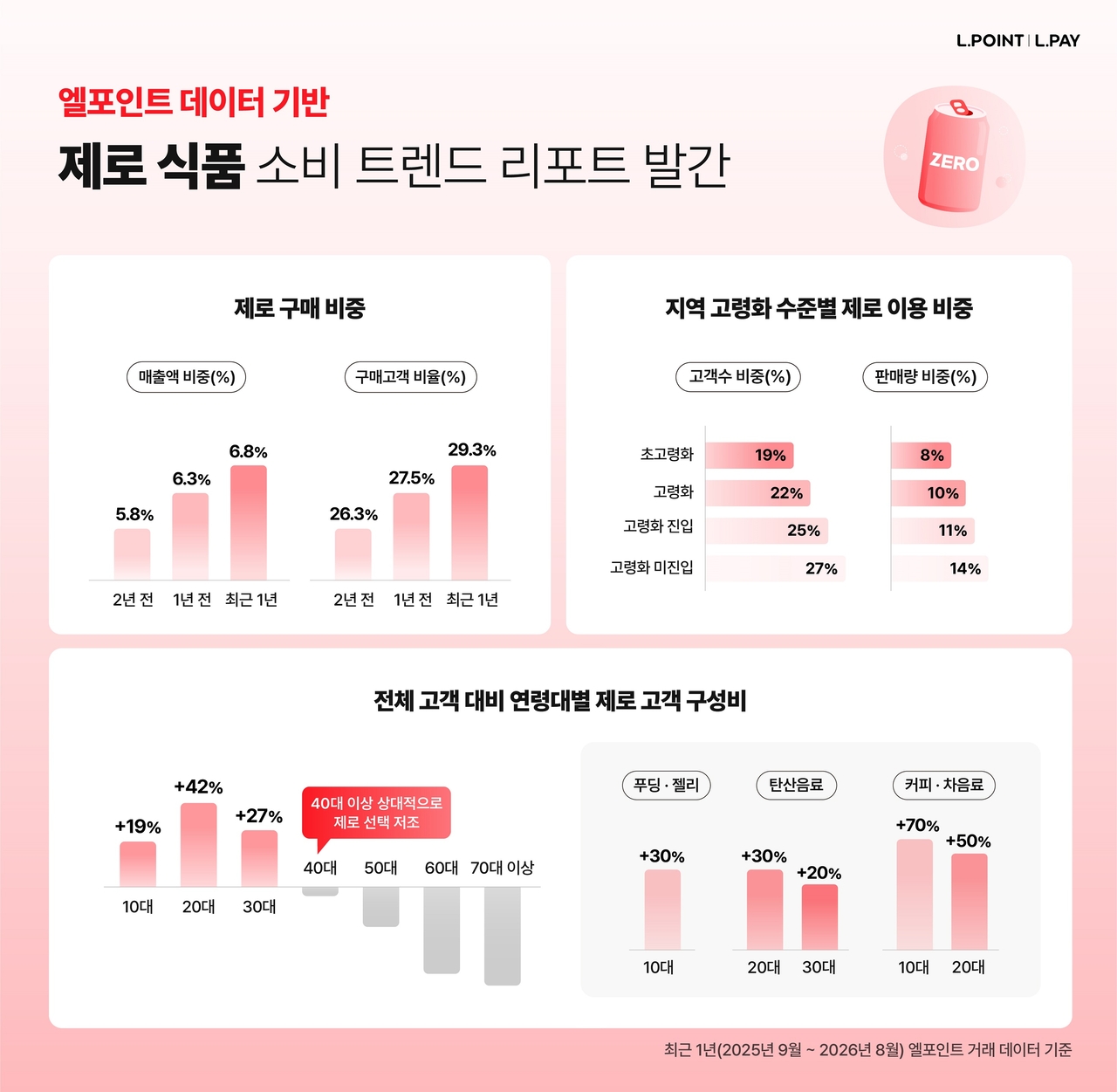
According to the report, 29.3 percent of consumers made at least one zero-product purchase between September last year and August this year, up 3 percentage points from 26.3 percent two years earlier. The sales share of zero products also rose over the same period, climbing from 5.8 percent to 6.8 percent.
Consumers in their 20s and 30s drove the trend. Among customers who bought zero products in the past year, those in their 20s posted the highest share at 42 percent above the overall customer average, while those in their 30s came in at 27 percent above average. Teenagers also showed strong interest, with their purchase share running 19 percent above the overall average.
By product category, teens bought zero coffee and tea beverages at a rate 70 percent above the overall customer average, while those in their 20s were 50 percent above average. For puddings and jellies, teens were 30 percent above average. In carbonated drinks, consumers in their 20s were 30 percent above average and those in their 30s were 20 percent above average.
Interest in and engagement with zero products declined with age. In areas that Lotte Members classified as having not yet entered an aging demographic — defined by the share of residents aged 65 or older — zero-product buyers accounted for 27 percent of customers. In super-aged areas, that figure was limited to 19 percent. Sales volume share was also nearly twice as high in non-aged areas at 14 percent, compared with 8 percent in super-aged areas.
Carbonated drinks, which pioneered the zero market, recorded the highest zero sales volume share at 42 percent over the past year, with the number of zero carbonated products up 47 percent from two years ago. The zero sales share in the pudding and jelly category reached 30 percent, a rise of 26.9 percentage points from two years earlier. Hangover-relief products also saw their zero sales share climb 11.8 percentage points to 15 percent.
korean@heraldcorp.com