Construction slump, cheap Chinese imports and rising electricity costs pile pressure on local steelmakers
Government inspection team visits Hyundai Steel, Dongkuk Steel Mill sites
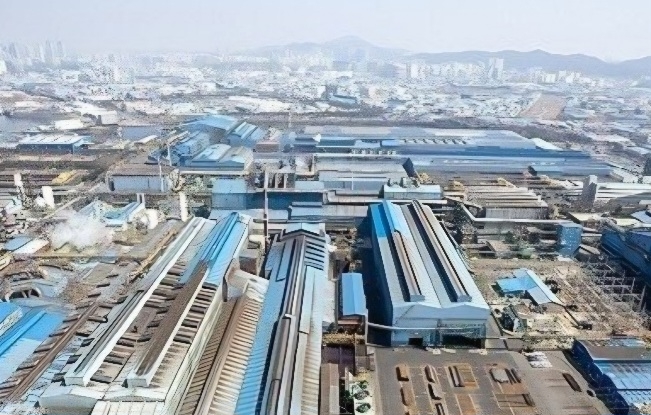
Incheon is making an all-out push to secure government support for the steel industry in Jeomulpo-gu, which has been battered by a series of domestic and external setbacks, in a bid to revive the sector and limit the damage to the local economy.
The city said Monday that a government inspection team — composed of officials from the Ministry of Trade, Industry and Energy, the Korea Institute for Industrial Economics and Trade, relevant ministries and private-sector experts — visited Incheon to assess the crisis gripping the district's steel industry.
Steelmakers in and around Jeomulpo-gu are struggling under a confluence of pressures: a prolonged slump in the construction sector, a flood of low-cost Chinese steel, tightening US tariffs and rising industrial electricity rates.
Hyundai Steel, the area's largest steelmaker, has permanently shut its electric arc furnace steelmaking plant and small-section rolling mill and has pursued voluntary redundancies. Dongkuk Steel Mill has also tightened its belt, cutting output as part of its own self-rescue measures.
The on-site inspection is part of the process for designating Jeomulpo-gu a "preemptive industrial crisis response zone" for the steel sector — a status Incheon formally applied for with the Ministry of Trade, Industry and Energy on Sept. 21.
The inspection team toured the small-section rolling mill inside Hyundai Steel's Incheon factory, which was permanently shut after halting operations in January, before moving on to Dongkuk Steel Mill's Incheon factory to examine idled facilities and assess the drop in operating rates.
The team then moved to the Songnim office of Jeomulpo-gu for a comprehensive discussion with representatives from Incheon, Jeomulpo-gu, the Incheon Chamber of Commerce and Industry, the Incheon Economic Trend Analysis Center, Incheon Technopark and the steel industry.
At the meeting, the inspection team examined how the steel industry's downturn is rippling through the broader local economy — affecting partner companies, workers and commercial districts alike.
Incheon has already secured 4 billion won ($2.98 million) in national funding after Jeomulpo-gu was designated a "preemptive employment crisis response zone" by the Ministry of Employment and Labor in July, and is using those funds to support workers in the area.
If the district also receives the additional "preemptive industrial crisis response zone" designation from the Ministry of Trade, Industry and Energy, the city would be able to build a comprehensive support framework that goes beyond employment assistance to include business stabilization funds, policy financing, research and development support, and job-transition programs.
"The steel industry in Jeomulpo-gu is a core national infrastructure industry that drives not only Incheon's manufacturing sector but the entire Greater Seoul industrial ecosystem," Incheon Mayor Park Chan-dae said. "We will work in close coordination with the central government to secure the final designation."
Incheon plans to refine its tailored crisis response measures and industrial competitiveness strategies based on the inspection team's feedback, while continuing close consultations with government ministries to achieve the final designation.
gilbert@heraldcorp.com